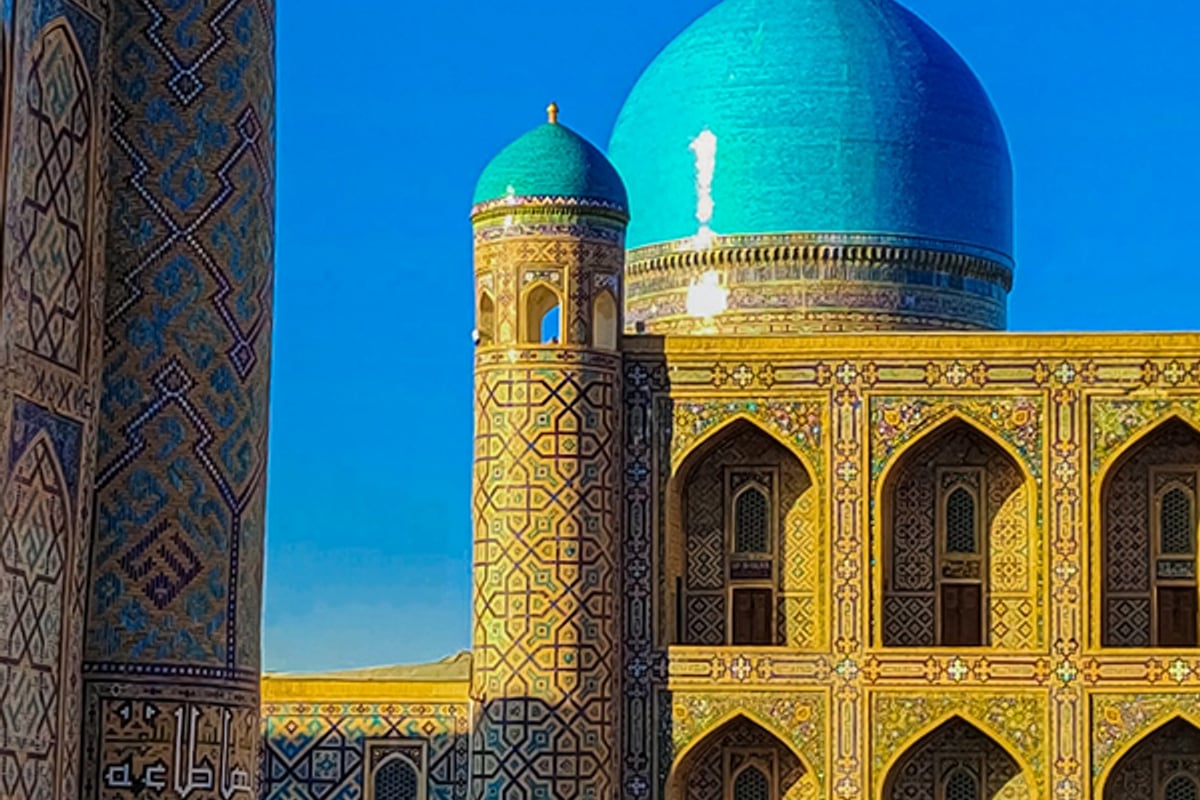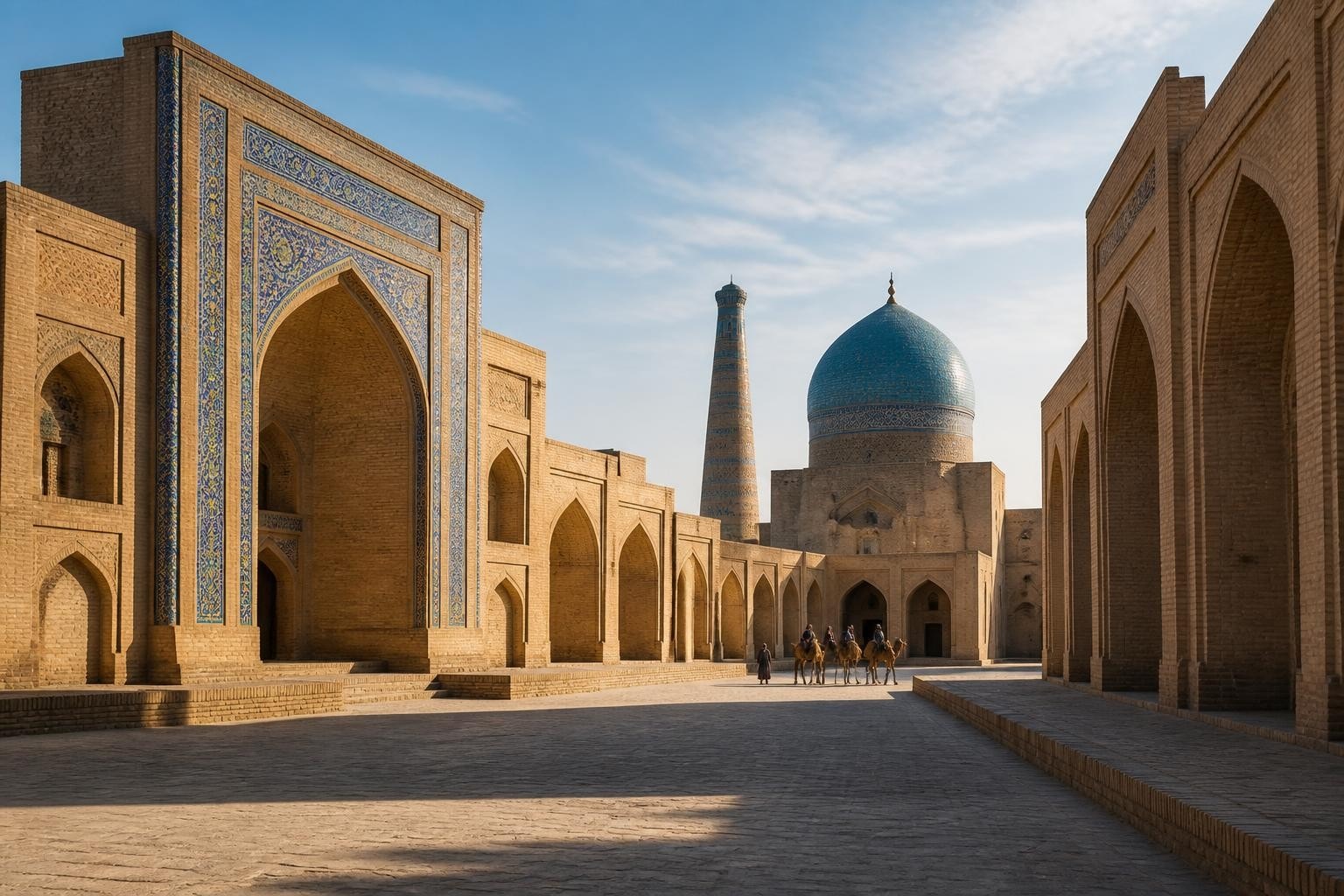
The sun rises over Samarkand's Registan Square, casting golden light across turquoise-tiled domes that have watched caravans arrive for centuries. This is where the Uzbekistan Silk Route comes alive, not as a dusty museum piece, but as a living, breathing story that unfolds with every step through narrow bazaar lanes and beneath ancient archways. The silk route wasn't merely a road-it was a network of relationships, cultures, and dreams woven together as intricately as the fabrics that gave it its name.
The Heart of the Ancient Trading Network
When we speak of the Uzbekistan Silk Route, we're talking about the very epicentre of transcontinental trade. Uzbekistan occupied a strategic position where multiple branches of the silk route converged, making cities like Samarkand, Bukhara, and Khiva essential stopovers for merchants travelling between China and the Mediterranean.
Picture a merchant arriving in Samarkand after weeks crossing the Kyzylkum Desert. The city offered more than rest-it provided a marketplace where Chinese silk met Persian carpets, Indian spices mingled with Byzantine gold, and ideas travelled as freely as goods. This wasn't simply commerce; it was cultural alchemy.
Why Uzbekistan Became the Crossroads
The geographical position of Uzbekistan created a natural meeting point for traders. Several factors made this region indispensable:
- Water sources: The Zerafshan and Amu Darya rivers provided essential resources in an otherwise arid landscape
- Oasis cities: Settlements grew around water sources, creating reliable stopping points
- Mountain passes: Routes through the Pamirs and Tian Shan naturally funneled through Uzbekistan
- Political stability: Strong local rulers often provided protection in exchange for trade taxes
The Uzbekistan Silk Route flourished because it offered something rare: predictability in an unpredictable world. Merchants knew they could find shelter, fresh supplies, and trading partners in these oasis cities.
Samarkand: The Jewel of the Silk Route
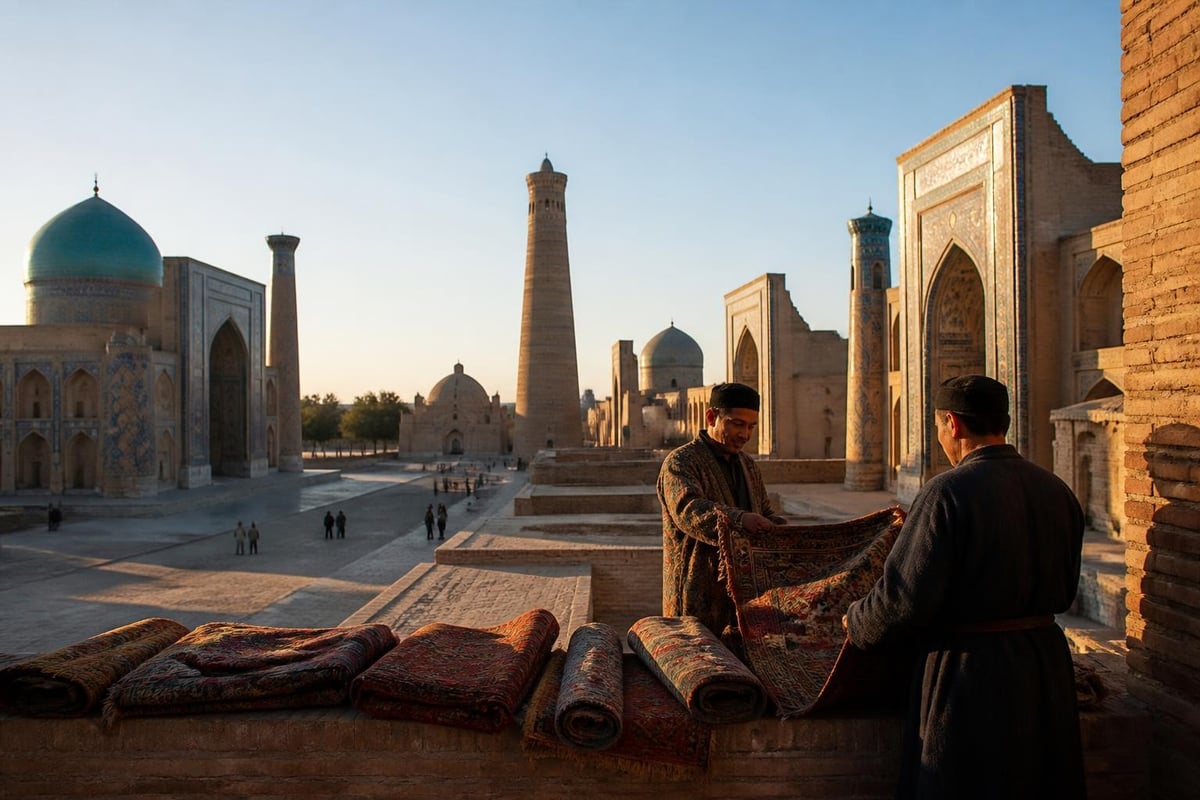
Among all cities along the Uzbekistan Silk Route, Samarkand holds a special place. Timur (Tamerlane) transformed it into an imperial capital in the 14th century, bringing the finest craftsmen from conquered territories to build monuments that still take your breath away.
Walking through Samarkand today, you're following paths worn smooth by centuries of merchants, scholars, and pilgrims. The Free Sight seeing of Samarkand allows visitors to experience these historical layers firsthand, connecting contemporary exploration with ancient trading traditions that shaped the city's character. Local guides share stories passed down through generations-tales of Marco Polo's visits, of Chinese silk traders who settled here, of Persian poets who found inspiration in its gardens.
The Architecture of Commerce
The buildings along the Uzbekistan Silk Route weren't merely decorative. Each structure served the practical needs of international trade:
| Structure Type | Purpose | Example in Samarkand |
|---|---|---|
| Caravanserai | Accommodation and warehouse | Various ruins throughout old city |
| Covered bazaar | Protected trading space | Siyob Bazaar (still operating) |
| Madrasah | Education and lodging | Registan Complex |
| Mausoleum | Spiritual center and landmark | Gur-e-Amir |
These buildings created an infrastructure that made long-distance trade viable. A merchant could store goods securely, exchange currency, hire translators, and even educate his sons-all within the same city.
The Silk That Named a Route
The Uzbekistan Silk Route carries the name of its most precious commodity, yet silk's story here extends far beyond mere trade. According to UNESCO’s documentation of sericulture traditions, the region developed its own silk production methods, blending Chinese techniques with local innovations.
Margilan, in the Fergana Valley, became Central Asia's silk production center. Here, mulberry trees grew abundantly, silkworms thrived in the climate, and artisans developed distinctive patterns and dyeing techniques. The city transformed from a mere trading post into a production powerhouse, creating competition for Chinese silk.
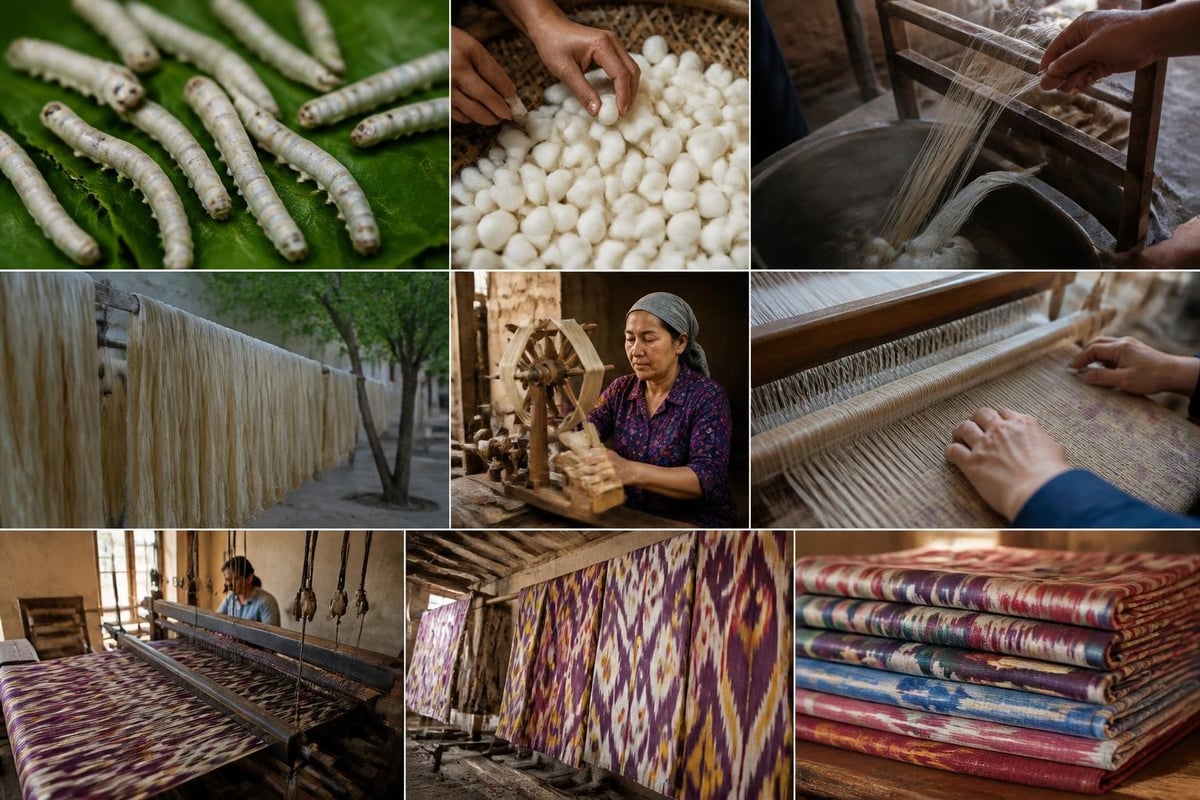
From Cocoon to Carpet: The Silk Process
Walking through Margilan's workshops today reveals techniques barely changed since medieval times:
- Sericulture: Raising silkworms on mulberry leaves (taking approximately 40 days)
- Reeling: Unwinding silk thread from cocoons in hot water
- Dyeing: Using natural dyes from plants, minerals, and insects
- Weaving: Creating fabrics on traditional looms
- Pattern-making: Applying ikat or other distinctive regional designs
The Fergana Valley’s agricultural heritage systems demonstrate how sericulture shaped entire landscapes, with mulberry orchards creating green corridors through desert regions.
Beyond Silk: The Route's Cultural Exchange
What made the Uzbekistan Silk Route truly transformative wasn't the goods-it was the ideas. Buddhism travelled westward from India, Islam spread eastward from Arabia, and Chinese innovations like papermaking reached Europe through these very streets.
Samarkand's Ulugh Beg Observatory stands as testament to this knowledge exchange. Built in the 1420s, it represents the convergence of Greek, Indian, Persian, and Chinese astronomical traditions. Scholars from across three continents collaborated here, creating star catalogues that European astronomers would use centuries later.
The Languages of Trade
Walk through Samarkand's bazaar today, and you'll hear Uzbek, Tajik, Russian, and increasingly English. This linguistic diversity echoes ancient patterns. Medieval traders developed pidgin languages and relied on polyglot intermediaries who understood both commerce and culture.
The Uzbekistan Silk Route created what we might now call "cultural translators"-individuals who could navigate between Chinese merchants who valued jade, Persian buyers seeking lapis lazuli, and European traders wanting spices. These intermediaries understood that successful trade required understanding worldviews, not just exchange rates.
The Cities That Connected Empires
While Samarkand might be the star, the Uzbekistan Silk Route relied on multiple cities, each playing a distinct role in the trading ecosystem. Much like how destination marketing organizations help travelers discover regional attractions, medieval Silk Route cities each promoted their unique advantages.
Bukhara: The Sacred and Commercial
Bukhara earned the title "Noble Bukhara" for good reason. Its 140+ madrasahs made it Central Asia's intellectual center, attracting students from distant lands. The city balanced spiritual pursuits with commercial ambitions-its covered trading domes specialized in different commodities:
- Toki Zargaron: Jewelers and metalworkers
- Toki Telpak Furushon: Hat and cap makers
- Toki Sarrafon: Money changers and bankers
This specialization created efficiency. A merchant knew exactly where to find skilled craftsmen or exchange currencies at competitive rates.
Khiva: The Desert Gateway
Khiva controlled routes through the Karakum Desert, making it essential for caravans heading to Persia or the Caspian Sea. Its massive Ichan Kala fortress enclosed an entire trading city-warehouses, palaces, mosques, and workshops all protected behind ten-meter-high walls.
The city developed sophisticated water management systems, channeling irrigation from the Amu Darya to create gardens in the desert. These green spaces weren't luxuries-they were essential for maintaining pack animals and providing fresh food for travelers.
Modern Revival: Tourism and Heritage
Today's Uzbekistan Silk Route faces different challenges than medieval merchants encountered, but the fundamental question remains: how do you preserve authenticity while welcoming the world? The World Bank’s analysis of Uzbekistan’s cultural heritage tourism highlights both opportunities and risks.
Recent government initiatives, including new policies to develop the silk industry, show commitment to maintaining traditional crafts while modernizing production. This balance mirrors the original silk route's success-honoring tradition while embracing innovation.
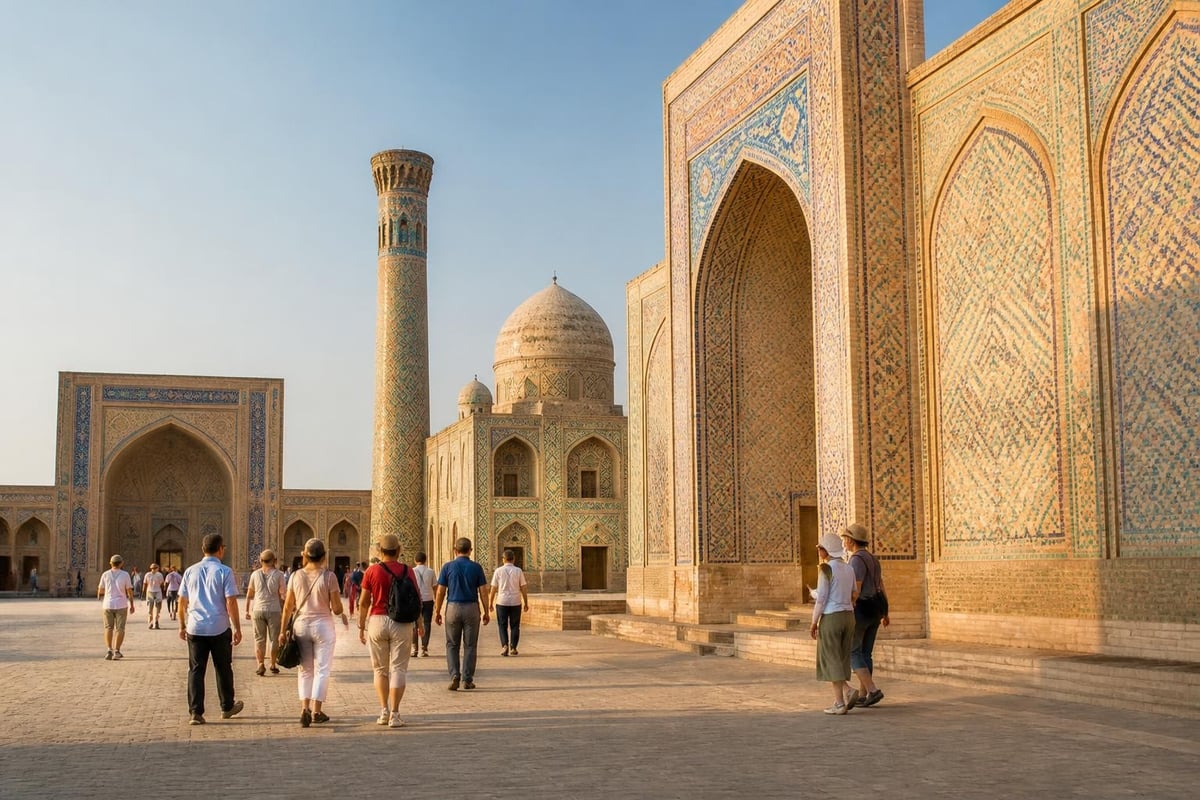
Walking Tours: Following Ancient Footsteps
Modern travelers can experience the Uzbekistan Silk Route most authentically on foot. Walking through Samarkand's old city reveals details invisible from tour buses-the worn threshold stones of caravanserais, water channels that still flow along medieval routes, workshops where sixth-generation craftsmen practice traditional techniques.
These walking experiences connect us viscerally to history. When you pause in the shade of a mulberry tree as merchants did 800 years ago, the past becomes present.
The Artisans Who Keep History Alive
Perhaps the most remarkable aspect of the Uzbekistan Silk Route today is its living traditions. In workshops throughout Samarkand, Bukhara, and Margilan, artisans practice crafts passed down through generations.
Master Craftspeople and Their Techniques
| Craft | Location | Distinctive Feature |
|---|---|---|
| Ikat silk weaving | Margilan | Pre-dyed threads creating blurred patterns |
| Ceramic tilework | Gijduvan | Turquoise and cobalt blue glazes |
| Miniature painting | Bukhara | Gold leaf and natural pigments |
| Metalwork | Samarkand | Copper vessels with traditional patterns |
| Paper-making | Samarkand | Mulberry bark paper using medieval methods |
These aren't museum demonstrations-they're functioning businesses creating contemporary products using traditional methods. A master ikat weaver might spend six months creating a single large fabric, dyeing individual threads before weaving to create patterns that seem to shimmer and move.
Culinary Traditions of the Route
The Uzbekistan Silk Route transformed cuisine as dramatically as architecture. Traders introduced ingredients that became staples: cumin from India, saffron from Persia, dried fruits from China. Samarkand's plov-rice cooked with meat, carrots, and spices-represents this fusion perfectly.
Central Asian bread culture shows silk route influence clearly. The tandoor oven arrived from Persia, wheat came via multiple routes, and the tradition of stamping decorative patterns into bread reflects both aesthetic traditions and practical solutions to identifying different bakers' products in communal ovens.
Market Economics Then and Now
Medieval bazaars operated on trust networks built over generations. A merchant's word became his bond because reputation travelled faster than goods. These systems paralleled modern credit ratings-a trader known for quality products and honest dealing could secure goods on consignment, while newcomers paid cash upfront.
Siyob Bazaar in Samarkand still operates on similar principles. Regular vendors maintain their pitches for decades, building relationships with customers who return year after year. This continuity creates stability in an otherwise chaotic marketplace.
Environmental Adaptations Along the Route
The Uzbekistan Silk Route demanded ingenious environmental solutions. Cities developed qanat systems-underground channels that transported water with minimal evaporation. The strategic approach to sustainable tourism recognizes these historical water management systems as both heritage sites and practical models for modern sustainability.
Caravanserais were positioned a day's journey apart-roughly 30 to 40 kilometers-allowing merchants to travel during cooler morning and evening hours, resting during midday heat. This rhythm shaped the entire route's infrastructure.
Climate and Commerce
Seasonal patterns dictated trade flows. Spring brought merchants from the south with goods purchased during winter; autumn saw caravans preparing for the long journey to China before winter closed mountain passes. Cities adapted, with storage facilities for goods awaiting favorable weather and housing that could accommodate seasonal population fluctuations.
The Route's Influence on Global Trade
The Uzbekistan Silk Route pioneered concepts we now take for granted in international commerce. Letters of credit-documents allowing merchants to access funds in distant cities-originated here. Standardized weights and measures emerged from the need to trade between cultures using different systems. Even concepts like intellectual property have roots in silk route practices protecting trade secrets.
When Chinese merchants jealously guarded silkworm eggs and sericulture knowledge, they created one of history's first trade secrets. The legendary smuggling of silkworm eggs to Byzantium in hollow bamboo staffs reads like industrial espionage-because that's exactly what it was.
Networks That Shaped Empires
The Uzbekistan Silk Route didn't merely connect existing empires-it shaped their rise and fall. Cities controlling key routes grew wealthy and powerful. Samarkand's golden age under Timur resulted directly from controlling silk route trade. When ocean routes to Asia opened in the 16th century, Central Asian cities declined as trade shifted to sea lanes.
This historical lesson resonates today: geography creates opportunity, but adapting to change determines longevity. Modern Uzbekistan's tourism development recognizes this, positioning its silk route heritage as an asset for contemporary travelers seeking authentic experiences.
Personal Stories from the Route
History books tell us about emperors and empires, but the Uzbekistan Silk Route thrived because of countless individual decisions. A Chinese merchant deciding to travel an extra month to Samarkand's better markets. A Persian craftsman settling in Bukhara to teach metalworking techniques. A local guide helping travelers navigate not just roads, but cultural expectations.
These personal stories continue today. Meet Rustam, a sixth-generation ceramic artist in Gijduvan, who can trace his family's workshop back to the 1500s. Or Dilnoza, who learned ikat weaving from her grandmother and now teaches international students. These individuals embody the silk route's living legacy-honoring tradition while embracing the future.
Their workshops welcome visitors not as tourists but as participants in an ongoing story. When you watch Rustam mix pigments using his great-great-grandfather's formulas, or help Dilnoza tie threads for ikat dyeing, you're not observing history-you're joining it.
The Uzbekistan Silk Route represents more than ancient trade-it's a living testament to human connection across cultures and centuries. These cities, crafts, and traditions survived because communities kept them alive, passing knowledge and skills through generations. Whether you're fascinated by architecture, crafts, cuisine, or simply the stories of human endeavor, walking these ancient paths offers profound connections to our shared past. Visit Samarkand provides the perfect gateway to experience these layers of history firsthand, with knowledgeable guides who bring the silk route's stories to life through free and paid walking tours that reveal both famous landmarks and hidden corners where history whispers its secrets.