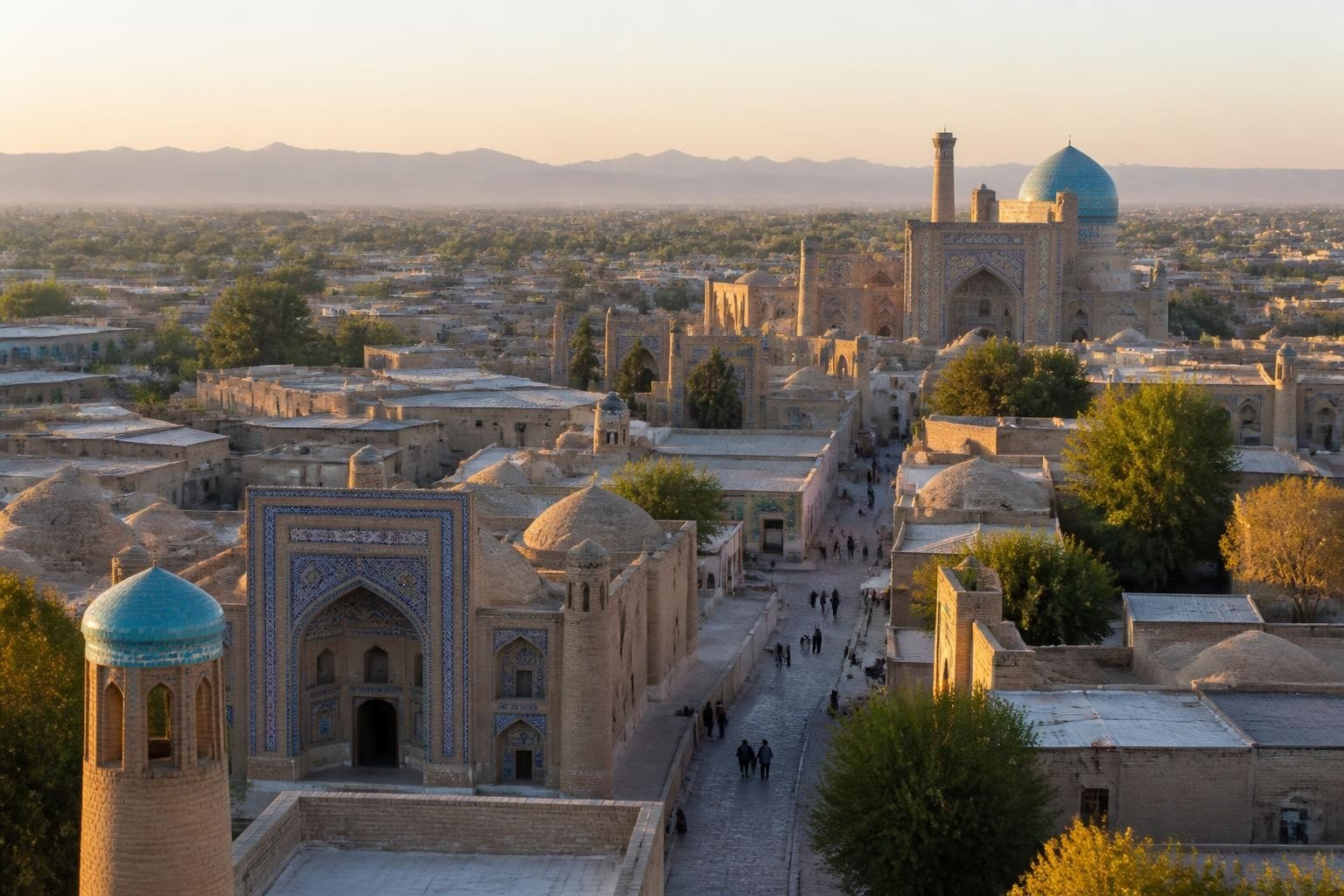
The call to prayer echoes across turquoise-tiled domes whilst a businessman rushes past on an electric scooter, mobile phone pressed to his ear. Welcome to Uzbekistan cities in 2026, where centuries collide in the most beautiful way imaginable. These aren't merely dots on a map; they're living museums where every cobblestone whispers tales of merchants, scholars, and conquerors who shaped civilisation itself. From the administrative buzz of Tashkent to the architectural poetry of ancient Silk Road settlements, each city offers travellers a unique window into Central Asia's soul.
The Timeless Appeal of Uzbekistan's Urban Landscape
Uzbekistan cities have captivated wanderers for over two millennia, and the magnetism hasn't faded one bit. What makes these urban centres so extraordinary isn't just their age, though some settlements predate the Common Era. It's the remarkable layering of civilisations, each leaving its fingerprint in architecture, cuisine, and daily rhythms.
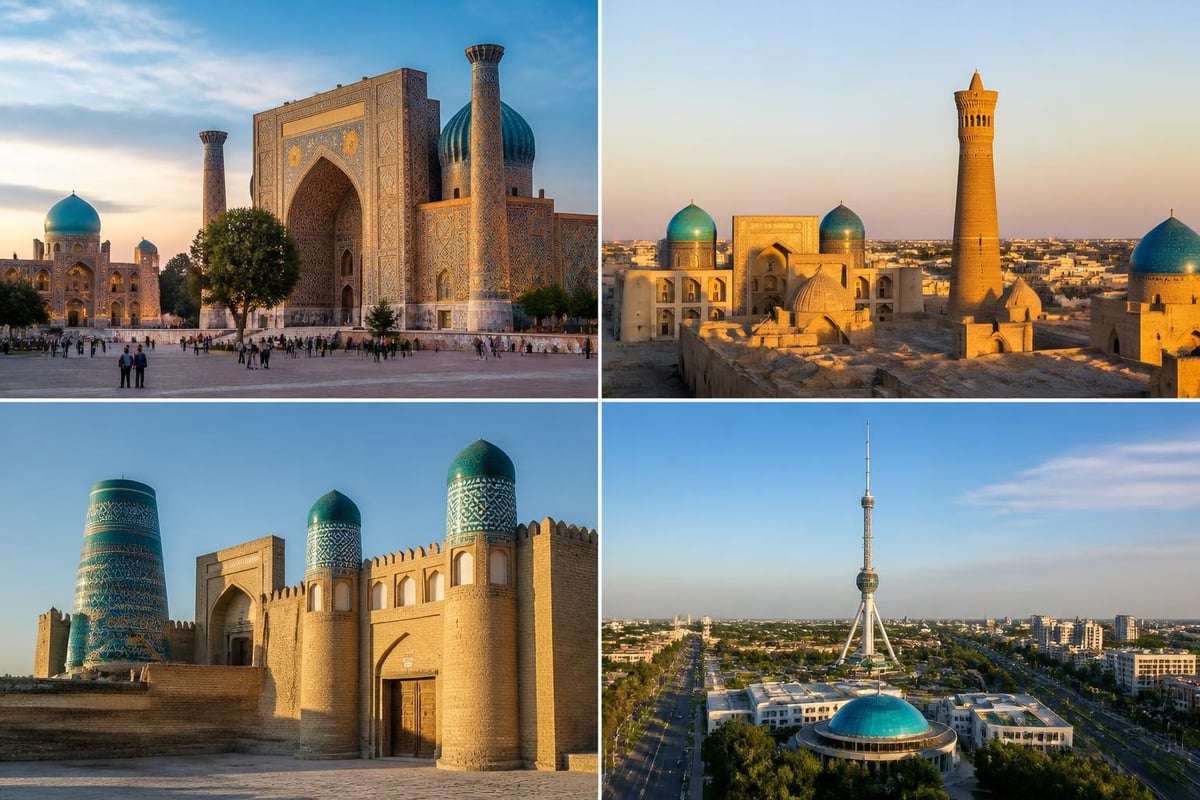
The official Uzbekistan tourism portal highlights how each major city developed its own character along the Silk Road. Samarkand became the jewel of learning and art. Bukhara evolved into a spiritual beacon. Khiva preserved its medieval heart almost entirely intact. Tashkent transformed into a modern capital whilst honouring its roots.
Understanding the Geographic Spread
Uzbekistan cities aren't randomly scattered. They follow ancient trade routes and water sources across diverse terrain:
- Tashkent sits in the northeast, near modern borders, serving as the administrative and economic heart
- Samarkand anchors the east-central region, positioned perfectly along historic caravan paths
- Bukhara lies westward in the Zerafshan River valley, a desert oasis city
- Khiva occupies the far west in Khorezm, gateway to the Kara-Kum desert
- Fergana Valley cities (Andijan, Kokand, Namangan) cluster in the fertile eastern basin
According to State Statistics data, population distribution reflects both historical importance and modern economic development, with urbanisation accelerating in recent years.
Samarkand: Where Heaven Touches Earth
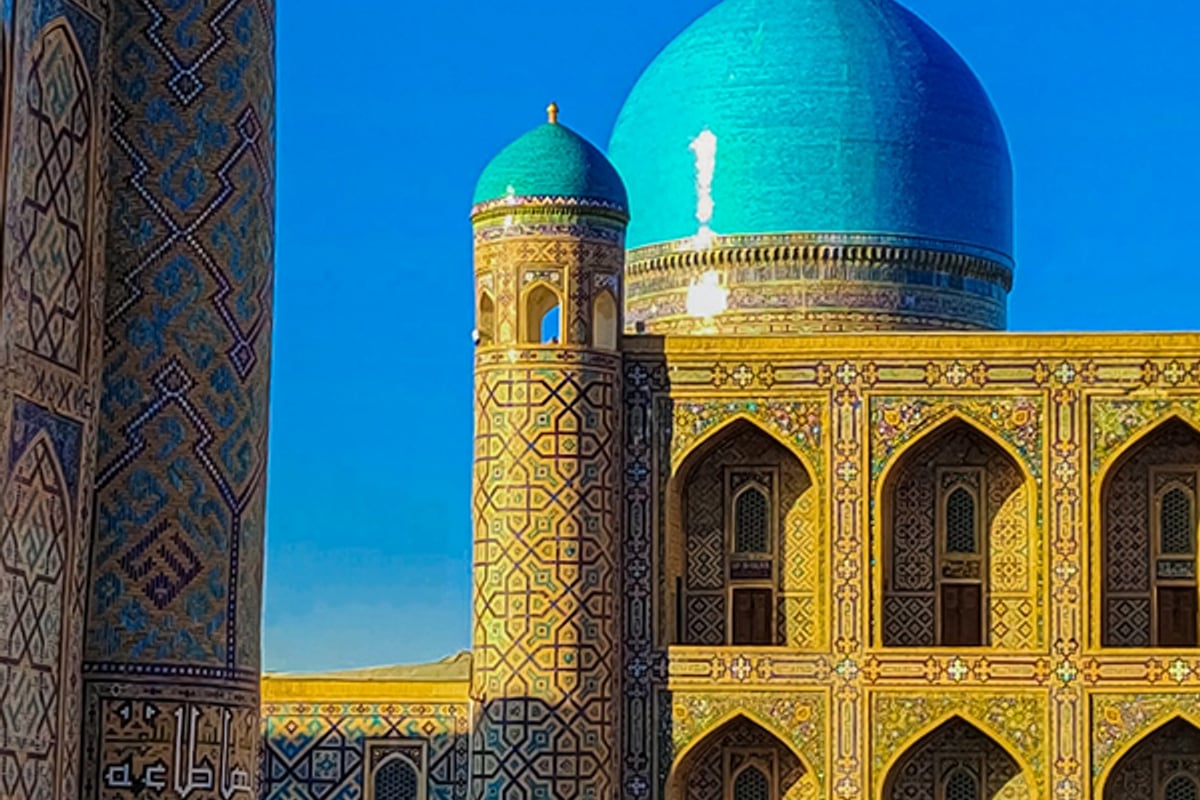
I'll never forget my first glimpse of Registan Square at dawn. The rising sun set those three madrasahs ablaze in gold and azure, and I understood why medieval poets called Samarkand "the mirror of the world". This city doesn't just contain history; it breathes it.
The UNESCO nomination dossier for Samarkand describes its Outstanding Universal Value as a crossroads of cultures, and wandering its streets proves the point magnificently. Persian, Turkic, Mongol, and Russian influences blend seamlessly in everything from architectural details to the plov served in neighbourhood chaikhanas.
Samarkand's Essential Character
Samarkand reveals itself in layers to patient explorers. The postcard monuments, the Registan, Gur-e-Amir, and Shah-i-Zinda, represent merely the opening chapter. Venture into the old Jewish quarter or the artisan workshops behind Bibi-Khanym Mosque, and you'll discover craftsmen using techniques Tamerlane's builders would recognise.
Taking a free walking tour in Samarkand offers invaluable context that transforms stunning buildings into story-filled spaces. Local guides share legends passed down through generations, point out architectural details you'd otherwise miss, and introduce you to the rhythms of contemporary Samarkand life.
The city's approximately 550,000 residents navigate between preservation and progress remarkably well. Modern cafés occupy restored caravanserais. Solar panels discretely power heritage sites. It's a delicate balance that most Uzbekistan cities are learning to strike.
Tashkent: The Modern Face of Uzbekistan
Tashkent tells a different story altogether. As Central Asia's largest metropolis, with over 2.5 million souls calling it home, the capital pulses with contemporary energy whilst honouring select pieces of its past.
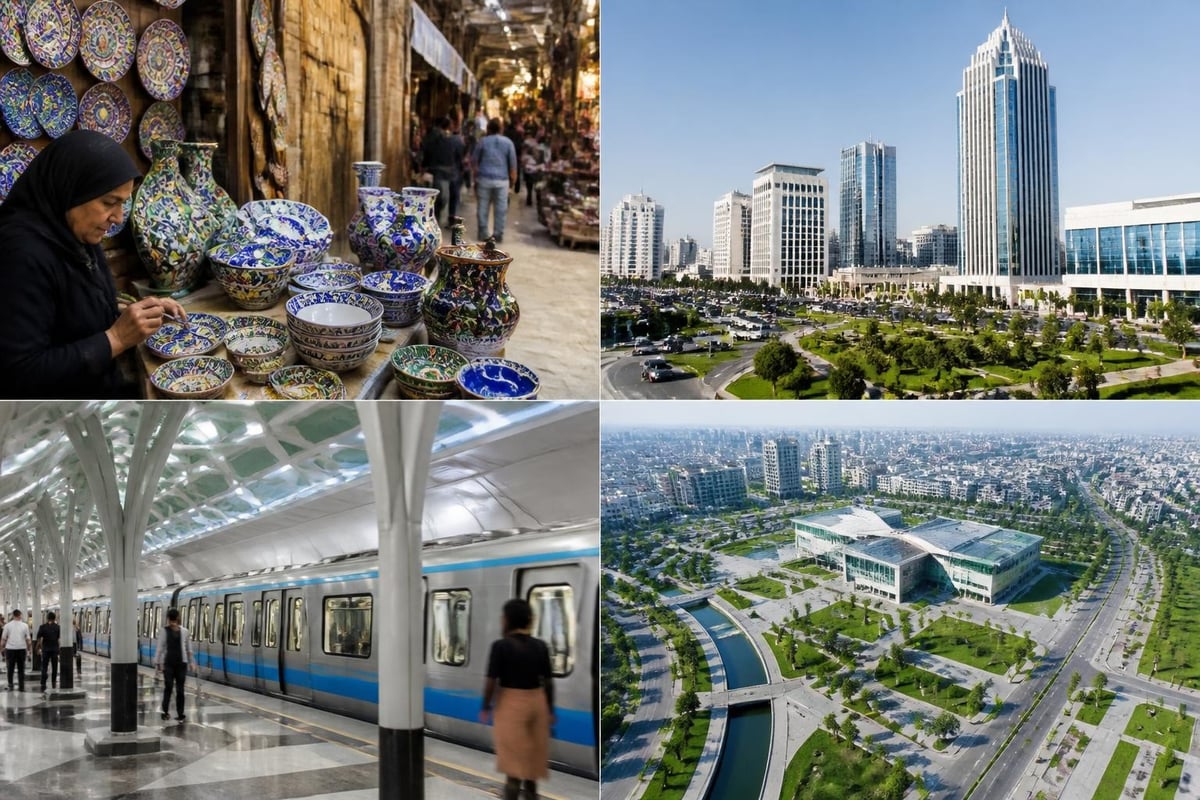
The 1966 earthquake erased much of old Tashkent, creating both tragedy and opportunity. Soviet planners rebuilt with wide boulevards, abundant parks, and a metro system that doubles as an underground art gallery. Each station showcases different design themes, from cosmonauts to cotton harvests.
Balancing Heritage and Development
| Aspect | Historical Quarter | Modern Districts |
|---|---|---|
| Architecture | Restored madrasahs, bazaars | Glass towers, shopping centres |
| Atmosphere | Traditional, intimate | International, fast-paced |
| Primary visitors | Culture seekers | Business travellers |
| Key sites | Chorsu Bazaar, Hast Imam | Tashkent City, Magic City |
The World Bank’s air quality assessment addresses urban environmental challenges facing Tashkent, highlighting the complexity of managing a growing metropolis. Traffic, industrial activity, and heating systems during bitter winters all contribute to pollution concerns that city authorities are actively addressing through policy reforms and infrastructure investment.
Yet Tashkent charms in unexpected ways. The Chorsu Bazaar bursts with colour, scent, and negotiation. Parks overflow with families on weekends. The Uzbek State Museum of Applied Arts houses treasures that contextualise what you'll see elsewhere in Uzbekistan cities.
Bukhara: The Living Museum
If Samarkand dazzles and Tashkent energises, Bukhara mesmerises. This city of 280,000 feels like stepping through a portal into the medieval Islamic world. The entire historic centre earned UNESCO recognition because it survived so remarkably intact.
Walk Bukhara's lanes at dusk when tour groups disperse, and magic descends. Swallows dart around minarets. Shopkeepers unroll carpets for evening prayer. The scent of kebabs mingles with jasmine. Time behaves differently here.
Architectural Storytelling
Bukhara's buildings narrate 2,000 years of evolution:
- The Ark Fortress (5th century foundations) where emirs ruled until 1920
- Samanid Mausoleum (9th century) showcasing sophisticated brickwork geometry
- Kalyan Minaret (1127) that Genghis Khan spared from destruction
- Trading domes (16th century) still functioning as artisan workshops
- Summer Palace (early 20th century) blending European and Central Asian styles
Among Uzbekistan cities, Bukhara particularly excels at adaptive reuse. Historic madrasahs now house boutique hotels where guests sleep in cells once occupied by theology students. Caravanserais serve as atmospheric restaurants. The city demonstrates that preservation needn't mean fossilisation.
Khiva: The Desert Jewel
Approaching Khiva across the Kyzylkum Desert creates unforgettable drama. This walled city of 90,000 appears like a mirage, its mud-brick fortifications and turquoise tiles shimmering against arid surroundings.
Itchan Kala, the inner city, represents the best-preserved example of Central Asian Islamic urban planning. Every element serves a purpose: defensive walls, Friday mosque, palaces, residential quarters, bazaars, and madrasahs all positioned according to practical and spiritual logic.
The Khiva Experience
What makes Khiva unique among Uzbekistan cities:
- Compact size allows exploring the entire historic centre on foot
- Consistent architectural palette creates visual harmony
- Fewer crowds than Samarkand or Bukhara during much of the year
- Strong craft traditions, especially woodcarving and silk weaving
- Atmospheric guesthouses within historic buildings
Some critics call Khiva overly restored, too perfect. I'd counter that its very completeness helps visitors grasp how Silk Road cities functioned as integrated systems. You can trace water flow from wells to fountains, visualise caravan routes through gates and caravanserais, and understand social hierarchies reflected in residential architecture.
The U.S. Department of Commerce commercial guide notes tourism's growing economic importance for smaller Uzbekistan cities like Khiva, where visitor spending increasingly supports local livelihoods whilst creating incentives for preservation.
Emerging Cities Worth Discovering
The quartet of Samarkand, Bukhara, Khiva, and Tashkent dominates travel itineraries, but other Uzbekistan cities reward curious travellers who venture beyond the standard circuit.
Fergana Valley Treasures
The fertile Fergana Valley cradles several significant cities that saw their own golden ages:
- Kokand boasts the stunning Khudayar Khan Palace with its remarkably colourful tiled facade
- Margilan remains Uzbekistan's silk-weaving capital, with workshops operating for centuries
- Andijan offers authentic local life with minimal tourist infrastructure
Lesser-Known Gems
| City | Population | Primary Appeal | Best Season |
|---|---|---|---|
| Shakhrisabz | 135,000 | Timur's birthplace, Ak-Saray Palace ruins | Spring/Autumn |
| Termez | 180,000 | Buddhist archaeological sites, Oxus River | Autumn/Winter |
| Nukus | 310,000 | Savitsky Museum's avant-garde art collection | Spring/Autumn |
| Urgench | 150,000 | Gateway to Khiva, modern Khorezm culture | Spring/Autumn |
The Asian Development Bank’s assessment examines infrastructure and development needs across Uzbekistan cities of all sizes, revealing how government investment priorities are shifting to support sustainable growth in secondary urban centres whilst addressing challenges in housing, transport, and public services.
Practical Realities of Visiting Uzbekistan Cities
Romance aside, let's address logistics. Travelling between Uzbekistan cities has improved tremendously in recent years, though variations in comfort and convenience persist.
Transportation Networks
High-speed rail now connects Tashkent, Samarkand, and Bukhara, cutting journey times dramatically. The Afrosiyob train covers Tashkent to Samarkand in roughly two hours, transforming what was once an exhausting six-hour road trip. Domestic flights serve major routes, though trains often prove more reliable and atmospheric.
Shared taxis remain the backbone of intercity transport, especially to places like Khiva or Fergana Valley destinations. They're affordable, relatively comfortable, and depart when full rather than on fixed schedules.
Accommodation Spectrum
Uzbekistan cities cater to every budget and preference:
- Luxury hotels in Tashkent and Samarkand offer international standards
- Boutique properties in historic buildings provide authentic atmosphere
- Family-run guesthouses deliver local hospitality and home cooking
- Budget hostels serve backpackers and young travellers
The sweet spot often lies with mid-range guesthouses where hosts share genuine enthusiasm for their cities and insider knowledge that enriches every exploration.
Seasonal Considerations
Spring (April-May) brings comfortable temperatures and blossoming landscapes, though it's also peak season with corresponding crowds and prices.
Autumn (September-October) rivals spring for weather whilst harvest season fills markets with spectacular produce.
Summer (June-August) in Uzbekistan cities can be brutally hot, with temperatures regularly exceeding 40°C. Early mornings and evenings become prime sightseeing hours.
Winter (November-March) sees few tourists and lower prices, but also bitter cold and reduced daylight. Some hotels and restaurants in smaller cities close seasonally.
Cultural Immersion in Urban Settings
Beyond monuments and museums, Uzbekistan cities offer countless opportunities to connect with contemporary Central Asian culture.
Food as Cultural Gateway
Every city boasts signature dishes. Samarkand's plov differs subtly from Tashkent's version. Bukhara perfected shurpa (lamb soup). Regional variations in bread, from obi-non to patyr, reflect local grain types and baking traditions.
The real culinary adventures happen in neighbourhood eateries where menus exist only in Uzbek or Russian and locals gather for unhurried meals. Point at what looks good, smile broadly, and prepare for generous hospitality.
Bazaar Culture
Markets remain the beating heart of Uzbekistan cities. They're not quaint tourist attractions but essential economic and social institutions where residents shop, gossip, and maintain community bonds.
Each bazaar has its own personality:
- Tashkent's Chorsu specialises in produce, spices, and everyday goods
- Samarkand's Siyob Bazaar excels in dried fruits, nuts, and sweets
- Bukhara's trading domes focus on crafts, textiles, and souvenirs
Spending time in bazaars teaches you more about Uzbekistan cities than any guidebook possibly could.
The Future of Uzbekistan Cities
Recent policy shifts under President Mirziyoyev's administration have opened Uzbekistan considerably since 2016. Visa requirements eased, currency restrictions lifted, and tourism infrastructure improved steadily.
This openness brings both opportunities and challenges for Uzbekistan cities. Tourism revenue supports conservation and creates employment. International attention raises standards. Yet rapid development risks eroding the authenticity that makes these cities special.
Samarkand exemplifies these tensions. New hotels sprout monthly. Restaurants multiply. Some restorations prioritise appearance over historical accuracy. Finding the balance between access and preservation tests city planners and conservation specialists continually.
The most encouraging sign? Growing recognition among Uzbeks themselves of their cities' value. Young entrepreneurs open cafés in heritage buildings rather than demolishing them. Artists draw inspiration from traditional motifs whilst exploring contemporary themes. Universities establish heritage management programmes. Pride in urban history strengthens alongside aspirations for modern amenities.
Planning Your Uzbekistan Cities Adventure
First-time visitors typically follow the classic route: Tashkent (arrival and acclimatisation), Samarkand (the unmissable highlight), Bukhara (deeper historical immersion), and possibly Khiva (if time permits). This circuit makes perfect sense, hitting the greatest hits whilst maintaining logical geographic flow.
Return visitors or those with extended time might explore alternative itineraries:
The Fergana Valley Loop from Tashkent offers authentic glimpses of Uzbekistan cities where tourism remains minimal. Markets burst with silk, ceramics, and agricultural abundance. Hospitality reaches levels that bring tears to cynical travellers' eyes.
Southern routes to Shakhrisabz and Termez reveal layers of history predating the Silk Road's medieval glory. Buddhist stupas, Graeco-Bactrian fortresses, and Timurid monuments layer across millennia.
Extended stays in single cities allow rhythm-shifting from monument-ticking to genuine inhabitation. Rent an apartment in Samarkand for a week. Shop in neighbourhood markets. Befriend the tea house regulars. Discover Uzbekistan cities as residents experience them.
The enchantment of Uzbekistan cities lies not simply in their extraordinary monuments but in how living communities continue shaping these ancient urban spaces. Whether you're drawn to Samarkand's architectural splendour, Bukhara's spiritual atmosphere, or Tashkent's contemporary vitality, each destination offers transformative experiences that linger long after departure. Ready to discover Samarkand's hidden corners and timeless stories? Visit Samarkand connects you with expert local guides who bring the city's layered history to life through accessible walking tours that reveal both famous landmarks and secret neighbourhood treasures you'd never find alone.