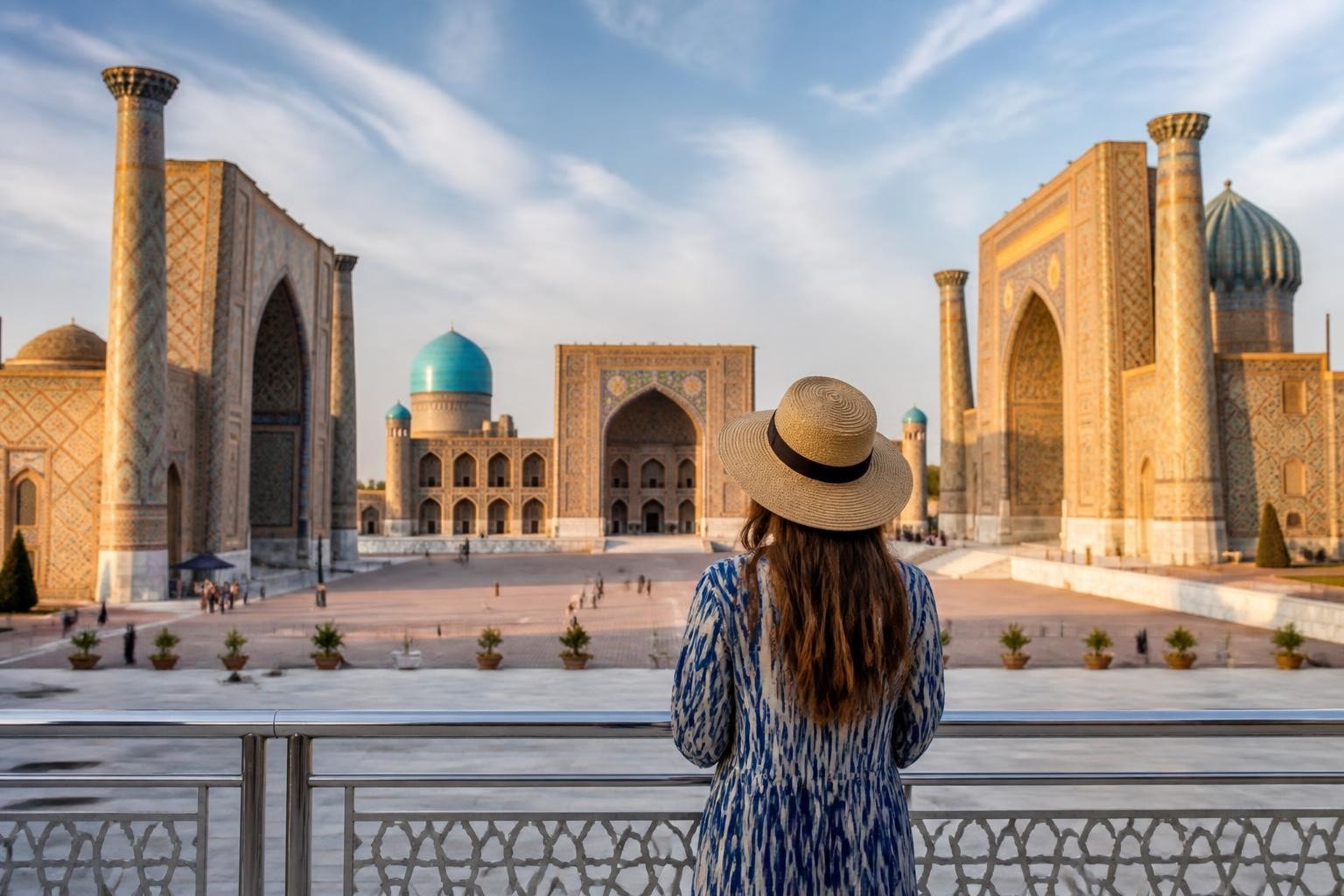
The first rays of morning sun strike the Registan's turquoise domes, casting long shadows across a plaza where emperors once held court. You're standing at the crossroads of civilisations, breathing in 2,000 years of history, and suddenly every travel documentary you've ever watched feels like a pale rehearsal for this moment. That's the power of Uzbekistan tours-they transport you not just across geography, but across time itself, to an era when this land formed the beating heart of the Silk Road. Whether you're tracing the footsteps of Tamerlane through Samarkand's architectural wonders or haggling in centuries-old bazaars, Uzbekistan offers a travel experience that feels both deeply exotic and surprisingly accessible.
Why Uzbekistan Tours Deserve Your Attention
The travel world has a curious habit of overlooking certain destinations until they suddenly explode into view. Uzbekistan is experiencing precisely that awakening, and the numbers tell a compelling story. According to official tourism statistics, visitor arrivals have surged dramatically over recent years as the country simplified visa procedures and invested heavily in tourism infrastructure.
The Silk Road Comes Alive
What sets Uzbekistan tours apart is their ability to make history tangible. You're not reading about the Silk Road in a museum-you're walking through it. The ancient cities of Samarkand, Bukhara, and Khiva have been preserved so meticulously that stepping into their old quarters feels like entering a time machine.
Key reasons travellers are choosing Uzbekistan:
- Architectural marvels unlike anywhere else on earth
- Affordability compared to other historical destinations
- Safety and welcoming hospitality culture
- Culinary traditions recognised by UNESCO
- Year-round travel possibilities with distinct seasonal charms
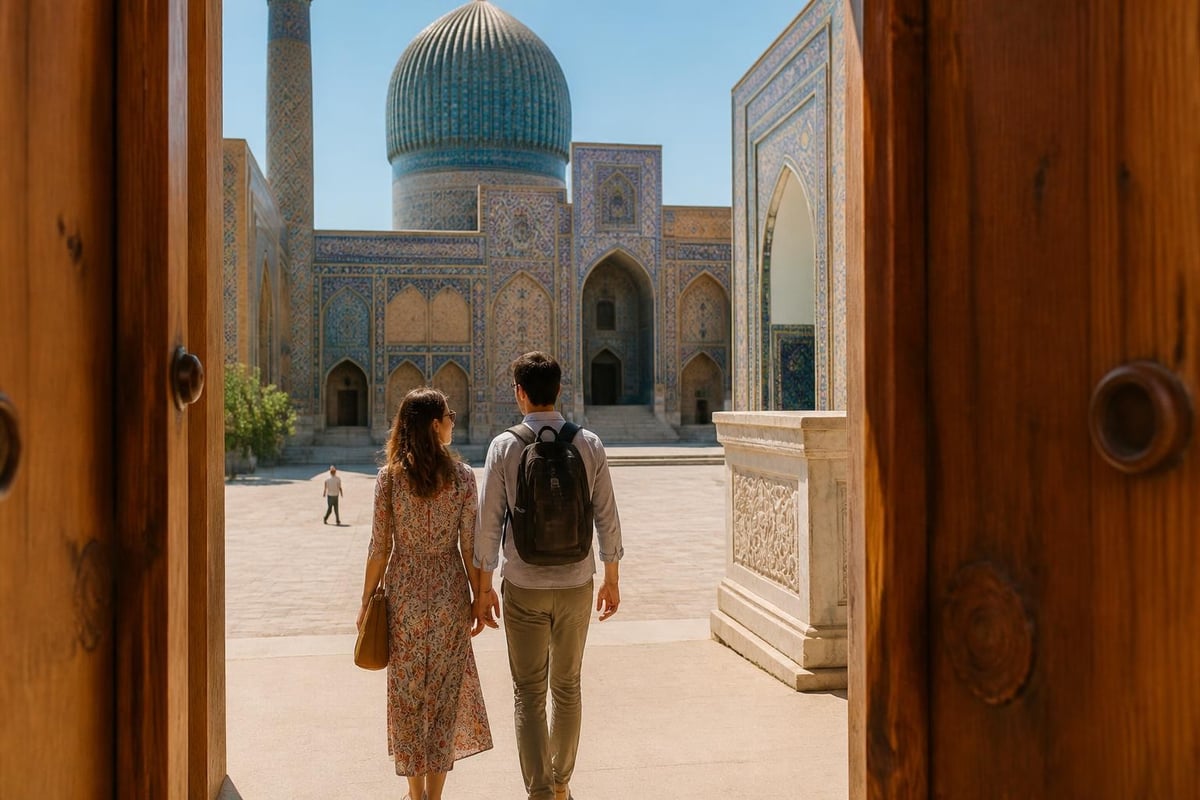
The National Geographic travel feature on Uzbekistan captures this perfectly, describing the country as a place where "the past doesn't just echo-it reverberates through every cobblestone and minaret."
Planning Your Uzbekistan Tour: Essential Practicalities
Before you lose yourself in visions of turquoise domes and spice-laden bazaars, let's address the practical foundations that make or break any journey. Planning Uzbekistan tours has become remarkably straightforward, but knowing the details saves both time and worry.
Visa Requirements and Entry
The good news? Uzbekistan has flung open its doors. Most nationalities can now apply for an e-visa through the official portal, receiving approval within days. The process is refreshingly simple-upload your documents, pay a modest fee, and receive your visa electronically. Some nationalities even enjoy visa-free entry for short stays.
Documentation checklist:
- Passport valid for at least six months beyond your travel dates
- Digital passport photograph meeting official specifications
- Proof of accommodation (hotel bookings or invitation letter)
- Travel insurance (highly recommended, sometimes required)
- Return flight confirmation
Getting There and Moving Around
Tashkent's international airport serves as the primary gateway, with increasing direct connections from major hubs in Asia, Europe, and the Middle East. Once you've arrived, domestic travel deserves careful thought. The country stretches across considerable distances, and time spent in transit is time stolen from exploration.
| Transport Option | Best For | Considerations |
|---|---|---|
| Domestic flights | Time-pressed itineraries | Limited routes, book ahead |
| High-speed rail (Afrosiyob) | Comfort and scenery | Connects major cities beautifully |
| Shared taxis | Flexibility and local colour | Negotiate prices beforehand |
| Private drivers | Customised routes | Higher cost but maximum freedom |
Uzbekistan Railways operates the modern Afrosiyob train service connecting Tashkent, Samarkand, and Bukhara in remarkable comfort. Picture yourself gliding through cotton fields and desert landscapes whilst sipping tea in a spotless carriage-it's travel as it should be.
The Classic Cities: Where All Uzbekistan Tours Lead
Every journey through Uzbekistan, no matter how creative or off-piste, gravitates toward three magnetic poles. These cities aren't just stops on an itinerary-they're the reason most people book Uzbekistan tours in the first place.
Samarkand: The Jewel of the Silk Road
Samarkand doesn't simply live up to expectations; it demolishes them. The Registan Square, with its three madrasahs forming a horseshoe of impossible beauty, represents perhaps the most photographed square in Central Asia-and photographs barely scratch the surface. The tilework, when examined closely, reveals such intricate craftsmanship that you could spend hours on a single archway.
But Samarkand extends far beyond its greatest hits. The Shah-i-Zinda necropolis climbs a hillside in a cascade of turquoise domes, each tomb more exquisitely decorated than the last. The Bibi-Khanym Mosque, once the largest in the Islamic world, still inspires awe despite centuries of earthquakes and neglect. And if you're looking to explore beyond the marquee attractions, walking tours offer an intimate perspective on neighbourhoods where traditional life continues much as it has for generations.
Bukhara: Living History
Where Samarkand dazzles, Bukhara enchants through atmosphere. The entire old city functions as an open-air museum, yet people actually live here, work here, pray in these ancient mosques. The Ark fortress has guarded the city for centuries, whilst the Poi Kalyan complex-with its towering minaret and surrounding buildings-creates architectural harmony that photographs simply cannot capture.
Don't miss in Bukhara:
- Early morning light on the Kalyan Minaret
- Sunset tea at a traditional chaikhana
- The trading domes, still functioning as markets
- Lyab-i Hauz plaza's evening promenades
- Traditional puppet performances in the old caravanserais
Khiva: The Desert Fortress
Khiva occupies a special place among Uzbekistan tours because it's been preserved almost entirely intact. Approaching Ichan-Kala (the inner city) feels genuinely like approaching a medieval walled city, because that's precisely what you're doing. Unlike Samarkand and Bukhara, which grew into modern metropolises, Khiva's old quarter remains frozen in amber.
Walking these narrow lanes at twilight, when tour groups have departed and soft light washes the clay walls golden, you'll understand why UNESCO granted it World Heritage status.
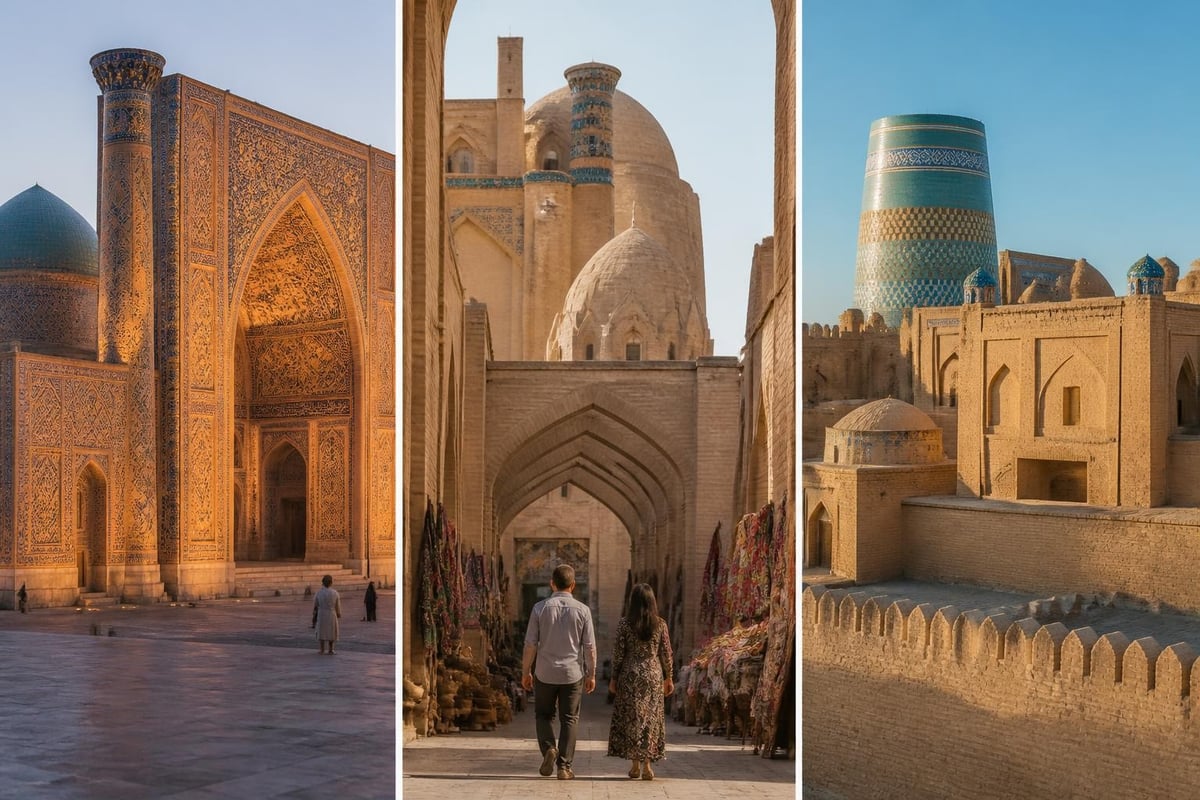
Beyond the Big Three: Hidden Gems on Uzbekistan Tours
The classic triangle gets the headlines, but venturing beyond reveals an Uzbekistan few tourists ever witness. These destinations require more effort to reach, but they reward that effort with authentic experiences and empty ruins.
The Fergana Valley
Tucked against Kyrgyzstan and Tajikistan, the Fergana Valley represents Uzbekistan at its most verdant and traditional. Silk production continues here using methods unchanged for centuries, and pottery workshops in Rishtan create ceramics using glazes whose blue matches the sky. The valley rarely features on short Uzbekistan tours, but travellers with time discover a gentler, greener side of the country.
Nukus and the Aral Sea
This journey suits the adventurous. Nukus hosts the Savitsky Museum, an extraordinary collection of Soviet-era avant-garde art that absolutely shouldn't exist in this remote location-but does, thanks to one man's vision and courage. Beyond Nukus lies the Aral Sea, or what remains of it, offering one of the planet's most sobering environmental lessons alongside otherworldly landscapes of ship graveyards and endless horizon.
| Destination | Travel Time from Tashkent | Best Season | Difficulty Level |
|---|---|---|---|
| Fergana Valley | 5-6 hours (drive) | Apr-Jun, Sep-Oct | Easy |
| Nukus | 18+ hours (train/fly+drive) | Apr-Jun, Sep-Oct | Moderate |
| Termez | 2 hours (flight) | Mar-May, Oct-Nov | Moderate |
| Shahrisabz | 2 hours from Samarkand | Apr-Oct | Easy |
Cultural Experiences That Define Uzbekistan Tours
Architecture draws visitors to Uzbekistan, but culture makes them fall in love. The country's UNESCO-recognised intangible heritage includes everything from palov (the national rice dish elevated to an art form) to specific musical traditions and craft techniques passed through generations.
Culinary Journeys
Food in Uzbekistan transcends mere sustenance. Palov (or plov) ceremonies bring communities together, with massive cauldrons cooking rice, meat, and vegetables in a symphony of spices. Each region claims its own variation, sparking friendly debates about whose version reigns supreme.
Beyond palov, the cuisine surprises Western palates pleasantly. Samsa (baked pastries filled with meat or pumpkin), lagman (hand-pulled noodles in rich broth), and shashlik (skewered grilled meats) appear on every menu. Don't overlook the bread-non, baked in traditional clay ovens, carries such significance that it's considered disrespectful to place it upside down.
Workshop Experiences
Many thoughtful Uzbekistan tours now incorporate hands-on workshops. Learn miniature painting in Bukhara's old city, try your hand at pottery in Gijduvan, or watch silk being produced from cocoon to thread in Margilan. These experiences transform passive observation into active participation, creating memories that outlast any photograph.
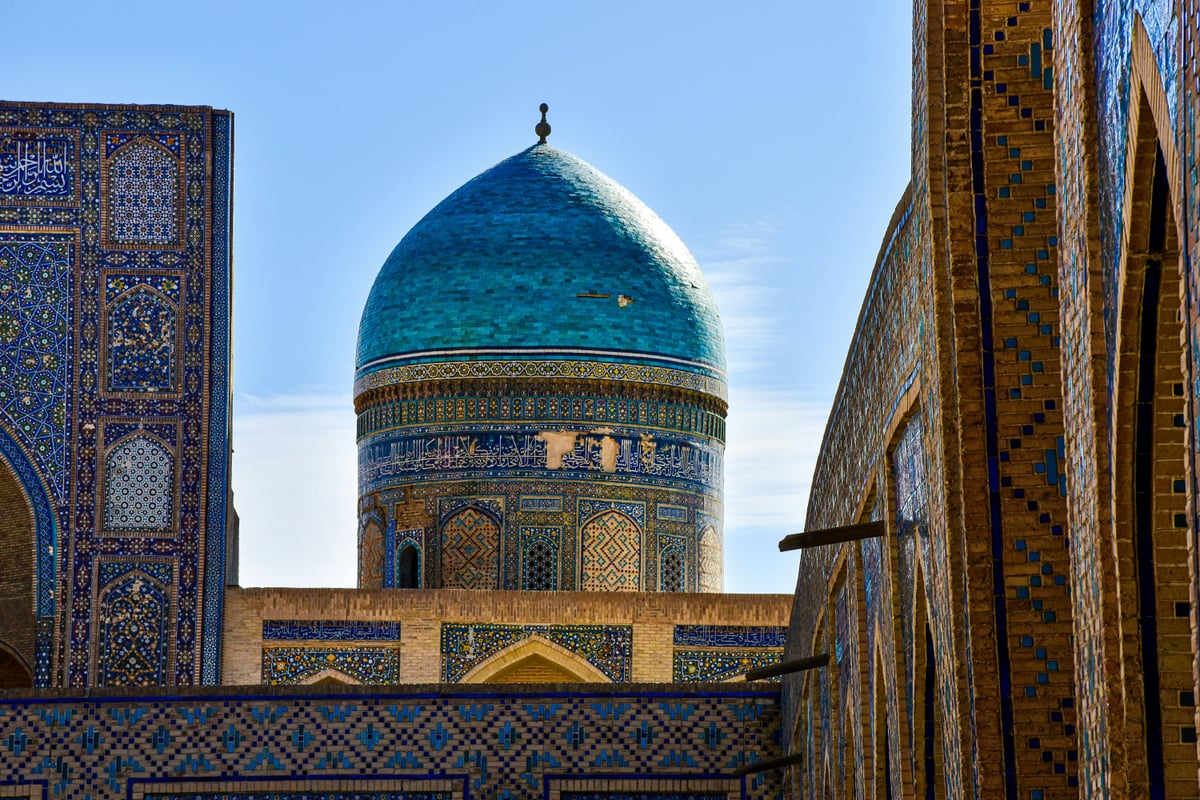
For those wanting to delve deeper into Samarkand's layered history, structured sightseeing tours offer comprehensive introductions to the city's architecture and centuries of stories. Expert guides bring the monuments to life with local legends and historical context that independent exploration simply cannot match.
Seasonal Considerations for Uzbekistan Tours
Timing makes an enormous difference to your experience. Uzbekistan experiences a continental climate with hot summers and cold winters, and choosing wisely between these extremes shapes your entire journey.
Spring (March-May):
- Perfect temperatures for exploration
- Wildflowers transform desert landscapes
- Navruz celebrations in March (UNESCO-recognised New Year festival)
- Peak season begins, book accommodation ahead
Summer (June-August):
- Intense heat, especially in July-August
- Fewer crowds, better deals
- Early morning and evening exploration essential
- Mountain regions (Chimgan, Beldersay) offer cool relief
Autumn (September-November):
- Ideal weather returns
- Harvest season brings abundant produce to markets
- Clear skies perfect for photography
- Peak season pricing
Winter (December-February):
- Cold but manageable in cities
- Snow-capped mountains frame monuments beautifully
- Dramatically fewer tourists
- Some mountain passes close
Choosing the Right Type of Uzbekistan Tour
The surge in Uzbekistan's popularity has spawned diverse tour styles, each serving different traveller preferences. Understanding these options helps you select experiences aligned with your values and interests.
Group Tours vs Independent Travel
Traditional group tours offer logistical ease and instant companionship. You'll move efficiently between highlights with accommodation, transport, and guides arranged. However, you'll sacrifice spontaneity and often rush through sites on fixed schedules.
Independent travel grants complete freedom but demands more research and occasional problem-solving. You'll navigate language barriers, arrange your own transport, and make decisions on the fly. The reward? Genuine serendipity and experiences no tour operator could programme.
Small Group and Specialist Tours
The middle path combines structure with flexibility. Small group Uzbekistan tours (typically 8-12 people) move at a more relaxed pace whilst maintaining professional organisation. Specialist tours focusing on photography, archaeology, or textiles attract like-minded travellers and expert guides who transform sites from impressive to unforgettable.
Walking Tours and Local Perspectives
Walking tours, particularly those led by local residents, offer something no coach tour ever can-genuine connection. You'll explore neighbourhoods tourists never see, hear stories passed through families, and experience hospitality in people's homes. These human connections often become a journey's most treasured memories.
The official Uzbekistan tourism board provides comprehensive resources for planning, whilst recognising that sometimes the best experiences come from simply wandering with curiosity and open eyes.
Practical Tips That Make Uzbekistan Tours Smoother
Years of travellers' collective wisdom has identified several practices that significantly improve the Uzbekistan experience. These aren't secrets, exactly, but they're not always obvious until you need them.
Money Matters
Uzbekistan uses the sum, and whilst ATMs exist in major cities, cash remains king-especially outside urban centres. US dollars (post-2013 issue, crisp notes) exchange easily. Credit cards work in upmarket hotels and some restaurants, but don't rely on them exclusively.
Connectivity and Communication
WiFi reaches most hotels and many restaurants in cities. Local SIM cards cost remarkably little and provide reliable data coverage across much of the country. Download offline maps beforehand; navigation apps sometimes struggle with Uzbekistan's evolving street systems.
Cultural Sensitivity
Uzbekistan welcomes visitors warmly but appreciates respectful behaviour. Dress modestly when visiting active mosques and shrines. Remove shoes before entering homes and some restaurants. Photography restrictions apply at some sites-always ask permission.
Language Basics
Russian serves as the common second language, whilst English spreads among younger city dwellers and tourism professionals. Learning a handful of Uzbek phrases (rakhmat for thank you, assalom alaykum for hello) generates smiles and goodwill far exceeding the minimal effort required.
The Investment Climate and Tourism's Future
Understanding Uzbekistan's tourism trajectory helps explain why now represents such an exciting time to visit. The UNWTO analysis of Uzbekistan's tourism development reveals ambitious government commitments to infrastructure, simplified regulations, and international promotion.
New hotels are rising in historic cities, airports expanding capacity, and road networks improving. This development walks a delicate line-enhancing visitor comfort whilst preserving the authenticity that makes Uzbekistan tours compelling in the first place. Visit soon, and you'll experience the sweet spot: improved accessibility without over-tourism's negative effects.
Creating Your Perfect Uzbekistan Tour Itinerary
With so much to see, prioritisation becomes essential. A well-constructed itinerary balances iconic highlights with breathing room for spontaneity and rest. Rushing through Uzbekistan defeats the purpose-this isn't a destination to tick off a list but a culture to absorb slowly.
One Week Sample: The Essentials
Days 1-3: Tashkent arrival and Samarkand (Registan, Shah-i-Zinda, Gur-e-Amir, local markets)
Days 4-5: Bukhara (Ark fortress, Poi Kalyan, trading domes, traditional crafts)
Days 6-7: Khiva (Ichan-Kala exploration) and return
Two Weeks: Deeper Immersion
Add the Fergana Valley, spend extra days in each major city for workshop experiences and day trips (Shahrisabz from Samarkand, desert fortresses from Bukhara), or venture to Nukus for the Savitsky Museum and Aral Sea region.
Three Weeks: The Complete Picture
Incorporate everything above plus lesser-known gems, allowing multiple days in favorite cities, mountain escapes, and genuine downtime. The luxury of three weeks transforms Uzbekistan tours from sightseeing marathons into genuine cultural immersion.
Uzbekistan tours offer something increasingly rare in modern travel: the chance to explore magnificent historical sites without battling crowds, to experience authentic culture that hasn't been staged for tourists, and to do so affordably. Whether you're drawn by architecture, history, cuisine, or simply the call of somewhere genuinely different, this Silk Road jewel delivers beyond expectation. For those planning to explore Samarkand specifically, Visit Samarkand provides both free and guided walking tours that reveal the city's hidden corners and centuries of stories, making the ancient capital's magic accessible to every traveller regardless of budget.