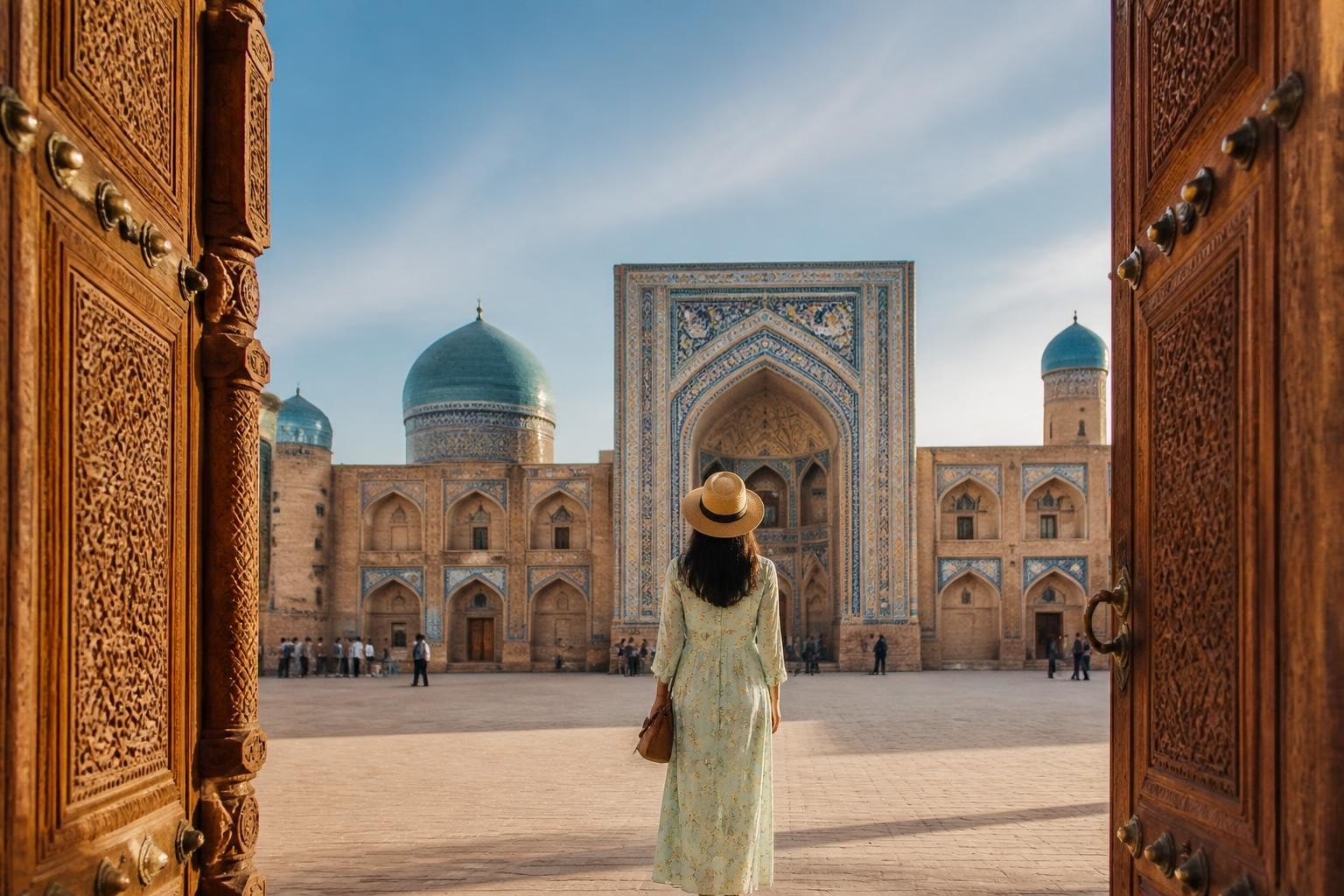
The first time I heard about Uzbekistan, I was sitting in a dusty library, poring over maps of the ancient Silk Road. The names alone seemed to shimmer with mystery: Samarkand, Bukhara, Khiva. These weren't just cities; they were doorways to another time, where traders carried precious silks and spices across unforgiving deserts, where scholars debated astronomy beneath turquoise domes, and where empires rose and fell like the sun over the steppe. Years later, standing in Registan Square as the evening light turned the madrasas to gold, I understood that discovering uzbekistan places to see isn't simply about ticking locations off a list. It's about stepping into stories that have been unfolding for millennia, stories that continue to shape the world today.
The Timeless Grandeur of Samarkand
Samarkand doesn't just welcome you; it sweeps you into its embrace like an old friend who has too many tales to share. The Registan Square stands as the beating heart of this ancient city, where three magnificent madrasas create what might be the most photographed view in Central Asia. But photographs, no matter how skilled the photographer, can't capture the feeling of standing beneath those towering portals, watching the intricate tile work shift from azure to emerald as clouds drift overhead.
Architectural Wonders That Define Centuries
The Bibi-Khanym Mosque tells a story of ambition and romance that would make any novelist envious. Built by Timur in the 14th century to honour his favourite wife, this architectural marvel was once the largest mosque in the Islamic world. Today, even in its partially restored state, it commands respect and wonder in equal measure.
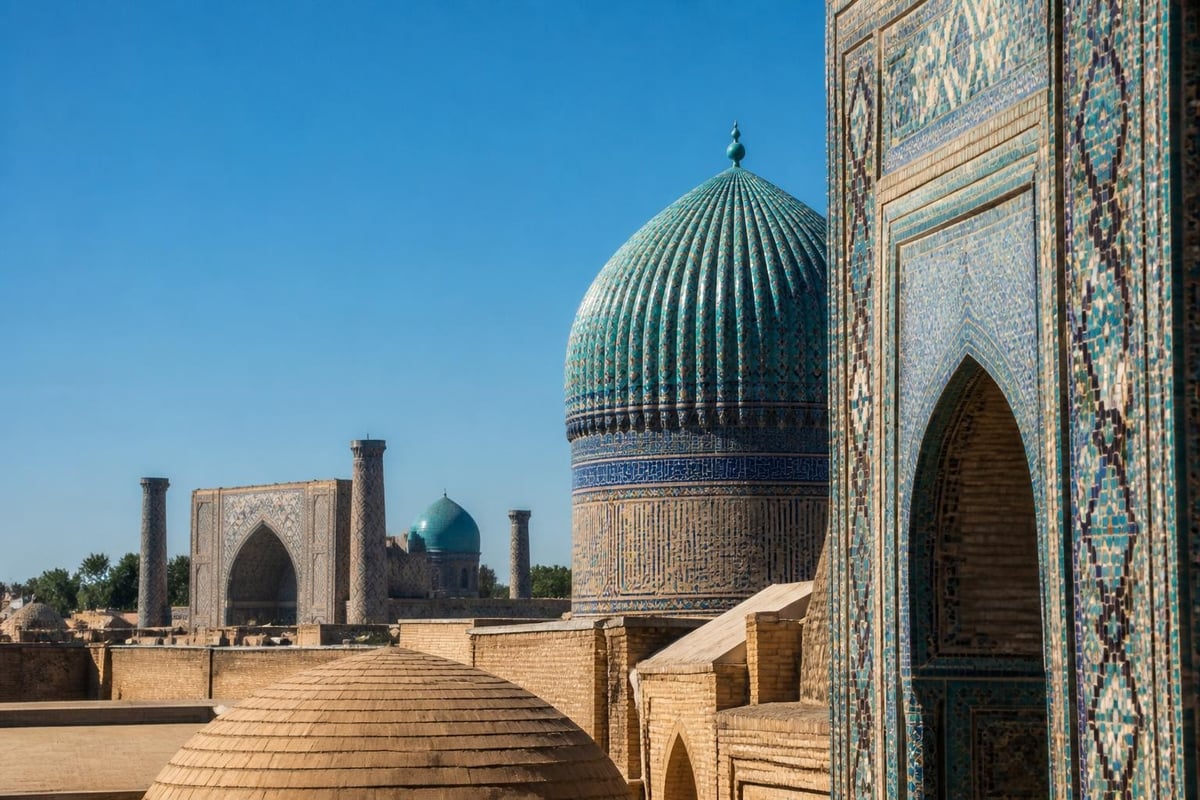
- Shah-i-Zinda necropolis: a street of mausoleums covered in some of the finest tilework you'll ever encounter
- Gur-e-Amir mausoleum: Timur's final resting place, featuring a jade tombstone and stunning interior decoration
- Ulugh Beg Observatory: testament to medieval astronomical achievement, built by Timur's scientist grandson
When exploring these uzbekistan places to see, particularly in Samarkand, you'll find that each monument connects to others through intricate webs of history, family ties, and architectural innovation. The city rewards those who take their time, who stop to notice how light plays across ceramic surfaces, who listen to the whispers of the past in quiet courtyards. Taking a free walking tour offers an excellent way to discover both the famous landmarks and the hidden corners where local life continues much as it has for centuries, revealing layers of history that guidebooks often miss.
Bukhara: Where Every Stone Has a Story
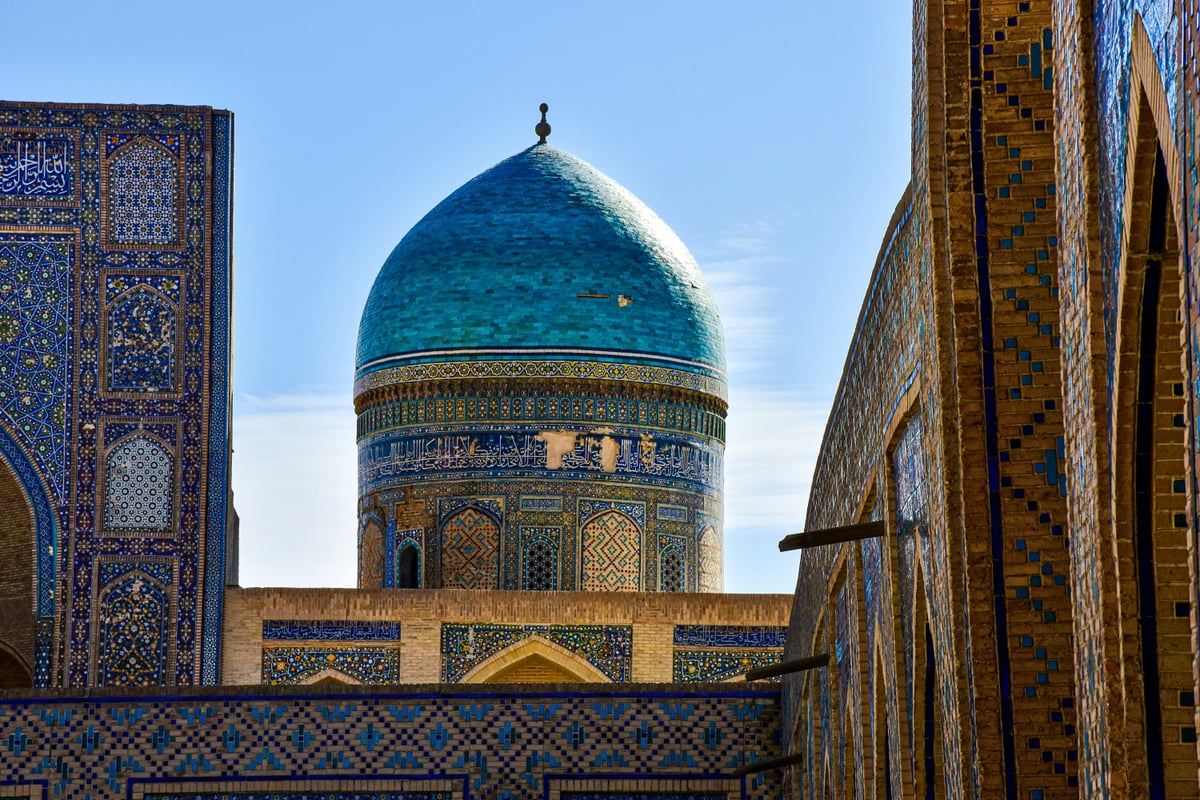
If Samarkand dazzles with grandeur, Bukhara enchants with intimacy. This city feels like a secret whispered from one traveller to another, a place where you can lose yourself in labyrinthine bazaars and emerge in courtyards that haven't changed in five hundred years. The old town is a living museum, but one where people still live, work, pray, and celebrate.
The Living Heritage of Ancient Commerce
The trading domes of Bukhara once sheltered merchants from across the known world. Today, they still buzz with commerce, though tourists have largely replaced the silk traders. Yet something essential remains: the art of conversation, of negotiation, of human connection that transforms simple transactions into relationships.
| Landmark | Era | Significance |
|---|---|---|
| Ark Fortress | 5th century onwards | Royal residence and administrative centre |
| Kalyan Minaret | 1127 | 'Tower of Death', survived Mongol destruction |
| Lyab-i Hauz | 1620 | Social heart of old Bukhara, traditional gathering place |
| Chor-Minor | 1807 | Four-towered gatehouse with unique design |
The Lonely Planet guide describes Bukhara as one of the essential uzbekistan places to see, and I couldn't agree more. Walking through its streets at dawn, when the call to prayer echoes off ancient walls and shopkeepers begin arranging their wares, you experience the city at its most authentic. The Poi Kalyan complex, with its mosque, minaret, and madrasa, creates a harmony of proportion and decoration that feels almost mathematical in its perfection, yet deeply spiritual in its impact.
Khiva: The Desert Jewel
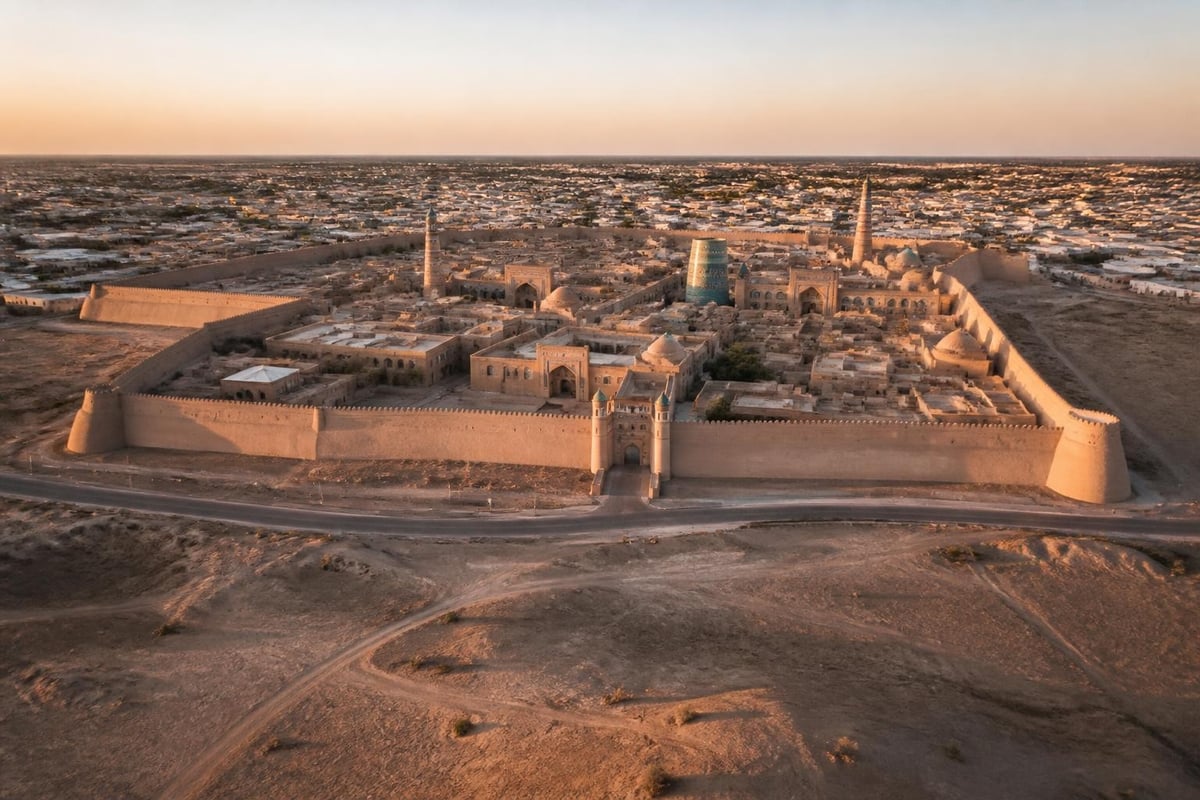
Approaching Khiva across the desert feels like watching a mirage solidify into reality. The walled city of Itchan Kala rises from the sand like something conjured by a storyteller's imagination. This is the most preserved of all the ancient Silk Road cities, a place where the past isn't commemorated but inhabited.
Stepping Through the Gates of Wonder
Passing through the western gate of Itchan Kala is like crossing a threshold between worlds. Modern Uzbekistan continues outside the walls, but inside, you walk streets that merchants and scholars travelled centuries ago. The compactness of the old town means you can explore it thoroughly on foot, discovering new details with each passing.
The Kalta Minor minaret, with its vivid blue tiles, stands as an unfinished ambition. Muhammad Amin Khan intended it to be the tallest minaret in the Islamic world, but his death halted construction. Today, this truncated tower has become one of the most recognizable uzbekistan places to see, its incompleteness somehow making it more poignant, more human.
Key sites within Itchan Kala:
- Kunya-Ark Fortress houses the Khan's former residence and administrative buildings
- Islam Khoja Minaret offers panoramic views across the desert and city
- Tash Hauli Palace showcases the opulent lifestyle of Khivan rulers
- Juma Mosque features a forest of wooden columns, each uniquely carved
Tashkent: Where Old Meets New
The capital city offers a different perspective on uzbekistan places to see, one shaped by Soviet influence and modern development alongside pockets of traditional Central Asian culture. Tashkent was largely rebuilt after a devastating earthquake in 1966, resulting in wide boulevards, Soviet-era architecture, and a distinctly different feel from the ancient Silk Road cities.
Contrasts That Define a Nation
The Chorsu Bazaar operates beneath a massive blue dome, a vibrant explosion of colours, scents, and sounds where locals shop for everything from fresh produce to traditional textiles. Here, the ancient tradition of bazaar commerce continues uninterrupted, despite the modern city rising around it. The energy is infectious, the variety overwhelming, the experience essential.
The National Geographic coverage of Uzbekistan's tourism development highlights how cities like Tashkent are working to balance modernization with cultural preservation. The Hazrat Imam Complex in the old town contains the Othman Quran, one of the world's oldest Quran manuscripts, while the Museum of Applied Arts showcases traditional Uzbek crafts in a beautifully restored 19th-century house.
The Fergana Valley: Uzbekistan's Garden
Often overlooked by rushed itineraries, the Fergana Valley represents a different aspect of uzbekistan places to see. This fertile region produces silk, ceramics, and woodwork of exceptional quality, maintaining crafts traditions that date back centuries. The valley is gentler, greener, more agricultural than the desert cities, offering insights into rural Uzbek life.
Artisan Traditions Kept Alive
Margilan has been producing silk for over two thousand years. At the Yodgorlik Silk Factory, you can watch the entire process, from cocoons to finished fabric. The artisans work with pride, their hands moving with practiced certainty, creating ikat patterns that have adorned robes and furnishings for generations.
| City | Specialty | Notable Feature |
|---|---|---|
| Margilan | Silk production | Traditional ikat weaving |
| Kokand | Historical architecture | Khudoyar Khan Palace |
| Rishtan | Ceramic work | Distinctive blue glazes |
| Andijan | Markets and trade | Jami Madrasah complex |
Kokand once ruled as the capital of an independent khanate. The Khudoyar Khan Palace, with its 113-meter-long facade covered in vivid tiles, provides a glimpse into 19th-century royal life. The Friday Mosque, built in 1809, demonstrates a different architectural style from western Uzbekistan, reflecting the valley's unique cultural influences.
Natural Wonders Beyond the Cities
While architectural marvels dominate most lists of uzbekistan places to see, the country's natural landscapes deserve equal attention. The Nuratau Mountains, northeast of Samarkand, offer hiking opportunities through landscapes where communities maintain traditional pastoral lifestyles. Here, you might encounter the rare Severtzov sheep or explore petroglyphs left by ancient inhabitants.
Lakes, Mountains, and Desert Landscapes
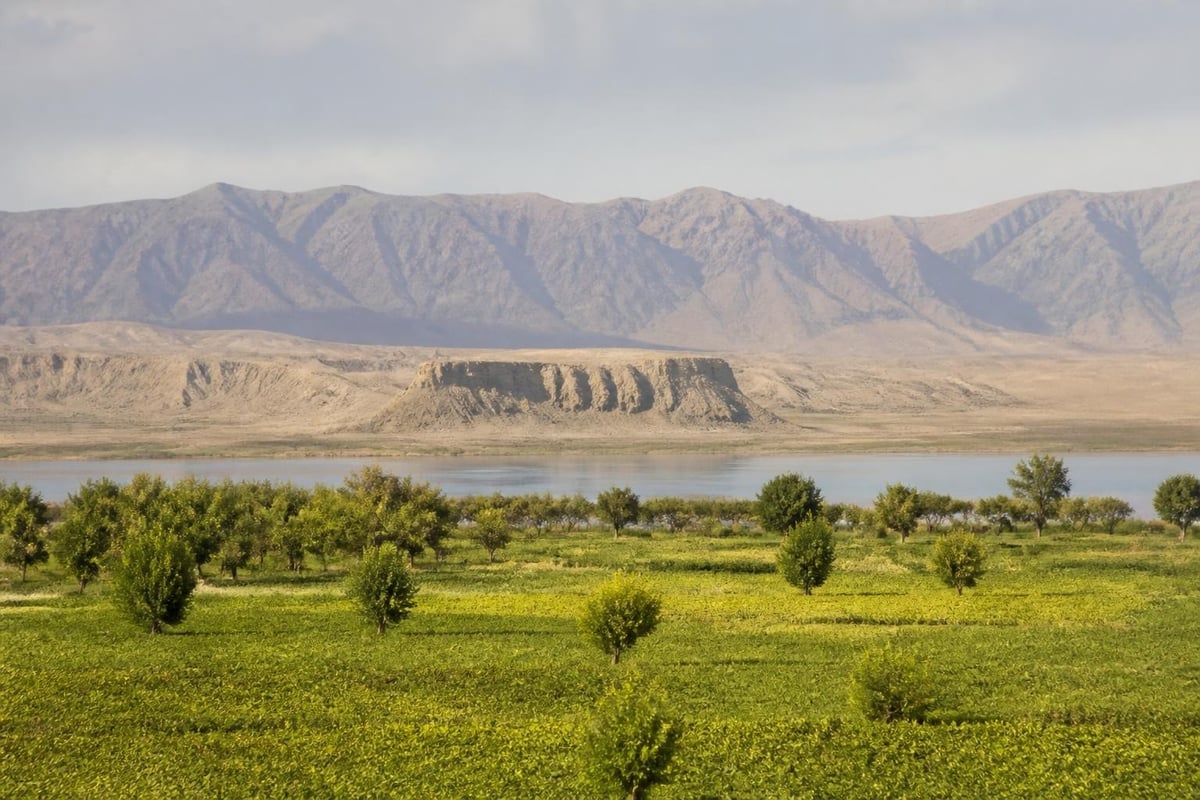
The Aral Sea disaster represents one of the 20th century's greatest environmental catastrophes, yet the region draws visitors seeking to understand this tragedy and witness ongoing restoration efforts. The abandoned ships at Moynaq create a haunting memorial to what was once the world's fourth-largest lake.
- Charvak Reservoir: escape the summer heat in this mountain reservoir near Tashkent
- Chimgan Mountains: skiing in winter, hiking and rock climbing in summer
- Aydar Lake: bird watching paradise in the Kyzylkum Desert
- Zarafshan Mountains: remote trekking through peaks reaching over 5,000 meters
Lake Aydarkul, formed accidentally from irrigation overflow, has become an unexpected natural haven. The desert lake attracts migratory birds and provides opportunities for overnight stays in traditional yurts, offering a taste of nomadic life.
Planning Your Journey Through History
The official Uzbekistan tourism portal provides comprehensive information about accessing these diverse uzbekistan places to see, including practical details about visas, transportation, and seasonal considerations. The country has made significant strides in opening up to tourism, simplifying visa processes and improving infrastructure.
Timing and Logistics Matter
Spring (April to June) and autumn (September to October) offer the most comfortable weather for exploration. Summer temperatures in the desert cities can exceed 40°C, while winter brings surprising cold. The shoulder seasons provide pleasant temperatures, clear skies, and the added benefit of fewer tourists at major sites.
Travel considerations:
- High-speed trains now connect Tashkent, Samarkand, and Bukhara efficiently
- Shared taxis and marshrutkas serve smaller destinations
- Accommodation ranges from luxury hotels to family-run guesthouses
- English is increasingly spoken in tourist areas, though Russian and Uzbek dominate
- The som has replaced the dollar as the practical currency for most transactions
According to recent tourism data, Uzbekistan welcomed over six million visitors in recent years, with infrastructure continuing to develop. The World Bank’s heritage and tourism development analysis highlights ongoing efforts to balance preservation with accessibility, ensuring these precious sites survive for future generations.
Cultural Immersion Beyond the Monuments
The most memorable uzbekistan places to see often turn out to be unexpected moments: sharing tea with a ceramicist in his workshop, watching bread being baked in a traditional tandir oven, hearing folk songs performed in a madrasa courtyard. The country's hospitality traditions mean locals frequently invite travellers to share meals or celebrations, offering glimpses into daily life that no guidebook can replicate.
Markets, Music, and Local Life
Every city has its central bazaar, but these are far more than shopping destinations. They're social hubs where news spreads, deals are negotiated, and the rhythms of community life play out. The produce sections burst with pomegranates, melons, and dried fruits. The spice stalls perfume entire alleyways. The bread vendors stack their rounds into architectural sculptures.
Traditional music performances, from classical shashmaqom to folk songs, occur regularly in cultural centres and restaurants. The haunting sound of the dutar, a two-stringed lute, accompanies storytelling traditions that preserve legends and historical accounts passed down through generations.
The Silk Road Legacy Lives On
Understanding the historical context enriches any visit to uzbekistan places to see. The Encyclopaedia Britannica’s overview of Uzbekistan's history explains how this land's position at the crossroads of East and West shaped its culture, architecture, and identity. The Silk Road wasn't a single path but a network of routes where goods, ideas, and beliefs flowed in all directions.
The madrasas that dot every major city weren't just religious schools but centres of learning where mathematics, astronomy, medicine, and philosophy flourished. The Central Asian Renaissance, centred in cities like Samarkand and Bukhara, produced scholars whose work influenced European and Asian thought for centuries. This intellectual legacy adds depth to architectural appreciation, reminding us that these buildings housed minds that expanded human knowledge.
Exploring uzbekistan places to see means engaging with this layered past while recognizing how it continues to shape the present. Modern Uzbekistan negotiates between preserving its heritage and building its future, between maintaining traditions and embracing change. This tension creates a dynamic, sometimes contradictory, always fascinating travel experience.
Uzbekistan offers far more than beautiful buildings and exotic landscapes; it provides a journey through human achievement, ambition, and resilience across millennia. Whether you're drawn to architectural grandeur, artisan traditions, natural beauty, or simply the thrill of discovery, this remarkable country delivers experiences that linger long after you've returned home. If you're ready to explore Samarkand's wonders with knowledgeable local guides who can reveal both famous landmarks and hidden corners, Visit Samarkand offers accessible walking tours that bring the city's rich history and vibrant culture to life, making your journey through these ancient streets truly unforgettable.