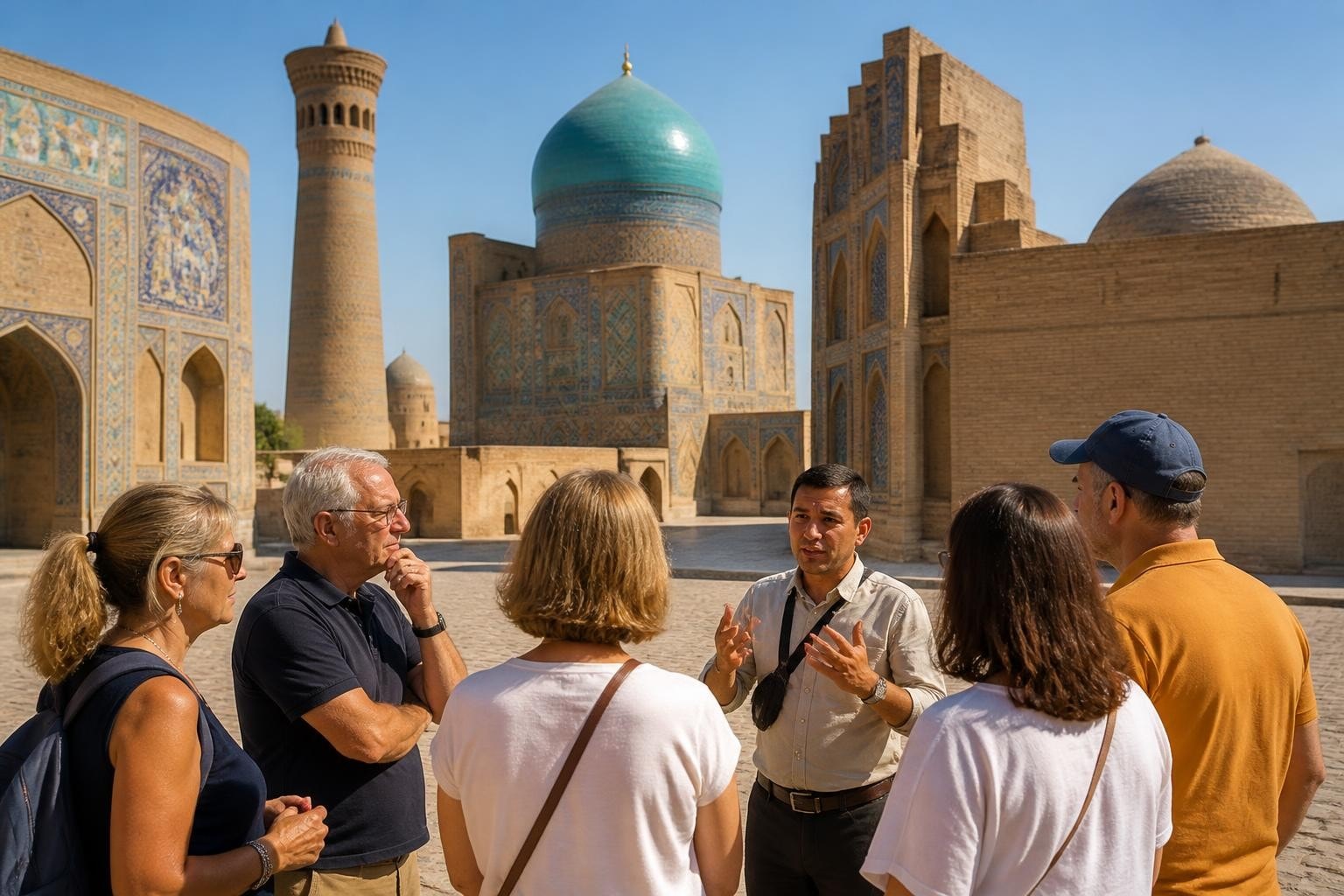
Standing beneath the turquoise domes of Registan Square, watching the late afternoon sun paint the tilework in shades of gold and amber, I realized why uzbekistan group tours have become one of Central Asia's most sought-after travel experiences. Around me, a dozen fellow travellers stood equally mesmerized, our guide weaving tales of Tamerlane and the ancient Silk Road with such passion that the centuries seemed to melt away. This wasn't just sightseeing. This was stepping into a living storybook, and we were turning the pages together.
The renaissance of Uzbekistan as a premier travel destination has transformed how people explore this crossroads of civilizations. Where solo travellers once struggled with language barriers and complex logistics, group tours now offer a seamless gateway into a land where every city holds a thousand stories, every bazaar hums with centuries of commerce, and every meal becomes a celebration of hospitality.
The Irresistible Appeal of Exploring Together
Uzbekistan group tours solve a puzzle that many independent travellers face: how to experience the depth of a culture without years of research or fluency in Uzbek or Russian. The magic lies in numbers, yes, but more importantly, in the collective curiosity of kindred spirits united by wanderlust.
Shared Discovery, Amplified Wonder
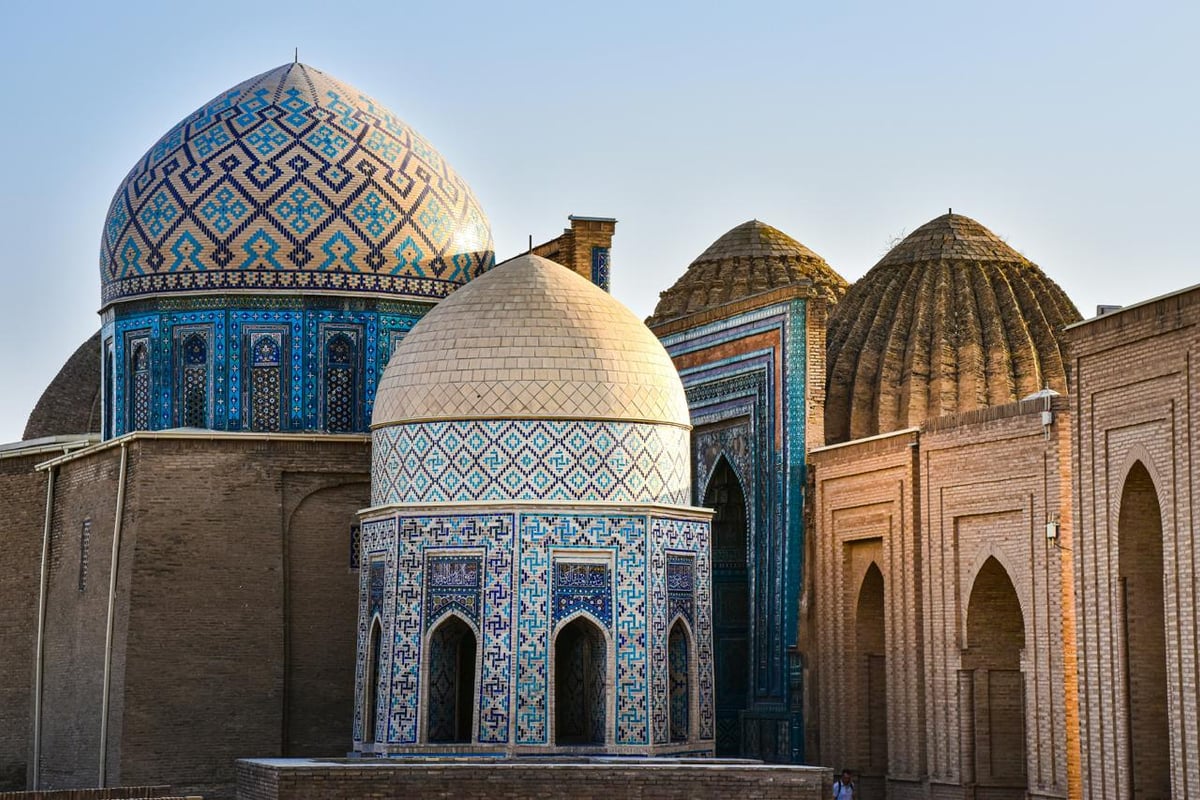
When you witness the Shakhi-Zinda necropolis with a group, something remarkable happens. One person notices the intricate geometry of the tilework. Another spots the Persian calligraphy. Someone else asks about the symbolism of the colours. Your guide responds to each question, and suddenly everyone's understanding deepens.
The domestic tourism programs developed by Uzbekistan's tourism board demonstrate how group experiences can be structured to maximize both cultural immersion and practical comfort. These frameworks ensure that travellers gain authentic insights whilst navigating unfamiliar territory with confidence.
The Economics of Exploration
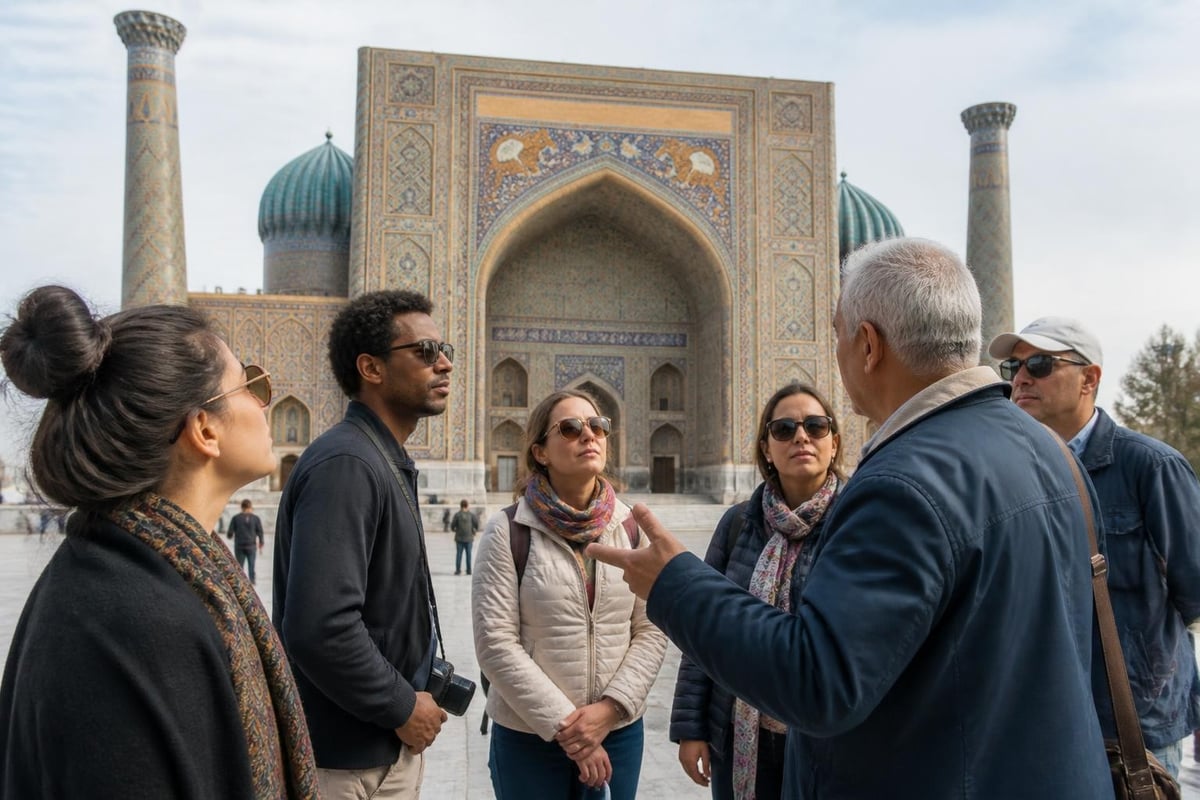
Let's talk practicalities. Travelling through Uzbekistan independently means arranging separate transport between Tashkent, Samarkand, Bukhara, and Khiva. You'll negotiate taxi fares, book individual accommodation, hire private guides at each site, and likely pay premium prices for one-off services.
Group tours redistribute these costs across multiple travellers:
- Shared transportation (comfortable coaches between cities, reducing per-person expense)
- Bulk accommodation bookings (better rates at quality hotels)
- Expert guides included (no need to hire separately at each monument)
- Group dining experiences (access to traditional meals at family homes or local restaurants)
- Skip-the-queue arrangements (entrance fees negotiated in advance)
One couple I met in Bukhara had attempted solo travel for three days before joining a group. "We spent more in those three days than the entire week-long tour cost," they admitted, "and we saw half as much."
Crafting the Perfect Itinerary
The best uzbekistan group tours don't just tick off UNESCO sites. They weave together architecture, cuisine, craft traditions, and personal encounters into a narrative that makes sense of this complex region.
The Classic Silk Road Circuit
Most comprehensive tours follow the ancient trade routes, and with good reason. This itinerary has stood the test of time because it captures Uzbekistan's essence:
| City | Days | Highlights | Cultural Experiences |
|---|---|---|---|
| Tashkent | 1-2 | Modern capital, Chorsu Bazaar, metro stations | Soviet-era architecture, contemporary Uzbek life |
| Samarkand | 2-3 | Registan Square, Gur-e-Amir, Bibi-Khanym | Artisan workshops, bread-baking demonstrations |
| Bukhara | 2-3 | Historic centre, Ark Fortress, trading domes | Traditional hammam, miniature painting studios |
| Khiva | 1-2 | Ichon-Qala, Juma Mosque, city walls | Carpet weaving, evening folklore performances |
The rhythm matters as much as the destinations. After a morning exploring Shah-i-Zinda's necropolis, a good tour builds in time for tea at a chaikhana, letting conversations flow and impressions settle. Rushing from monument to monument defeats the purpose.
Beyond the Tourist Trail
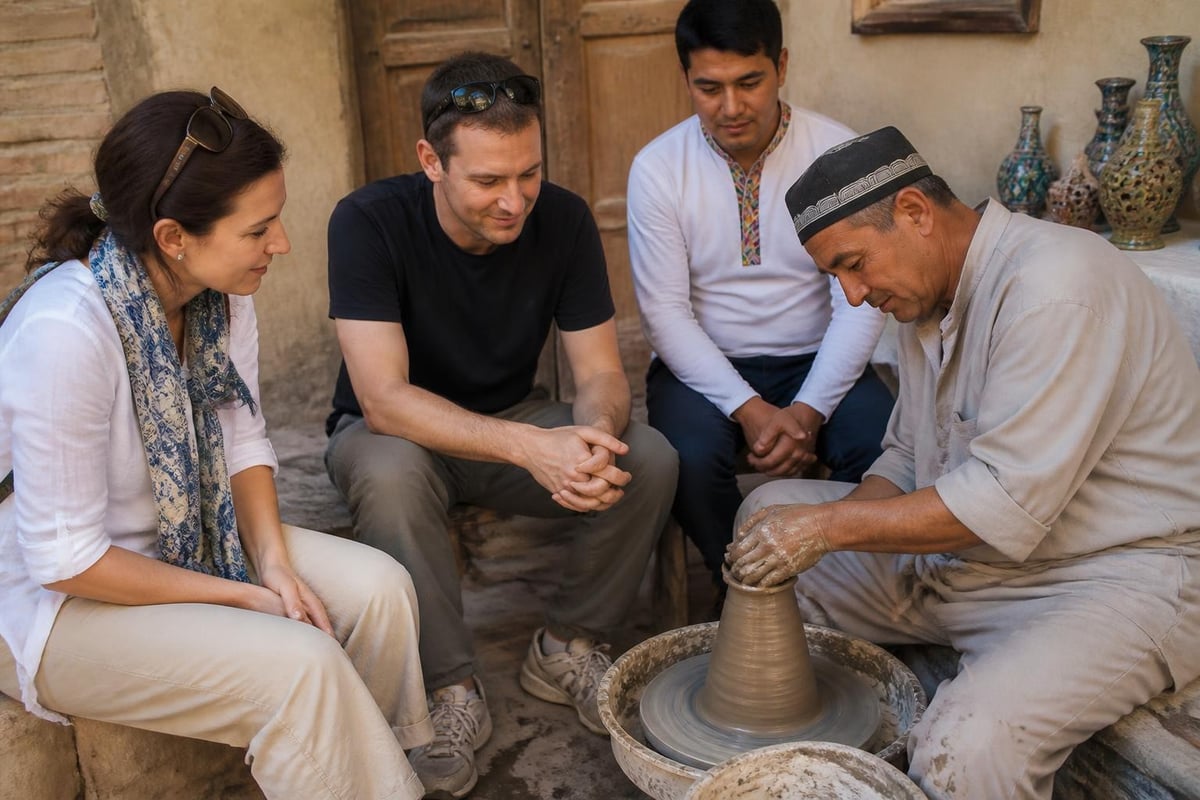
Forward-thinking operators now include experiences that independent travellers rarely access. Village homestays in the Nuratau Mountains. Meals with families who've preserved traditional Uzbek cuisine. Visits to ceramics workshops where masters still use 700-year-old techniques.
I joined a group that spent an afternoon in a village outside Samarkand, learning to make plov with a grandmother whose recipe had been passed down through seven generations. Sixteen of us crowded into her courtyard, chopping carrots and questioning the precise moment to add the rice. That meal, cooked together and eaten family-style, taught us more about Uzbek culture than any museum could.
The Human Element: Guides Who Transform Journeys
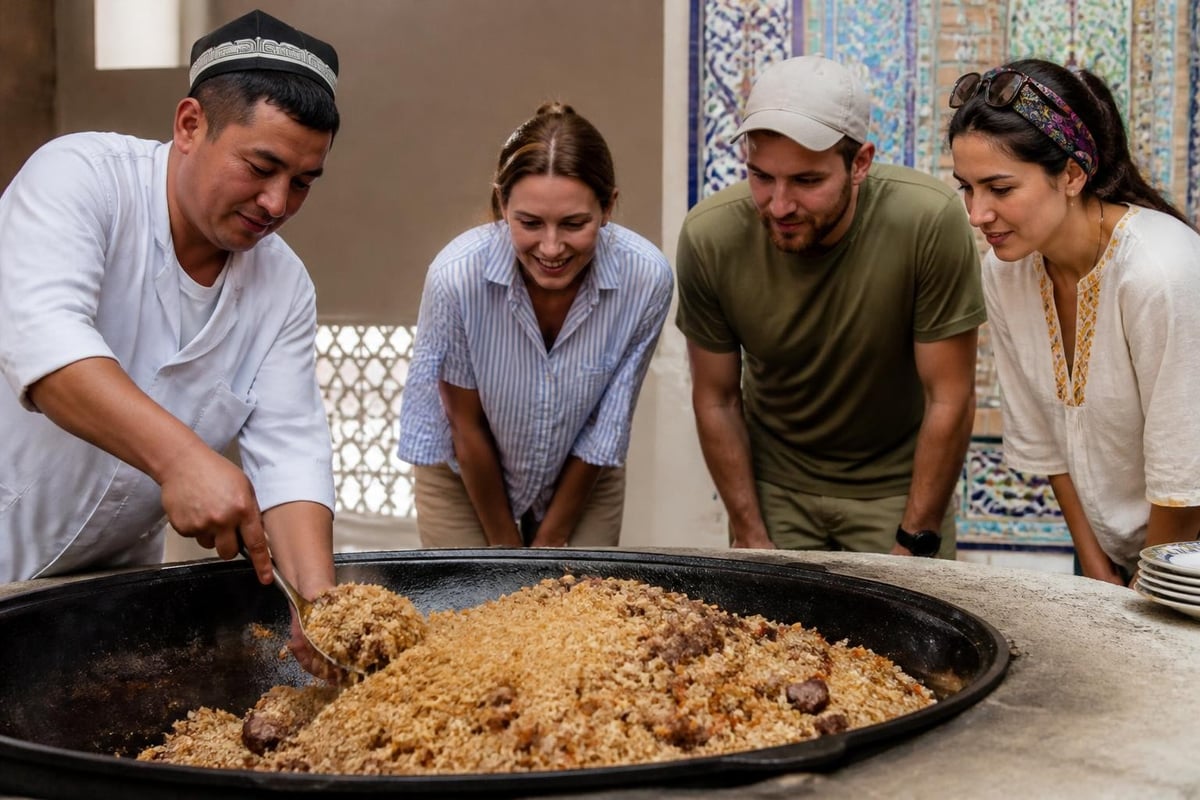
An ordinary tour guide recites facts. An extraordinary guide transforms monuments into stories, dates into dramas, and strangers into friends. Uzbekistan group tours rise or fall on this human element.
What Separates Good Guides from Great Ones
Great guides possess three qualities:
- Deep historical knowledge rooted in academic study and personal research
- Storytelling ability that makes ancient history feel immediate and relevant
- Cultural sensitivity that helps visitors understand context without judgment
Our guide in Samarkand, Dilnoza, embodied all three. At the Ulugh Beg Observatory, she didn't just explain that Ulugh Beg was a 15th-century astronomer. She described how he risked his life pursuing forbidden knowledge, how his star charts were more accurate than European equivalents made a century later, and how his murder by religious zealots echoed through Uzbek consciousness even today.
When someone asked about the role of women in historical Uzbekistan, Dilnoza's answer spanned warrior queens, scholarly poets, and the complex realities of various eras. She neither sugar-coated difficulties nor reduced women to victims. History, she reminded us, is always more nuanced than we expect.
The recent government initiatives to professionalize tourism services include enhanced guide training programs. These investments show in the quality of cultural interpretation visitors now receive.
Group Dynamics: The Social Architecture of Tours
Twenty strangers boarding a coach in Tashkent. By Khiva, they're sharing meals, swapping travel stories, and promising to stay in touch. This transformation is no accident. It's built into how well-designed uzbekistan group tours function.
Size Matters
- Small groups (8-12 people): More intimate, flexible scheduling, easier restaurant bookings, stronger group bonds
- Medium groups (15-20 people): Good balance of social variety and manageability, economies of scale
- Large groups (25+ people): Lower costs but less flexibility, potential for feeling anonymous
I've experienced all three. Small groups foster deeper conversations and can pivot when someone discovers a fascinating side street. Large groups offer more social variety but lose some spontaneity. Most operators find 15-18 participants the sweet spot.
Managing the Mix
Age ranges, travel experience levels, and interest areas all shape group chemistry. A tour attracting mostly photography enthusiasts will move differently than one drawing history buffs. The best operators are transparent about their target audience, helping you choose a group aligned with your interests.
Practical Logistics That Make or Break Experiences
The romance of Silk Road exploration meets the reality of border crossings, hotel check-ins, and meal planning. Professional tour operators handle these practicalities so seamlessly you barely notice them.
Transportation Between Cities
Modern coaches with air conditioning have replaced the cramped marshrutkas of earlier decades. The improvements in aviation infrastructure also mean some tours include internal flights, though many travellers prefer overland journeys for the landscapes and roadside encounters.
The four-hour drive from Samarkand to Bukhara becomes an experience in itself:
- Tea stops at roadside chaikhanas
- Views of cotton fields and rural villages
- Conversations with fellow travellers
- Gradual transition from Samarkand's grandeur to Bukhara's intimate charm
Accommodation Standards
Group tours typically use three- to four-star hotels, though luxury options exist. The key is location. A hotel within walking distance of Bukhara's historic centre is worth more than a five-star resort on the outskirts.
| Accommodation Type | Advantages | Considerations |
|---|---|---|
| Modern hotels | Reliable amenities, international standards | Less atmospheric, can feel generic |
| Boutique guesthouses | Local character, personalized service | Variable standards, limited facilities |
| Historic caravanserais | Authentic atmosphere, central locations | Sometimes basic, historic buildings may lack modern comforts |
Navigating Health and Safety
The CDC guidance for Uzbekistan covers routine vaccinations and food safety precautions. Group tours have the advantage of vetted restaurants and bottled water supplies, reducing common travel health concerns.
Smart operators brief groups on safe eating practices (cooked food is generally safe; be cautious with raw vegetables unless properly washed) and ensure access to medical support if needed.
Cultural Sensitivity and Meaningful Exchange
Tourism can connect cultures or commodify them. The best uzbekistan group tours strive for the former, creating encounters that respect local communities whilst offering genuine insight.
Mosque Etiquette and Sacred Spaces
Visiting active mosques requires awareness. Most tours provide guidance:
- Women should carry headscarves (many mosques provide them)
- Remove shoes before entering prayer halls
- Avoid visiting during prayer times unless explicitly welcome
- Photography rules vary; always ask permission
I watched one guide gently correct a group member about to photograph worshippers without asking. "These are not exhibits," she explained kindly. "They're our neighbours in prayer." The group member apologized, and the moment became a teaching opportunity for everyone.
Supporting Local Economies Authentically
When your group stops at a ceramics workshop, are you supporting a living craft tradition or a tourist trap? The distinction matters. Ethical operators partner with genuine artisans, ensuring fair compensation and authentic experiences.
Samarkand's craft workshops offer a perfect example of this balance. Free walking tours have pioneered accessible ways for all visitors to engage with the city's artisan traditions, from paper-making to silk weaving, without the pressure of hard-sell souvenir pitches.
Seasonal Considerations and Timing
Uzbekistan's continental climate creates distinct travel seasons, each offering different advantages for uzbekistan group tours.
Spring (April-May): The Sweet Spot
Temperatures hover in the pleasant 20-25°C range. The countryside blooms. Tourist numbers are manageable. This is peak season for good reason.
Spring advantages:
- Comfortable weather for walking tours
- Fruit blossoms in the valleys
- Nowruz (Persian New Year) celebrations if visiting in late March
- Good availability of tours before summer crowds
Autumn (September-October): The Insider's Choice
Slightly fewer tourists than spring, but equally pleasant weather. The harvest season means exceptional produce in the markets and spectacular plov made with fresh ingredients.
Summer (June-August): Heat and Strategies
Temperatures can exceed 40°C. Not ideal for all travellers, but tours adapt with early morning starts, midday breaks, and evening explorations. Summer also means longer daylight hours and some festivals.
Winter (November-March): The Bold Choice
Cold but clear. Far fewer tourists. Hotels offer discounts. Snow on the mountains creates photographic opportunities. You'll need warm clothes, but you'll have monuments largely to yourself.
What the Data Tells Us
The World Bank’s analysis documents Uzbekistan's tourism surge. Visitor numbers have grown exponentially since visa liberalization in 2018, with group tours accounting for a significant portion of this growth.
The statistics reveal not just quantity but quality. Travellers are staying longer, spending more, and visiting beyond the main cities. Group tours facilitate this deeper exploration by handling logistics that would daunt independent travellers.
Pre-Departure Preparation: Setting Yourself Up for Success
The homework you do before boarding that flight to Tashkent significantly impacts your experience.
Essential Documentation
The UK Foreign Office guidance outlines current visa requirements. Many nationals now receive visa-free entry for up to 30 days, but checking current regulations is essential.
Checklist for group tour participants:
- Valid passport (at least 6 months remaining)
- Visa (if required for your nationality)
- Travel insurance with medical coverage
- Photocopies of key documents
- Emergency contact details for your tour operator
Packing Wisdom
Experienced travellers on uzbekistan group tours pack strategically:
- Layered clothing (mornings can be cool even when afternoons are warm)
- Modest attire (lightweight long trousers or skirts, shirts covering shoulders)
- Comfortable walking shoes (you'll cover serious ground exploring medressas and bazaars)
- Sun protection (hat, sunglasses, high-SPF sunscreen)
- Small daypack (for water, camera, and purchases)
The Solo Traveller's Dilemma: To Supplement or Not?
Many group tours apply single supplements (additional charges for solo travellers not sharing rooms). This raises costs but guarantees privacy and space for introverts to recharge between group activities.
Some operators offer shared accommodation pairings, matching solo travellers with roommates to avoid supplements. Success depends on compatible matches and communication.
My advice for solo travellers considering uzbekistan group tours: factor the supplement into your budget calculation, but recognize that group tours offer solo explorers built-in companionship without the loneliness that can accompany individual travel in countries with significant language barriers.
Extending Your Journey: Add-On Opportunities
The core Silk Road circuit can be expanded with extensions that deepen specific interests:
The Fergana Valley
Less visited but extraordinarily beautiful, the Fergana Valley offers:
- Traditional ceramics in Rishtan
- Silk production in Margilan
- Mountain scenery and hiking opportunities
- A glimpse of rural Uzbek life
The Aral Sea Region
A sobering but important environmental story. Some tours include visits to the former fishing towns now stranded in the desert, offering perspectives on ecological disaster and resilience.
Turkmen Border Crossings
Adventure-focused tours might continue into Turkmenistan, though visa complexities make this challenging. Uzbekistan-focused itineraries typically concentrate on seeing this country thoroughly rather than rushing across borders.
Food: The Delicious Thread
Every uzbekistan group tour is fundamentally a culinary journey. Meals bring the group together and reveal cultural layers that monuments cannot.
Signature Dishes You'll Encounter
- Plov (osh): The national dish, a rice pilaf with meat, carrots, and spices, cooked differently in each region
- Shashlik: Grilled meat skewers, perfect with fresh bread and onions
- Lagman: Hand-pulled noodles in a rich, spiced broth
- Samsa: Baked pastries filled with meat, pumpkin, or potato
- Non: The ever-present flatbread, baked in tandoor ovens
Group tours often include at least one traditional meal in a local home, where you'll discover that Uzbek hospitality means tables groaning under the weight of food and hosts who won't let your tea glass empty.
Dietary Accommodations
Vegetarians sometimes struggle in a meat-centric cuisine, but tour operators increasingly accommodate dietary requirements. Communication during booking is essential. Most restaurants can prepare vegetable plov, salads, and bread-based dishes.
Building Cultural Competence Before You Go
Lonely Planet’s destination guide offers background reading, but I'd also suggest:
- Learning basic Russian or Uzbek phrases (hello, thank you, please)
- Reading about Tamerlane and the Timurid Renaissance
- Understanding Islam's role in Central Asian identity
- Familiarizing yourself with Soviet history in the region
This context transforms monuments from pretty backdrops into meaningful historical witnesses. When you stand in Registan Square knowing that Ulugh Beg once taught astronomy there, that Tamerlane's conquests funded its construction, and that Soviet restoration saved it from collapse, every tile becomes a story.
The Value Proposition: What You're Really Buying
Uzbekistan group tours aren't just about seeing sights. You're purchasing:
- Access: Entry to places and experiences difficult to arrange independently
- Expertise: Professional guides who've spent years studying their subject
- Efficiency: Optimized itineraries that maximize limited vacation time
- Safety: Vetted transport, accommodation, and activities
- Community: Shared experiences with fellow travellers
- Peace of mind: Problem-solving support if anything goes wrong
When my group's coach broke down halfway to Khiva, our operator had a replacement vehicle arrive within two hours. We barely missed a beat. That's what professional tour management delivers.
Post-Tour: The Journey Continues
The best uzbekistan group tours don't end when you board your flight home. Friendships forged over plov and shared wonder at architectural masterpieces often endure.
I'm still in contact with people I met in Samarkand three years ago. We share travel tips, recommend books, and periodically discuss returning to explore more of Central Asia together. The group dynamic that seemed contrived at first becomes genuine connection through shared discovery.
Uzbekistan group tours transform ancient history into living experience, weaving together architecture, cuisine, craft traditions, and human connection into journeys that satisfy both the practical traveller and the curious soul. Whether you're drawn to Samarkand's turquoise domes, Bukhara's labyrinthine medressas, or the simple pleasure of sharing plov with new friends, travelling in a group unlocks depths that solo exploration can rarely match. If you're ready to begin your own Silk Road story, Visit Samarkand offers expertly guided walking tours that bring the city's rich heritage to life, with both complimentary and extended options designed to match every interest and schedule.