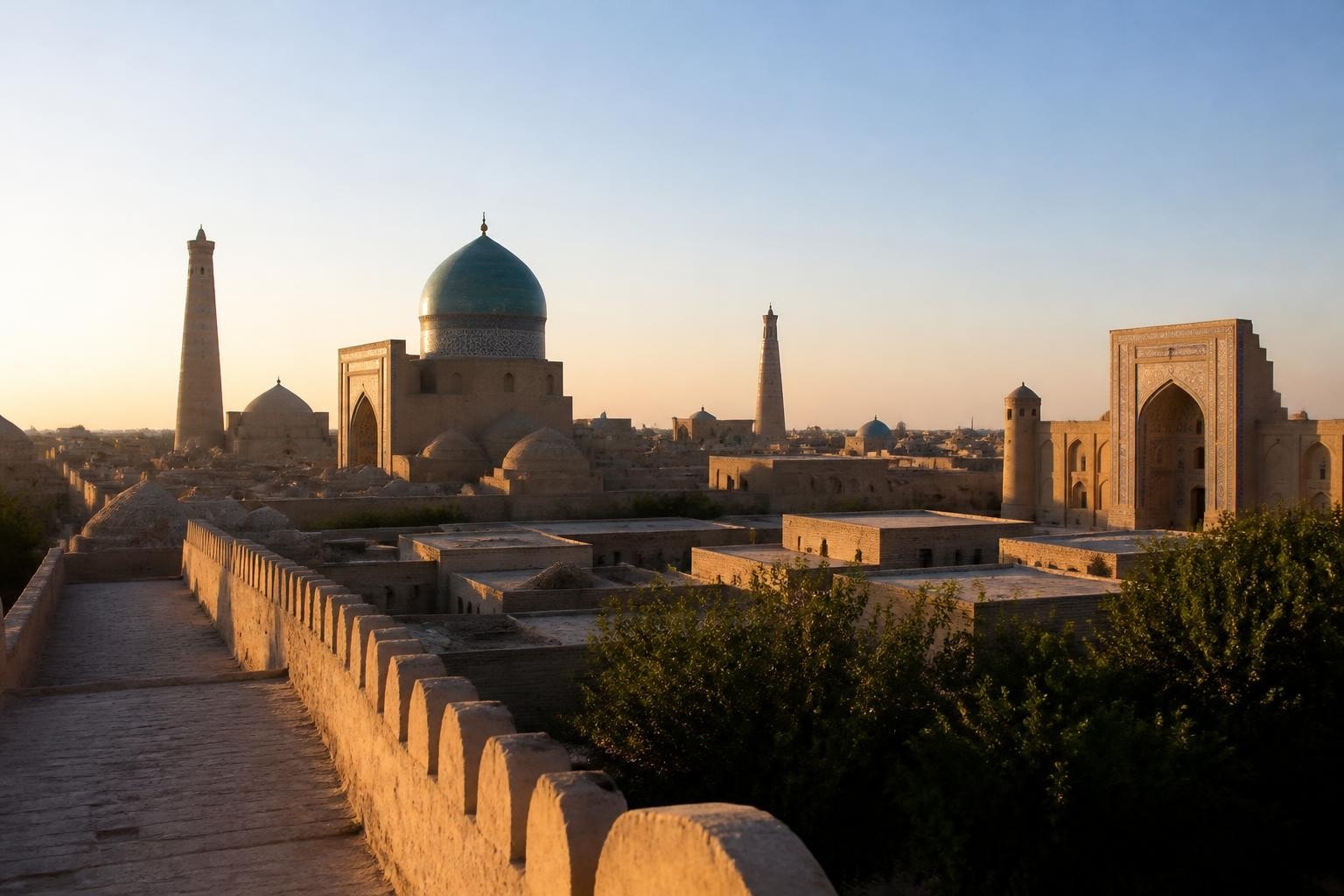
The dusty caravanserais of Central Asia once echoed with the voices of merchants from Damascus, Chang'an, and Delhi, their laden camels swaying beneath bundles of silk, spices, and secrets. Today, the silk road Uzbekistan traversed remains one of history's most captivating narratives, a story written in turquoise domes, intricate tilework, and the weathered stones of cities that served as the beating heart of transcontinental trade. For modern travellers seeking to walk in the footsteps of ancient traders, Uzbekistan offers an unparalleled window into this legendary network, where every cobblestone and carved archway whispers tales of empires, innovation, and cultural exchange.
The Historical Tapestry of Trade Routes
The silk road Uzbekistan experienced wasn't a single road at all, but rather a vast network of interconnected routes stretching from the Mediterranean to East Asia. Between the 2nd century BCE and the 15th century CE, these pathways transformed sleepy oases into cosmopolitan hubs where Persian, Chinese, Indian, and Greek influences collided and merged.
Uzbekistan's strategic position made it inevitable that the region would become a focal point of this exchange. Nestled between mountain ranges and deserts, the cities that dot modern Uzbekistan's landscape served as essential rest stops where merchants could:
- Replenish supplies and exchange goods
- Hire fresh guides familiar with treacherous mountain passes
- Access banking services through early forms of credit letters
- Gather intelligence about political situations along their routes
- Repair equipment and rest animals before the next leg of their journey
The interactive mapping resources developed by academic institutions help us visualise how these routes converged on Uzbek territory, creating what historians now call the "Silk Road crossroads."
Economic Networks That Shaped Civilisations
Trade along the silk road Uzbekistan witnessed wasn't merely about luxury goods. Whilst silk, porcelain, and precious stones certainly travelled these routes, the real wealth lay in the exchange of technologies, religious ideas, and agricultural innovations.
| Commodity | Origin | Destination | Cultural Impact |
|---|---|---|---|
| Silk fabrics | China | Mediterranean | Fashion revolution, diplomatic gifts |
| Paper-making | China via Samarkand | Islamic world, Europe | Knowledge preservation, bureaucracy |
| Glassware | Roman territories | East Asia | Artistic techniques exchange |
| Gunpowder | China | Central Asia, West | Military transformation |
| Musical instruments | Persia | China | Cultural synthesis |
The cities of Samarkand, Bukhara, and Khiva didn't simply facilitate this exchange. They added their own contributions, developing unique crafts, architectural styles, and intellectual traditions that would influence cultures thousands of miles away.
Samarkand: The Crown Jewel
No discussion of silk road Uzbekistan can overlook Samarkand, the city that poet-astronomers called "the mirror of the world" and conquerors coveted above all others. Founded over 2,700 years ago, Samarkand reached its zenith under Timur (Tamerlane) in the 14th century, when the ruler consciously cultivated the city as a showcase of Islamic art, science, and commerce.
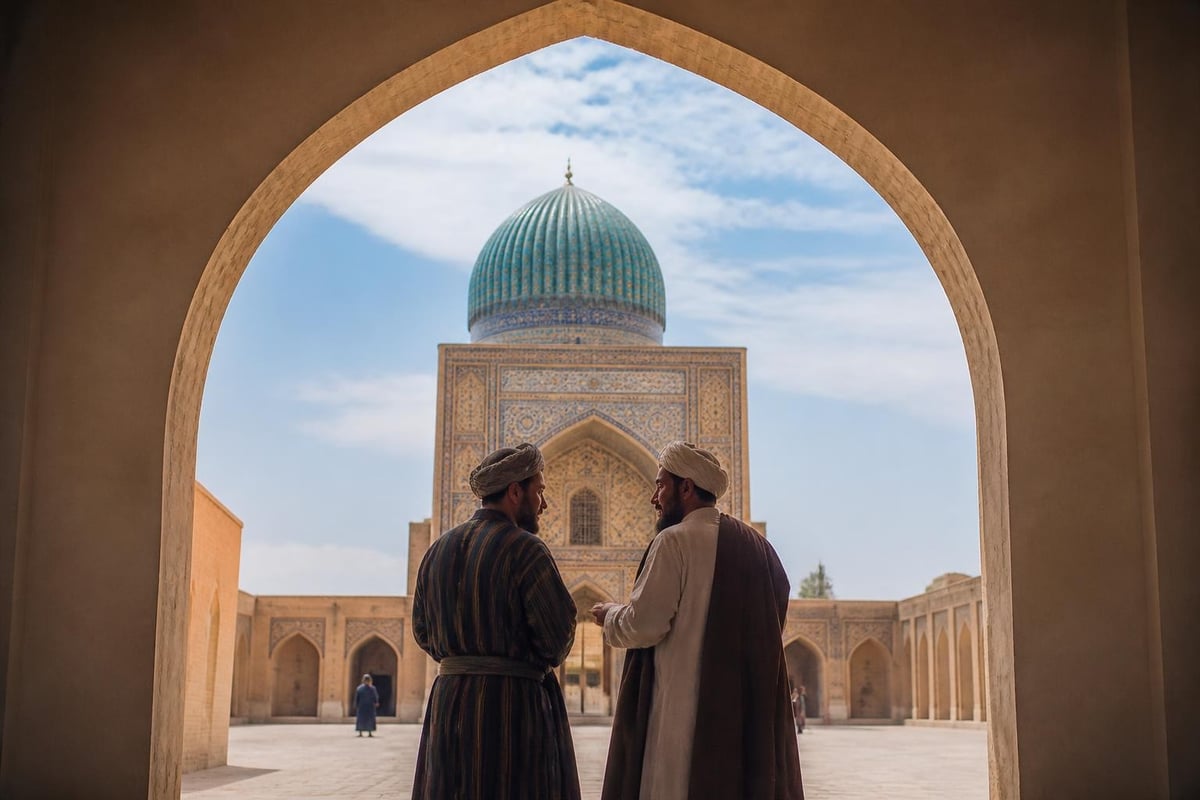
Walking through Samarkand today, you encounter layers of history compressed into single streets. The Registan, with its three madrasahs adorned in geometric perfection, stands as testament to the city's role as an educational centre where Persian, Arabic, and Turkic scholars debated philosophy and astronomy.
The Bibi-Khanym Mosque, commissioned by Timur after his Indian campaign, was intended to be the largest mosque in the Islamic world. Though earthquakes have humbled its ambitions, the structure still conveys the scale of wealth flowing through the silk road Uzbekistan commanded. Legend says Timur's Chinese wife inspired the design, a romantic tale that reflects the genuine multicultural marriage of architectural traditions visible in the building's Chinese-influenced decorative elements and Persian engineering.
The real magic of Samarkand lies in how accessible these wonders remain. Taking a free walking tour offers visitors the chance to explore not just the grand monuments but the hidden courtyards, working artisan studios, and neighbourhood teahouses where local traditions continue unbroken since medieval times. These guided experiences bring context to the stones, transforming ruins into stories and statistics into human experiences. For a structured way to see these sites, explore our silk road tours through ancient cities, bazaars, and stories linking East and West.
The Shah-i-Zinda Necropolis
Perhaps nowhere captures the artistic zenith of silk road Uzbekistan better than Shah-i-Zinda, the avenue of mausoleums where Timurid nobility rest beneath some of the finest tilework ever created. Each tomb represents a family's attempt to outdo their predecessors, resulting in an explosion of colour, pattern, and calligraphic innovation.
The craftspeople who created these masterpieces drew on techniques and pigments sourced from across the Silk Road network:
- Lapis lazuli from Afghan mountains for deep blues
- Gold leaf from Asian mines for accents
- Persian geometric patterns combined with Chinese cloud motifs
- Arabic calligraphy elevated to pure visual art
Walking up the narrow lane between these structures feels like ascending through layers of heaven, each tomb more intricate than the last, each glaze catching the Central Asian sun differently throughout the day.
Bukhara: The Living Museum
Whilst Samarkand dazzles with monumentality, Bukhara charms with intimacy. This city, which UNESCO has designated a World Heritage Site in its entirety, offers perhaps the most complete experience of silk road Uzbekistan as it was lived day-to-day.
The British Museum’s Silk Roads exhibition includes several Bukharan artefacts that illustrate the city's role as both a trading hub and a centre of Islamic scholarship. The exhibition notes how Bukhara's reputation for learning attracted students from as far as Andalusia and Java, creating an intellectual atmosphere that rivalled Baghdad and Damascus.
The Architecture of Commerce
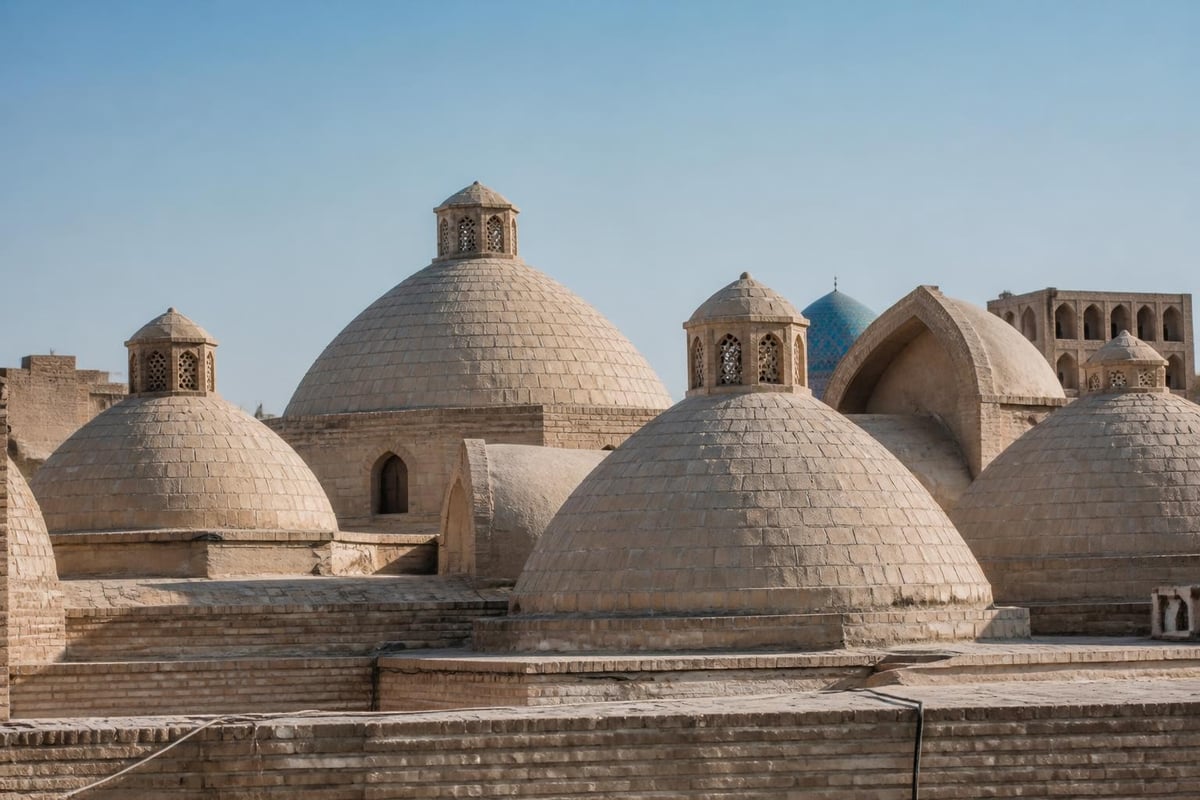
Bukhara's old city preserves the infrastructure of medieval trade in remarkable detail. The trading domes (toki) still function as bazaars, each originally dedicated to specific crafts:
- Toki Zargaron — the jewellers' dome, where gold and silver work continues
- Toki Telpak Furushon — the hat-makers' dome, now selling textiles and suzanis
- Toki Sarrafon — the moneychangers' dome, historically Bukhara's financial centre
These covered markets solved a practical problem for silk road Uzbekistan traders: how to conduct business through Central Asia's extreme temperature variations. The domed structures created naturally cooled spaces where delicate fabrics, spices, and manuscripts could be examined without weather damage.
The Lyab-i Hauz complex exemplifies urban planning that balanced commerce, religion, and community life. The rectangular pool at its centre provided water for travellers and their animals, whilst the surrounding madrasahs and khanqahs (Sufi lodges) offered education and spiritual sustenance. Today, the chaikhanas (teahouses) around Lyab-i Hauz serve the same purpose they did five centuries ago, offering rest and conversation to weary travellers.
Khiva: The Desert Outpost
If Samarkand represents the Silk Road's ambition and Bukhara its intellectual legacy, then Khiva embodies the network's frontier spirit. This walled city in the Khorezm oasis marked the last major stop before traders faced the formidable Karakum Desert on routes heading west.
The silk road Uzbekistan traversed required cities like Khiva to function as more than simple waypoints. They served as intelligence centres where merchants gathered information about tribal movements, political situations, and the availability of water sources in the deserts ahead.
Khiva's Ichan Kala (inner fortress) remains so well-preserved that walking through its gates feels like stepping through a portal in time. The city avoided the modernisation that transformed other Uzbek cities, partly because its remoteness made it less strategically important to Soviet planners. This neglect proved a blessing, leaving structures like the Kalta Minor Minaret and Juma Mosque largely untouched.
| Khiva Feature | Historical Purpose | Modern Experience |
|---|---|---|
| City walls | Defence and customs control | Sunset walks with panoramic views |
| Tash Hauli Palace | Khan's residence, harem | Intricate tilework and carved wood |
| Islam Khoja Minaret | Call to prayer, watchtower | Stunning views after 118-step climb |
| Kunya-Ark | Citadel within fortress | Museum of Khorezm history |
Cultural Exchange Beyond Commerce
The legacy of silk road Uzbekistan extends far beyond the exchange of goods. The routes facilitated a transfer of knowledge that transformed civilisations from China to Europe. Samarkand's role in this intellectual exchange deserves particular attention.
The Ulugh Beg Observatory, constructed in the 1420s, exemplifies how Silk Road wealth funded scientific advancement. Ulugh Beg, Timur's grandson, was himself a mathematician-astronomer who compiled star catalogues so accurate that they remained authoritative for centuries. His observatory's massive sextant, carved into a hillside, measured celestial positions with precision that wouldn't be surpassed until the telescope's invention.
The Art and Culture Development Foundation of Uzbekistan has worked to ensure these contributions receive international recognition, supporting exhibitions that showcase how silk road Uzbekistan served as a crucible where Eastern and Western knowledge traditions merged.
Religious Syncretism and Tolerance
The multicultural nature of silk road Uzbekistan cities necessitated religious tolerance rare in medieval times. Samarkand and Bukhara hosted significant communities of Muslims, Jews, Christians, Zoroastrians, and Buddhists, often living in adjacent neighbourhoods.
This proximity generated both tension and synthesis. Islamic architecture in Uzbekistan bears clear influences from Buddhist stupa designs, Persian fire temples, and Christian basilicas. The famous "Samarkand Kufic" calligraphic style developed as Arabic script merged with geometric patterns from Chinese art and Persian miniatures.
The Paper Revolution
One of silk road Uzbekistan's most consequential contributions to world history remains largely unsung: the introduction of Chinese paper-making technology to the Islamic world and, eventually, Europe. According to historical accounts, Chinese paper-makers captured during the Battle of Talas in 751 CE revealed their craft's secrets to their Samarqandi captors.
Within decades, Samarkand became renowned for producing paper superior to Chinese varieties, using local mulberry bark and flax. This "Samarkand paper" spread throughout the Islamic world, enabling the translation movement that preserved Greek philosophy, the compilation of hadith collections, and the bureaucratic expansion of Islamic empires.
The impact cascaded across centuries:
- Islamic libraries and bookshops proliferated, democratising knowledge
- Scientific treatises could be copied and distributed more widely
- European paper mills, established by the 13th century, built on techniques refined along the silk road Uzbekistan perfected
- The printing revolution depended on affordable paper, ultimately traceable to these Central Asian innovations
Contemporary Revival and Tourism
The silk road Uzbekistan once knew fell into decline after maritime routes offered faster, safer passage between East and West. For centuries, the great caravanserais stood empty, the madrasahs silent, the bazaars shadows of their former glory. The Soviet period brought industrialisation but also neglect of Islamic heritage.
Since independence in 1991, Uzbekistan has invested heavily in restoration and tourism infrastructure, recognising that its Silk Road heritage represents both cultural treasure and economic opportunity. The official Uzbekistan tourism portal promotes Silk Road-themed festivals, craft workshops, and cultural programming that connects modern visitors with historical traditions.
The restoration work has sparked debate amongst preservationists. Some projects have been criticised for over-restoration, creating monuments that feel more like theme parks than historical sites. Others praise the accessibility these renovations provide, allowing visitors to appreciate the original grandeur that centuries of wear had diminished.
Walking in Traders' Footsteps
Modern travellers exploring silk road Uzbekistan benefit from infrastructure those ancient merchants could never have imagined. High-speed rail now connects Tashkent, Samarkand, and Bukhara. Boutique hotels occupy restored merchant houses. Yet the essential experience, walking through blue-tiled arcades whilst haggling over suzanis in centuries-old bazaars, remains remarkably unchanged.
The detailed trade route visualisations created by academic institutions help modern visitors understand the broader network their Uzbek journey represents. These resources map not just physical routes but also the flow of ideas, technologies, and artistic traditions that made the Silk Road a highway of civilisation.
Crafts and Continuity
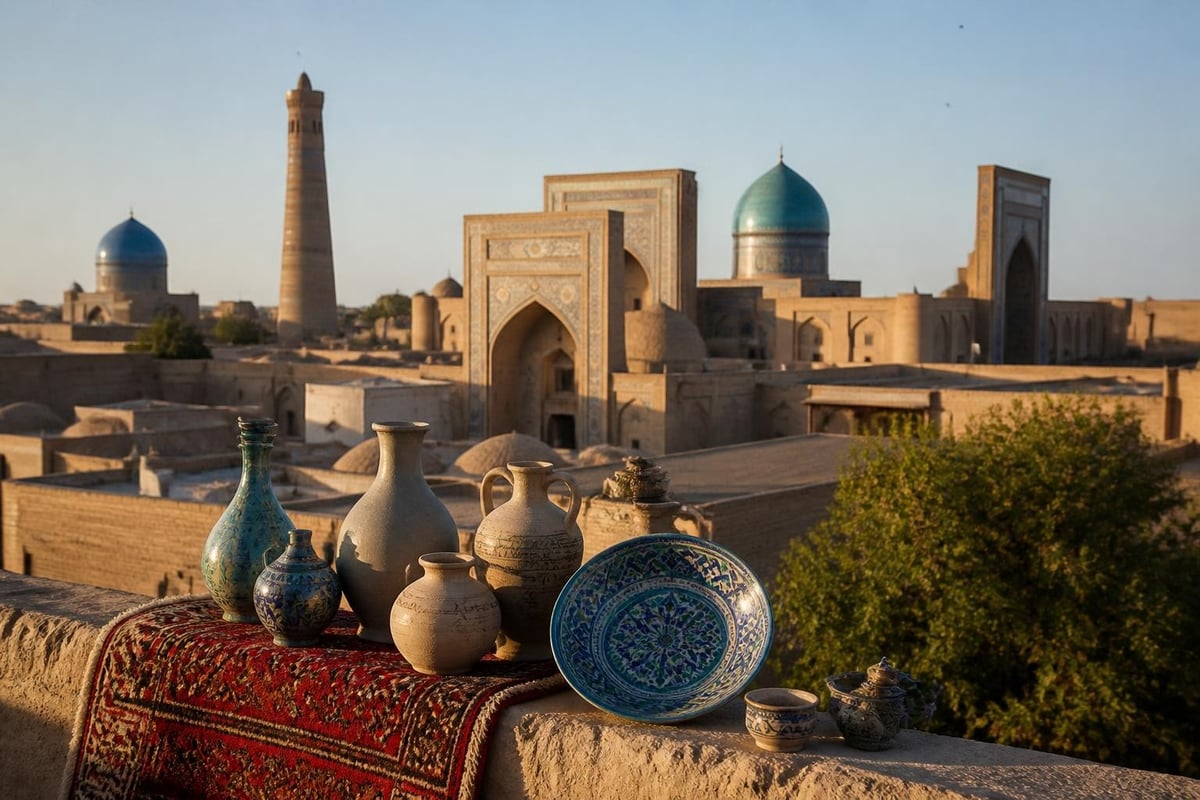
The silk road Uzbekistan sustained created demand for luxury crafts that still define the region's artistic identity. Master artisans in Samarkand, Bukhara, and beyond maintain techniques passed down through generations, creating objects that would be recognisable to a medieval trader.
Traditional crafts that endure include:
- Suzani embroidery — silk thread on cotton, featuring pomegranate and sun motifs
- Ikat silk weaving — the complex abr (cloud) patterns requiring exceptional skill
- Ceramic work — especially the distinctive blue pottery of Gijduvan and Rishtan
- Miniature painting — Persian-influenced illustrations of Silk Road scenes
- Knife-making — particularly the pichok knives of Chust, with decorated handles
- Jewellery — incorporating techniques from Sogdian, Persian, and Central Asian traditions
Visiting working studios reveals how these crafts connect to silk road Uzbekistan history. The tools, materials, and even workshop layouts often follow patterns established when these cities served global trade. Master craftspeople can explain how their grandfather's grandfather learned from merchants who travelled the routes, creating an unbroken chain reaching back centuries.
Culinary Heritage
Food offers perhaps the most accessible connection to silk road Uzbekistan traditions. The region's cuisine reflects every culture that passed through, creating a fusion that predated the concept by a millennium.
Plov (or osh), Uzbekistan's national dish, exemplifies this synthesis. Rice from the Ferghana Valley combines with lamb, carrots, onions, and spices in a recipe with countless regional variations. The dish's origins lie in the need for caravan cooks to create nutritious, one-pot meals using ingredients available along the routes.
The tandoor oven, introduced from Persia, produces bread that remains central to Uzbek hospitality. The ritual of breaking non (flatbread) carries spiritual significance inherited from Zoroastrian traditions. Samosas, manti (dumplings), and lagman (noodles) all bear evidence of cultural exchange between Chinese, Indian, Persian, and Turkic food traditions.
Chaikhana culture itself descends directly from Silk Road caravanserais. The elaborate tea service, featuring green tea in summer and black in winter, follows protocols established when these establishments served as neutral ground for traders from competing empires to negotiate.
The silk road Uzbekistan traversed transformed not just the cities it connected but the entire trajectory of human civilisation, creating networks of exchange that shaped art, science, religion, and commerce across continents. These ancient routes live on in Samarkand's turquoise domes, Bukhara's bustling bazaars, and Khiva's timeless streets, waiting for modern travellers to discover their stories. Whether you're drawn by history, architecture, or the simple joy of exploration, Visit Samarkand offers guided walking tours that bring these tales to life, helping you experience the Silk Road not as distant history but as living heritage you can touch, taste, and treasure.