
There's a particular moment I remember from my first visit to Central Asia. Standing before a centuries-old architectural masterpiece, I felt something shift inside me. Time seemed to expand. My breathing slowed. The world felt simultaneously vast and intimate. That's when I understood that amazing experiences aren't just enjoyable moments — they're transformative encounters that reshape how we see ourselves and the world around us. They're the stories we tell for years, the memories that define chapters of our lives, and the moments that remind us why being human is such an extraordinary thing.
The Science Behind What Makes Experiences Amazing
Amazing experiences share a common thread: they trigger what psychologists call "awe" — that overwhelming sense of being in the presence of something greater than ourselves. Recent research on the psychology of awe reveals that these moments actually change our brain chemistry, flooding our systems with oxytocin and dopamine whilst reducing stress hormones like cortisol.
What's particularly fascinating is how our brains process these peak moments differently from everyday experiences.
The Neurological Footprint of Wonder
When we encounter something truly amazing, our hippocampus — the brain's memory centre — becomes hyperactive. This explains why we remember extraordinary moments with such vivid detail, often years or decades later. You might forget what you had for breakfast last Tuesday, but you'll remember standing before the turquoise domes of Samarkand for the rest of your life.
The elements that consistently create amazing experiences include:
- Vastness: Encountering something physically large or conceptually immense
- Accommodation: Being forced to adjust our mental frameworks to process what we're experiencing
- Novelty: Experiencing something genuinely new or unexpected
- Beauty: Perceiving exceptional aesthetic qualities
- Connection: Feeling linked to something beyond ourselves
According to cross-cultural research on awe experiences, whilst the triggers vary across cultures, the fundamental response remains remarkably consistent. A Japanese visitor might find awe in meticulous garden design, whilst a Brazilian traveller might seek it in vast natural landscapes, but the neurological and emotional response follows similar patterns.

Designing Experiences That Resonate
Creating amazing experiences isn't accidental. It requires thoughtful design that considers both the rational and emotional dimensions of human experience. The most successful experience designers understand that people don't just want to see things — they want to feel transformed by them.
The Architecture of Memorable Moments
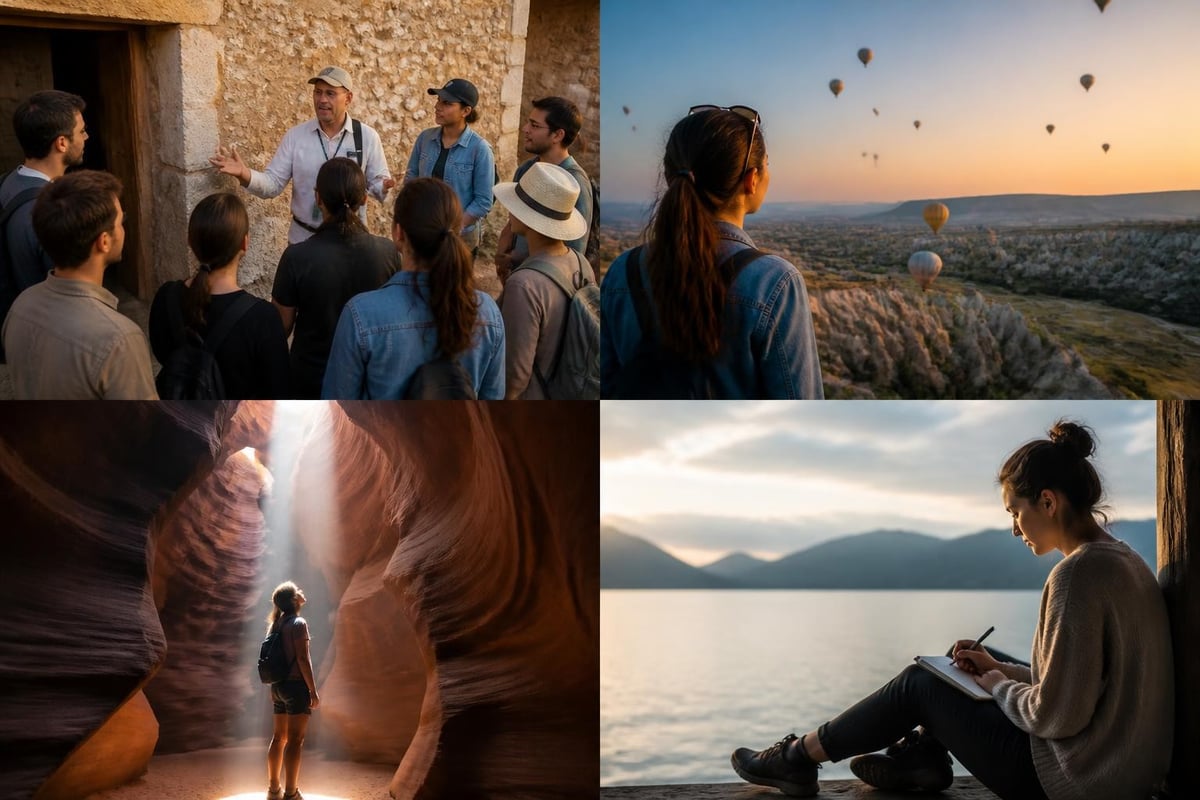
Think about the difference between quickly snapping a photo at a famous landmark versus spending an hour with a knowledgeable guide who reveals hidden details, shares local legends, and helps you understand the human stories embedded in ancient stones. The second approach creates what psychologists call "thick experiences" — layered, meaningful encounters that engage multiple senses and create emotional resonance.
| Experience Type | Engagement Level | Memory Retention | Emotional Impact |
|---|---|---|---|
| Surface interaction | Low | Weak | Minimal |
| Guided discovery | High | Strong | Significant |
| Immersive participation | Very High | Very Strong | Transformative |
The business implications are substantial. According to Qualtrics’ Experience Management Trends 2024, organizations that invest in creating emotionally resonant experiences see measurable returns in customer loyalty, word-of-mouth marketing, and long-term value. But here's the crucial bit: you can't fake authentic amazing experiences. They require genuine care, deep knowledge, and a commitment to creating value beyond the transactional.
The Role of Storytelling in Creating Wonder
Every amazing experience tells a story. Whether you're walking through ancient streets or discovering a hidden courtyard, the narrative context transforms observation into meaning. This is why the best guides aren't just information dispensers — they're storytellers who weave facts into compelling narratives that help us connect emotionally with what we're experiencing.
I once joined a free walking tour exploring Samarkand’s historic centre, and what made it extraordinary wasn't just the stunning architecture — it was how our guide brought the Silk Road to life through stories of merchants, scholars, and artisans who walked these same paths centuries ago. Suddenly, we weren't just tourists looking at old buildings; we were participants in an ongoing human story.

Crafting Narratives That Connect
The most effective experience narratives share several characteristics:
- Personal scale: They connect vast historical or cultural concepts to individual human experiences
- Sensory detail: They engage multiple senses beyond just visual observation
- Emotional resonance: They create feelings of connection, wonder, or understanding
- Meaning-making: They help participants understand why something matters
- Memorable moments: They create peak experiences that become lasting memories
When designing amazing experiences, consider how each element contributes to the overall narrative arc. Just as a well-crafted story needs rising action, climax, and resolution, amazing experiences benefit from thoughtful pacing and structure.
The Practical Elements of Experience Design
Whilst emotional resonance matters enormously, amazing experiences also require practical excellence. Nobody remembers a tour fondly if they were uncomfortable, confused, or felt their time was wasted. The logistics matter just as much as the magic.
Balancing Structure and Spontaneity
The best experiences maintain a careful balance between planned structure and room for spontaneous discovery. Too rigid, and you lose the sense of adventure; too loose, and people feel uncertain or lost.
Consider these practical elements:
- Timing and pacing: Building in moments of intensity and moments of rest
- Group dynamics: Managing size and composition to foster connection without crowding
- Accessibility: Ensuring people of varying abilities can participate fully
- Weather contingencies: Having backup plans that don't feel like disappointments
- Clear communication: Setting expectations whilst leaving room for surprise
Research from the XM Institute on customer experience ROI demonstrates that operational excellence and emotional engagement aren't opposing forces — they're complementary. The most amazing experiences typically score high on both dimensions.
Measuring What Matters
How do you know if you're truly creating amazing experiences? The metrics that matter go beyond simple satisfaction scores. According to NICE’s comprehensive guide to measuring customer experience, the most revealing indicators include emotional engagement, likelihood to recommend, and behavioural evidence of impact.
Beyond Net Promoter Scores
Whilst traditional metrics have their place, amazing experiences reveal themselves through different signals:
| Metric Type | What It Measures | Why It Matters |
|---|---|---|
| Emotional intensity | Peak feelings during experience | Predicts memory formation |
| Time perception | Whether time felt expanded or rushed | Indicates immersion level |
| Spontaneous sharing | Unprompted social media posts, conversations | Shows genuine enthusiasm |
| Return intent | Desire to repeat or extend experience | Reveals perceived value |
| Behavioural change | New interests, habits, or perspectives | Demonstrates transformation |
The most telling sign of an amazing experience isn't a high rating — it's when someone incorporates that experience into their identity. They don't just say "I took a tour of Samarkand." They say "I'm someone who's walked the ancient Silk Road." That shift from external action to internal identity is the hallmark of truly transformative experiences.
Cultural Context and Amazing Experiences
What makes an experience amazing isn't universal — it's deeply influenced by cultural background, personal history, and individual values. A moment that creates profound awe for one person might feel ordinary to another. This variability isn't a problem to solve; it's a reality to embrace and design for.
Designing for Diversity
The most successful experience creators understand that amazing experiences emerge from the intersection of what you offer and what each participant brings. This requires:
Flexibility in interpretation: Allowing people to find their own meaning rather than prescribing one "correct" response
Multiple entry points: Offering different ways to engage based on interests, knowledge levels, and learning styles
Cultural sensitivity: Understanding how different backgrounds shape what people find meaningful or moving
Personal relevance: Helping participants connect universal themes to their individual contexts
For travellers exploring new destinations, mobility matters too. Whether you're planning a day trip from your base or need reliable transport to reach historic sites, having flexible car rental options can transform a potentially stressful logistics challenge into a seamless part of your adventure. The freedom to explore at your own pace, with the security of full insurance coverage, removes barriers that might otherwise prevent amazing experiences from unfolding.
The Economics of Amazing Experiences
Here's something that surprises many people: creating amazing experiences doesn't necessarily require massive budgets. Whilst luxury certainly has its place, some of the most transformative moments cost little or nothing. What they require instead is expertise, passion, and genuine commitment to creating value.
Value Beyond Price Points
The relationship between cost and amazingness isn't linear. A free walking tour led by a passionate, knowledgeable guide who loves their city can create more lasting impact than an expensive but impersonal package tour. What matters is the density of meaning and the quality of engagement.
This democratization of amazing experiences represents a significant shift in the travel industry. Projects that make guided cultural exploration accessible to everyone challenge the assumption that the best experiences must be exclusive or expensive. They prove that what creates transformation isn't luxury — it's authentic connection, deep knowledge, and carefully crafted moments of discovery.
Building Amazing Experiences Into Everyday Life
Whilst travel often provides our most memorable amazing experiences, the principles that make them work can be applied much closer to home. The capacity for awe, wonder, and transformation isn't reserved for exotic locations — it's a skill we can develop and a lens we can choose to apply.
Cultivating Everyday Wonder
The practices that support amazing experiences include:
- Attention training: Learning to truly observe rather than just glance
- Context seeking: Understanding the stories behind what we encounter
- Novelty pursuit: Actively seeking new perspectives even in familiar settings
- Curiosity cultivation: Asking questions and exploring beneath surface impressions
- Presence practice: Being fully engaged rather than mentally elsewhere
People who regularly experience awe report higher life satisfaction, greater generosity, and increased sense of meaning. By intentionally creating conditions that foster amazing experiences, we're not just making travel more memorable — we're enriching our entire lives.
The Future of Experience Design
As we move further into 2026, several trends are reshaping how amazing experiences are created and shared. Technology plays an increasingly sophisticated role, but the most successful applications enhance rather than replace human connection and authentic discovery.
Emerging Approaches
Virtual and augmented reality offer new possibilities for historical reconstruction, allowing visitors to see ancient sites as they once appeared. But the most effective implementations use technology to deepen rather than distract from real-world engagement. Imagine standing in a historic square whilst your device reveals the layers of history beneath your feet, then putting it away to simply be present in that remarkable space.
Sustainability has also become central to experience design. The most amazing experiences now often include understanding our impact and participating in preservation efforts. This adds a dimension of meaning that purely consumptive tourism lacks.
Creating Your Own Amazing Experiences
Whether you're designing experiences for others or seeking them for yourself, certain principles consistently create conditions where transformation becomes possible. Start with genuine curiosity. Seek depth over breadth. Value quality of engagement over quantity of sights seen. Find guides or companions who bring expertise and passion to their sharing.
Most importantly, remain open to being changed by what you encounter. Amazing experiences require a certain vulnerability — the willingness to let go of preconceptions and allow new perspectives to emerge. They ask us to be fully present, intellectually engaged, and emotionally available.
The magic happens in that intersection of excellent design and open-hearted participation. Neither alone is sufficient. Together, they create moments that remind us why exploration, discovery, and connection matter so profoundly in human life.
Amazing experiences transform how we see the world and ourselves, creating lasting memories through authentic connection, thoughtful design, and genuine engagement with culture and history. If you're ready to discover the extraordinary beauty and rich heritage of one of the Silk Road's most magnificent cities, Visit Samarkand offers the perfect opportunity to explore ancient wonders with knowledgeable guides who bring centuries of history to life through compelling stories and hidden discoveries.