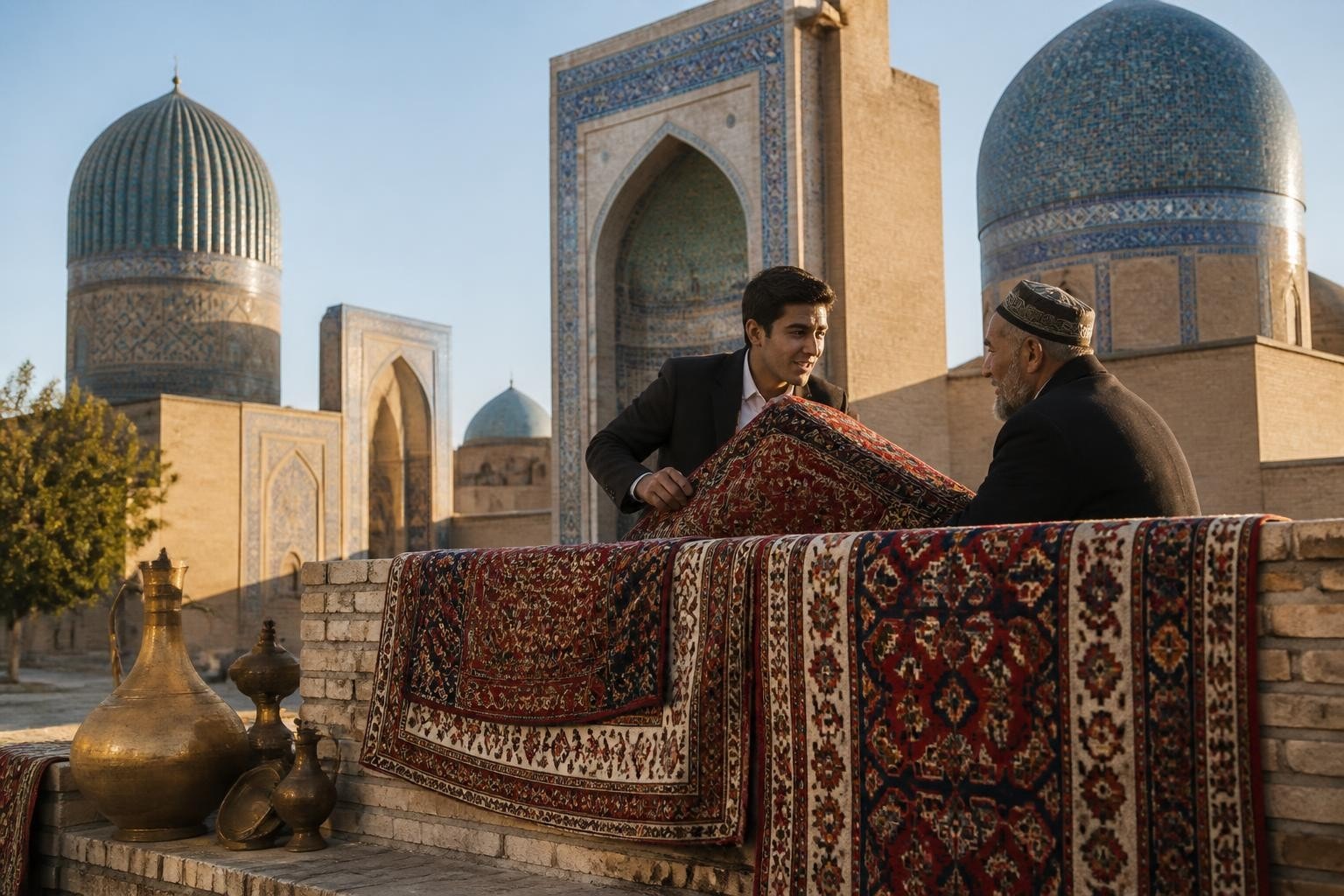
The first time I stood before the turquoise domes of Registan Square, I understood why silk road samarkand had captivated travellers for millennia. The morning sun painted those ceramic tiles in shades of sapphire and gold, and I could almost hear the echoes of merchants haggling over Chinese silk, Persian carpets, and Indian spices. This wasn't just a city. It was the beating heart of the greatest trade network the medieval world had ever known, a place where East met West and changed history forever.
The Soul of an Empire
Samarkand's story reads like an epic poem written in architecture and ambition. When Timur (known in the West as Tamerlane) made it his capital in the 14th century, he transformed a prosperous trading hub into something extraordinary. He understood what many rulers before him had missed: that silk road samarkand wasn't merely about commerce. It was about culture, knowledge, and power.
The conqueror brought back artisans from every corner of his vast empire. Damascus sent its master tileworkers. Persia contributed architects who understood how to make buildings touch the sky. Indian craftsmen brought techniques for working with precious stones. These weren't prisoners but honoured guests, given the finest materials and unlimited creative freedom.
Building a Legend in Blue
Walking through the historic core today, you witness the result of that ambitious vision. The Registan ensemble stands as perhaps the most recognizable symbol of Central Asian architecture. Three madrasahs frame a vast plaza, their facades covered in geometric patterns so intricate they seem to shimmer in the desert heat.
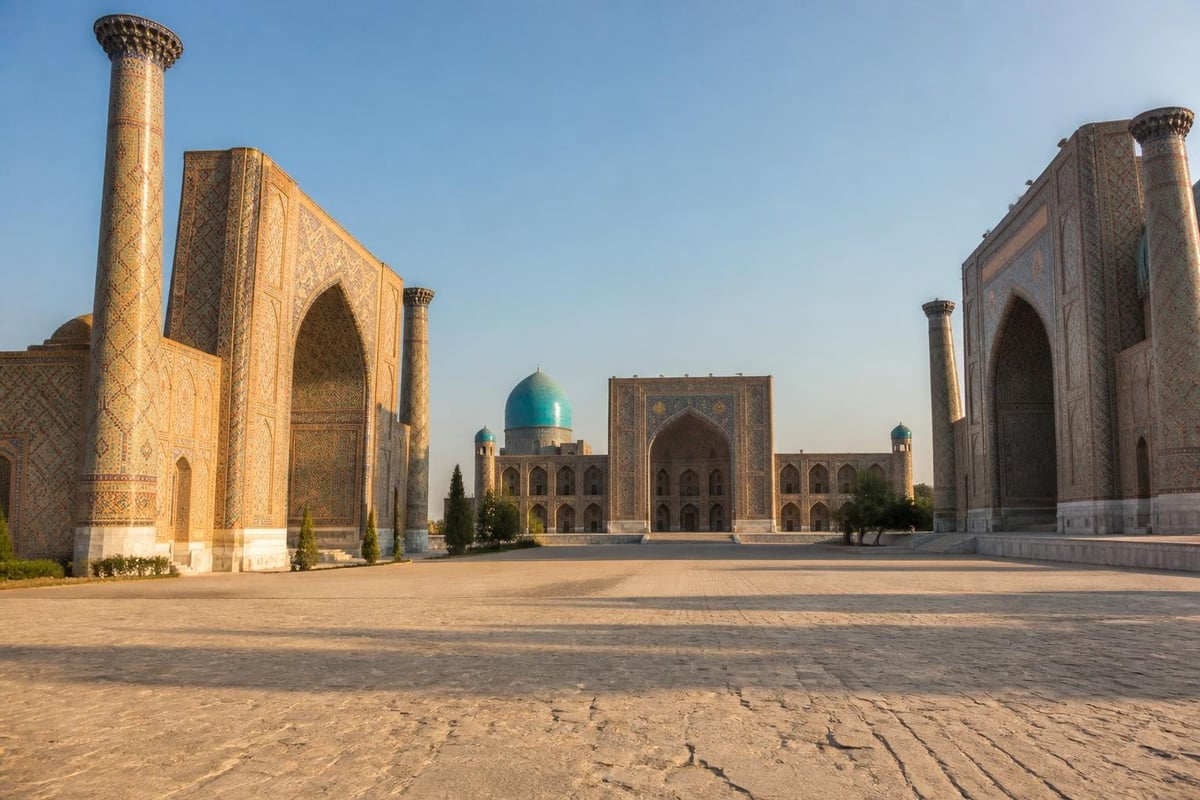
But here's what the history books often miss: this wasn't a vanity project. These were working educational institutions where the brightest minds studied astronomy, mathematics, theology, and philosophy. The National Geographic feature on Uzbekistan’s Silk Road cities beautifully captures how these monuments served both practical and symbolic purposes.
The Observatory Where Science Met the Stars
If Registan represents silk road samarkand's cultural ambitions, then Ulugh Beg's Observatory reveals its intellectual heart. Timur's grandson wasn't content with military glory or architectural splendour. He wanted to understand the heavens themselves.
Picture this: in the 15th century, whilst much of Europe remained locked in medieval thinking, Ulugh Beg built an observatory with a massive sextant carved into living rock. The precision was staggering. His star catalogue, listing over a thousand celestial bodies, remained the most accurate for centuries.
The Price of Knowledge
The observatory tells a darker story too. Ulugh Beg's passion for science ultimately cost him his throne and his life. Religious conservatives viewed his astronomical work as dangerous, perhaps heretical. In 1449, his own son orchestrated his murder. The observatory fell into ruin, deliberately destroyed by those who feared what knowledge might bring.
Yet centuries later, Russian archaeologists rediscovered the massive underground arc of the sextant. Today, visitors can stand in that same trench and contemplate the courage it took to pursue truth in an uncertain world. The scholarly article on Ulugh Beg and Samarkand as a science city explores this fascinating intersection of power, faith, and astronomical inquiry.
| Monument | Built | Key Feature | Cultural Significance |
|---|---|---|---|
| Registan Square | 15th-17th centuries | Three madrasahs | Educational and ceremonial centre |
| Gur-e-Amir | 1404 | Timur's tomb | Architectural prototype for Taj Mahal |
| Bibi-Khanym Mosque | 1399-1404 | Massive courtyard | Demonstrated imperial ambition |
| Ulugh Beg Observatory | 1428-1429 | Giant sextant | Advanced astronomical research |
The Marketplace of Ideas
Silk road samarkand thrived because it understood a fundamental truth: trade isn't just about goods. When a Chinese merchant sold silk to a Persian buyer, they also exchanged stories, techniques, and worldviews. The city became a crucible where Buddhism, Islam, Christianity, and Zoroastrianism coexisted, sometimes peacefully, often tensely, but always creatively.
The Shah-i-Zinda necropolis demonstrates this cultural mixing beautifully. A street of mausoleums climbs a hillside, each tomb representing a different era, a different patron, a different artistic vision. The tilework tells stories in cobalt blue and turquoise green. Some patterns feel purely Islamic, geometric and abstract. Others hint at older Persian traditions or even Chinese influences carried along the trade routes.
Archaeology Unveils Hidden Layers
Recent excavations continue to reveal new chapters in Samarkand's story. The Samarkand Archaeology Institute has documented ongoing field seasons that uncover residential quarters, workshops, and hydraulic systems. These findings paint a picture of daily life far more complex than simple merchant caravans passing through.
What makes these discoveries remarkable:
- Evidence of sophisticated water management systems
- Workshops producing ceramics for both local use and export
- Residential areas showing mixed communities of different faiths
- Trade goods from as far as Scandinavia and Korea
- Agricultural terracing that supported a much larger population than previously thought
Walking Through Time
Modern silk road samarkand presents visitors with an intriguing paradox. Soviet-era restoration saved many monuments from complete collapse, yet sometimes at the cost of authenticity. The Registan you see today sparkles with fresh tiles, many replaced in the 20th century. Does this diminish the experience? I don't think so.
The Aga Khan Trust for Culture’s work in Samarkand represents a more nuanced approach to historic preservation. Their projects balance conservation with community needs, recognizing that a living city must evolve whilst respecting its past. They've worked on everything from structural stabilization to training local craftspeople in traditional techniques.
The Human Element
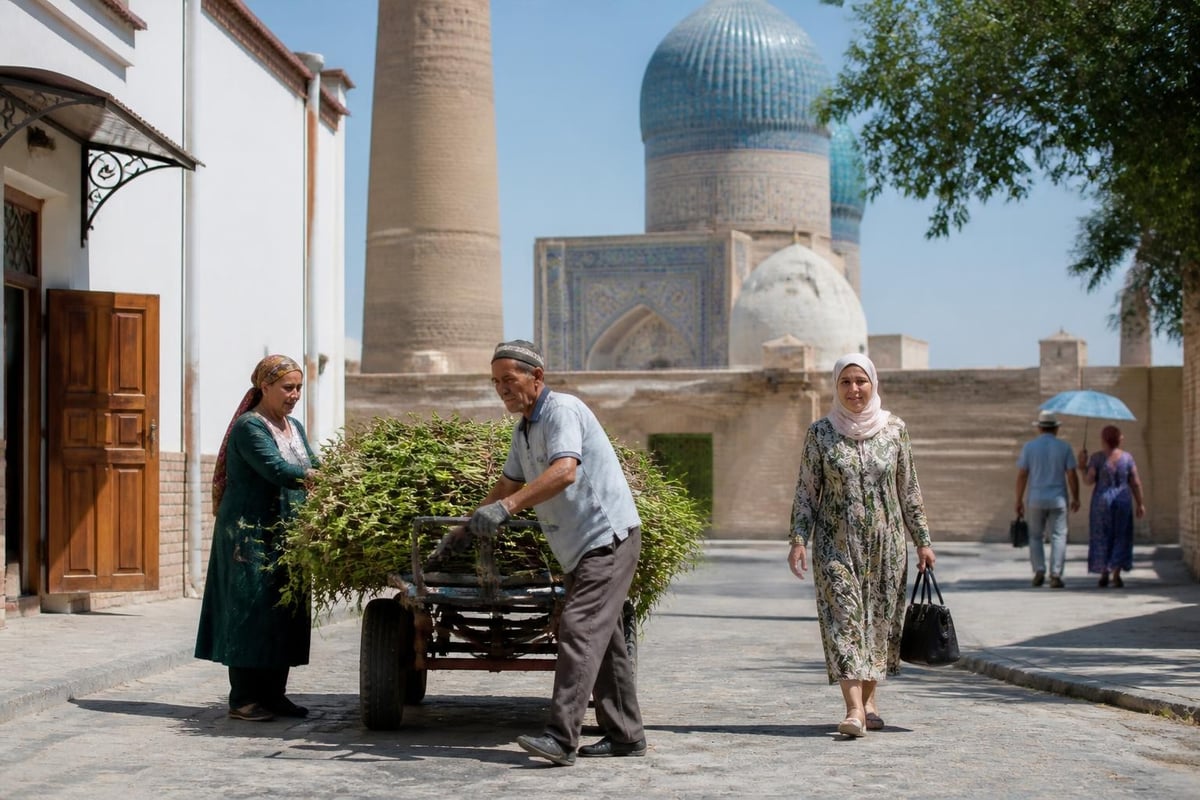
What transforms silk road samarkand from a museum into a lived experience is the people who call it home. In the old town surrounding the monuments, families have occupied the same courtyards for generations. Bread bakers still use clay ovens that would look familiar to their medieval ancestors. Tea houses serve green tea poured with the same theatrical flourish that once welcomed weary caravan traders.
A free walking tour will be a great opportunity to connect with these layers of living history, as local guides share stories passed down through families alongside documented historical facts, creating a richer understanding than any guidebook alone could provide.
The Timurid Renaissance in Architecture
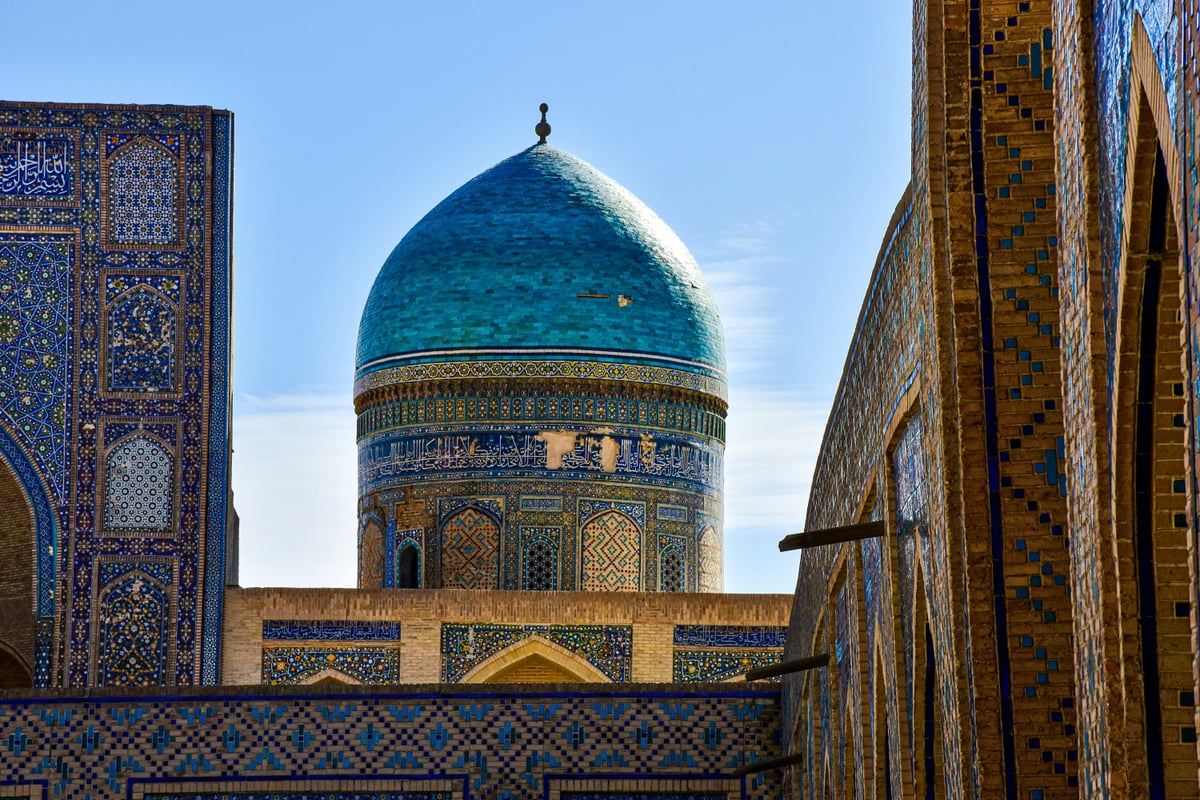
Scholars sometimes refer to the 14th and 15th centuries in silk road samarkand as the Timurid Renaissance, and for good reason. The architectural innovations developed here influenced building across the Islamic world and beyond. The double dome construction, where an inner dome creates the interior space whilst a taller outer dome dominates the skyline, became a signature technique.
The Gur-e-Amir mausoleum, where Timur himself rests, perfected this approach. When Mughal Emperor Shah Jahan designed the Taj Mahal two centuries later, he drew heavily on this precedent. The ribbed dome, the balanced proportions, even the use of gardens as part of the architectural ensemble all echo back to Samarkand.
Ceramic Art as Cultural Text
The tilework covering these monuments deserves special attention. This isn't mere decoration. The IIAS article on Timurid architecture explores how these patterns encoded mathematical principles, theological concepts, and political messages.
Common motifs and their meanings:
- Geometric stars: Divine unity and cosmic order
- Floral arabesques: Paradise gardens promised to believers
- Calligraphic bands: Quranic verses and poetry
- Turquoise blue: The dome of heaven
- Gold accents: Divine light and royal power
Routes and Routines
Understanding silk road samarkand requires grasping the logistics that made it function. Caravanserais, fortified inn-warehouses, dotted the routes leading to the city. Merchants would arrive dusty and exhausted, their camels loaded with goods that had travelled thousands of miles.
Inside the city, specialized markets handled different commodities. Silk merchants clustered in one district, metalworkers in another, spice traders in a third. This organization wasn't arbitrary; it reflected quality control, price regulation, and the practical reality that different goods required different storage conditions.
| Trade Good | Origin | Samarkand's Role | Final Markets |
|---|---|---|---|
| Silk | China | Quality inspection, re-packing | Persia, Mediterranean |
| Paper | Samarkand production | Manufacturing hub | Islamic world, Europe |
| Glassware | Syrian cities | Trading center | Central Asia, China |
| Horses | Ferghana Valley | Major market | Across Islamic world |
The Paper Revolution
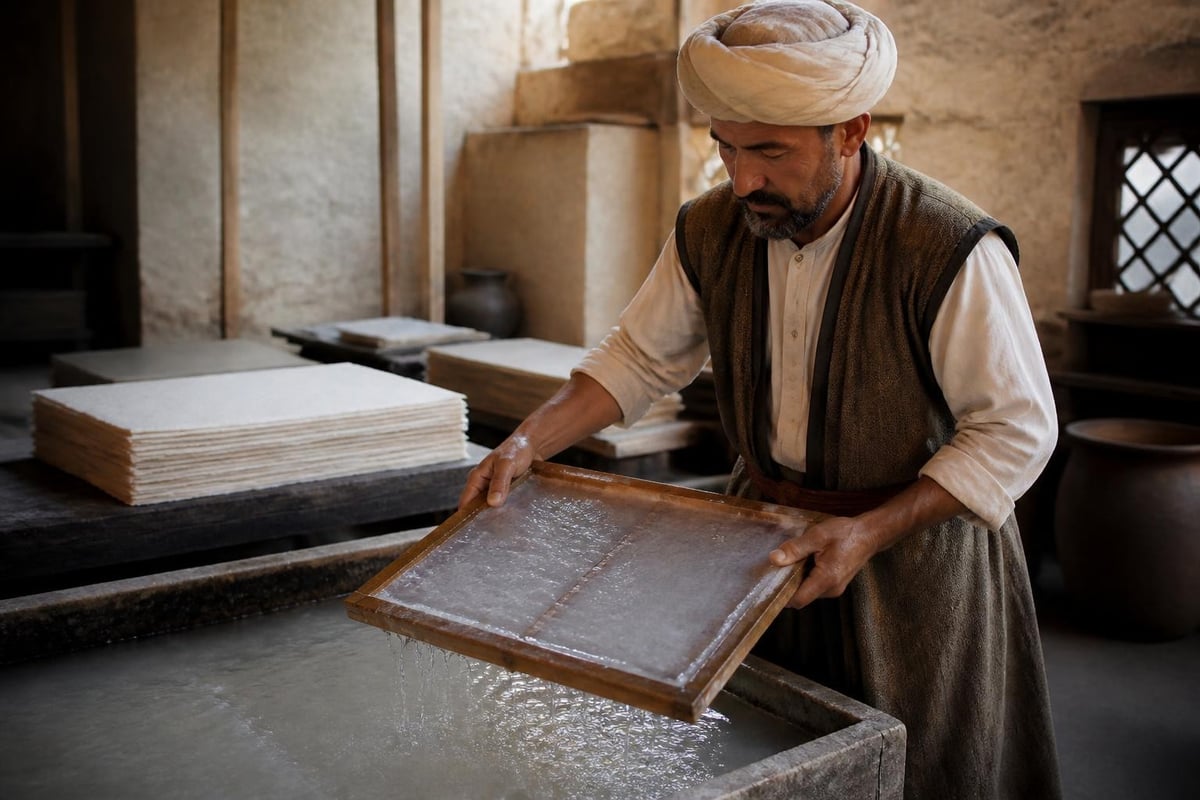
Here's a story often overlooked: silk road samarkand was instrumental in spreading paper-making technology from China to the Islamic world and eventually Europe. After capturing Chinese papermakers in the 8th century, Samarkand became a major production center. The city's abundant water and skilled craftspeople made it ideal for this industry.
This matters more than you might think. Paper revolutionized record-keeping, scholarship, and administration. The Islamic Golden Age's achievements in science, mathematics, and literature were only possible because scholars had access to affordable writing materials. And that access often traced back to Samarkand's paper workshops.
Beyond the Tourist Trail
Modern visitors to silk road samarkand often follow a well-worn path: Registan, Bibi-Khanym, Shah-i-Zinda, perhaps Ulugh Beg's Observatory. These monuments absolutely deserve their fame. But the city rewards those willing to wander.
The Siab Bazaar operates on a site that's hosted commerce for centuries. Yes, it now sells souvenirs alongside vegetables, but watch carefully. You'll see the same negotiating dances, the same testing of produce, the same social rituals that have bound this community together through empires and invasions.
Neighbourhood Stories
In the residential quarters between major monuments, life unfolds at a different pace. Courtyards hide behind heavy doors, offering glimpses of domestic architecture unchanged for generations. Children play the same games their great-grandparents played. Women gather to make bread in communal ovens, sharing news and maintaining social bonds.
What neighbourhood exploration reveals:
- Traditional house construction using adobe and wood
- Courtyard gardens with fruit trees and vine-covered terraces
- Small workshops where artisans practice traditional crafts
- Neighborhood mosques serving specific communities
- The rhythm of daily prayers structuring time
The Contemporary Crossroads
Silk road samarkand today faces questions that would have puzzled Timur but might have interested Ulugh Beg. How do you preserve the past whilst embracing the future? How do you welcome tourists without becoming a theme park? How do you honor tradition whilst giving young people opportunities?
These aren't abstract academic questions. They affect real families trying to make livings in a changing economy. UNESCO World Heritage status brings prestige and restrictions. Tourism brings money and pressure. Modernization brings convenience and loss.
The answers emerging involve careful balancing acts. New construction happens outside the historic core. Restoration projects increasingly involve training programs that pass traditional skills to younger generations. Tourism development considers community impact, not just visitor numbers.
Living Heritage
What strikes me most about silk road samarkand isn't the monuments, magnificent though they are. It's the continuity. This is a city that has survived Alexander the Great, Arab conquest, Mongol devastation, Timurid glory, Uzbek rule, Soviet communism, and now independent Uzbekistan. Through it all, something essential persisted.
That essence lives in the way morning light hits the Registan tiles. In the smell of fresh bread from clay ovens. In the sound of craftspeople tapping metal in workshops that have occupied the same streets for centuries. In the hospitality that treats strangers as honored guests, a tradition born when survival depended on maintaining caravanserai networks.
Elements of continuity:
- Traditional crafts passed through family workshops
- Islamic scholarship maintained in functioning madrasahs
- Persian language persisting alongside Uzbek and Russian
- Culinary traditions linking medieval feasts to modern tables
- Architecture informing new construction whilst preserving old
The city demonstrates that heritage isn't about freezing time. It's about maintaining living connections to the past whilst moving forward. Silk road samarkand succeeded because it adapted, incorporating new influences whilst maintaining core identity. That adaptive resilience continues today.
Silk road samarkand offers more than beautiful monuments and fascinating history; it provides a window into how cultures connect, influence each other, and create something greater than their individual parts. Whether you're drawn by architecture, archaeology, or simply the romance of the ancient trade routes, this city rewards curiosity. Visit Samarkand can help you discover these layers through guided walking tours that bring history to life, connecting you with local experts who know not just the famous sites but the hidden stories that make this city truly unforgettable.