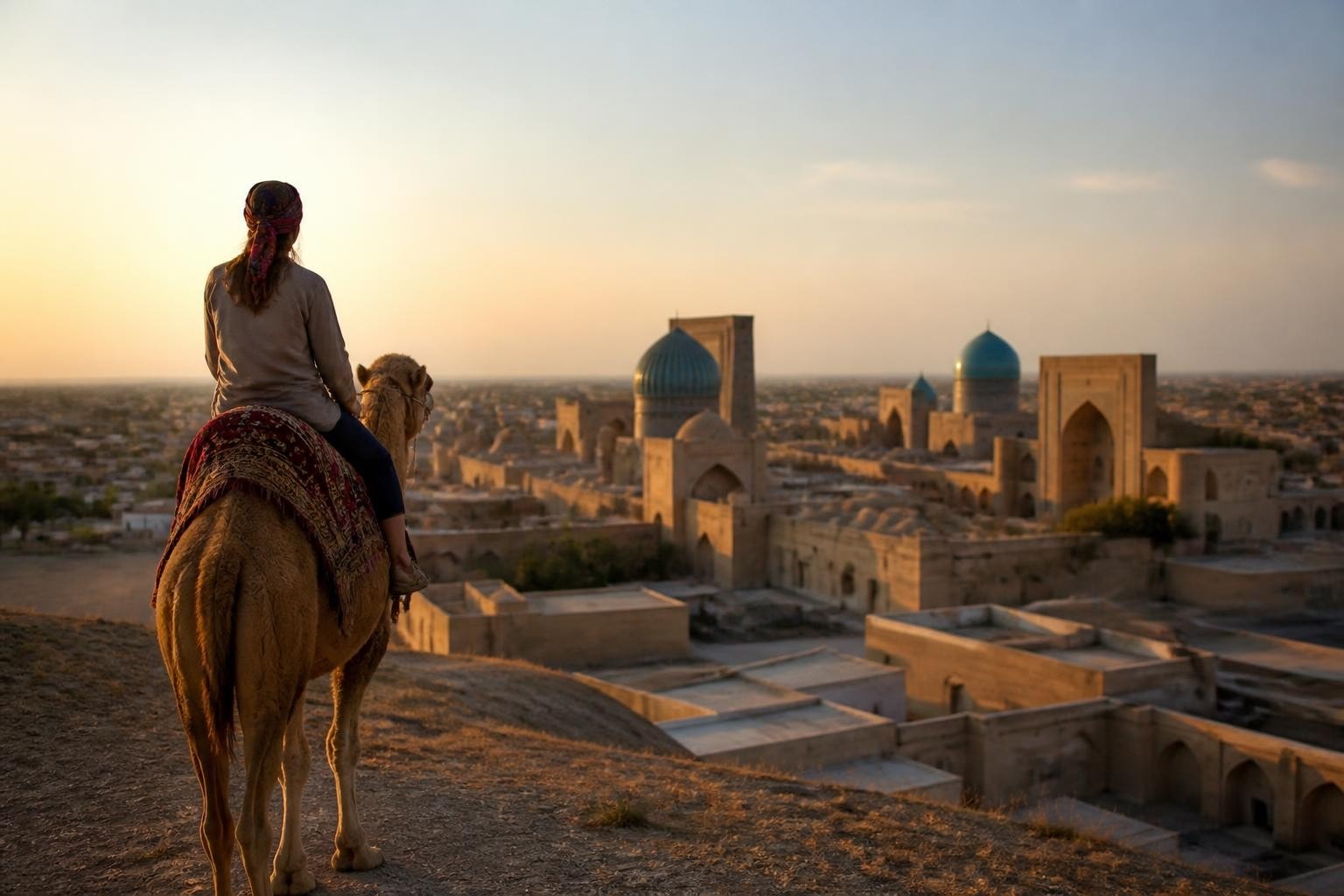
The desert wind carries whispers of a thousand years. Traders once loaded their camels with silk, spices, and stories, setting out on journeys that would reshape civilisations. Today, the ancient pathways of commerce have transformed into one of the world's most extraordinary travel experiences. A silk route tour isn't merely a holiday; it's a pilgrimage through time, tracing the footsteps of merchants, scholars, and adventurers who connected East and West in ways that still echo through our modern world.
Understanding the Historic Silk Roads
The term "Silk Road" conjures romantic images of endless caravans and bustling bazaars, but the Silk Roads were actually a vast network of interconnected routes spanning continents. These pathways didn't simply carry silk; they transported ideas, religions, technologies, and cultures across more than 6,000 kilometres.
Between roughly 130 BCE and 1453 CE, these routes flourished as the arteries of global exchange. Chinese silk travelled westward whilst Roman glassware journeyed east. Buddhist teachings spread from India to China. Mathematical concepts, astronomical knowledge, and artistic techniques moved freely along with the merchants.
The Routes Through Central Asia
Central Asia formed the beating heart of this network. Cities like Samarkand, Bukhara, and Khiva became cosmopolitan centres where Persian, Chinese, Indian, and European cultures collided and merged. Caravanserais – roadside inns for travelling merchants – dotted the landscape, offering rest and refuge. Recent archaeological research has revealed fascinating details about these trade network hubs, uncovering the daily lives of the traders who kept commerce flowing.
Today's silk route tour follows these historic pathways, allowing modern travellers to walk where empires rose and fell.
Planning Your Silk Route Tour in 2026
Planning a silk route tour requires more than booking flights and hotels. You're crafting an experience that spans multiple countries, diverse landscapes, and countless historical sites. The journey demands thoughtful preparation.
Choosing Your Route
Several main corridors formed the historic Silk Roads, and each offers distinct experiences:
- The Central Asian Route: Uzbekistan, Turkmenistan, and Kazakhstan showcase magnificent Islamic architecture and desert landscapes
- The Persian Corridor: Through Iran, you'll discover ancient Zoroastrian sites and stunning Persian gardens
- The Eastern Passages: China's Xinjiang province and the Taklamakan Desert route offer dramatic scenery and frontier culture
- The Southern Path: Through Afghanistan (when safe) and Pakistan, this challenging route rewards brave travellers
Most first-time silk route tour participants focus on Uzbekistan. The country combines accessibility, safety, exceptional monuments, and well-developed tourism infrastructure. The Uzbekistan government has recently announced new tourist routes connecting key Silk Road cities, making travel even more convenient.
Best Times to Travel
Timing dramatically affects your silk route tour experience. Central Asia's continental climate brings extremes.
| Season | Advantages | Disadvantages |
|---|---|---|
| Spring (April-May) | Mild weather, blooming landscapes, fewer crowds | Occasional rain, some mountain passes still closed |
| Summer (June-August) | Long daylight hours, vibrant local festivals | Extreme heat (40°C+), peak tourist season |
| Autumn (September-October) | Perfect temperatures, harvest season, golden light | Some services begin closing for winter |
| Winter (November-March) | Empty sites, authentic local life, budget prices | Very cold, reduced opening hours, transport challenges |
September and early October offer the sweet spot: comfortable temperatures, ripened melons in the markets, and autumn light that makes ancient tilework glow like jewels.
Samarkand: The Crown Jewel
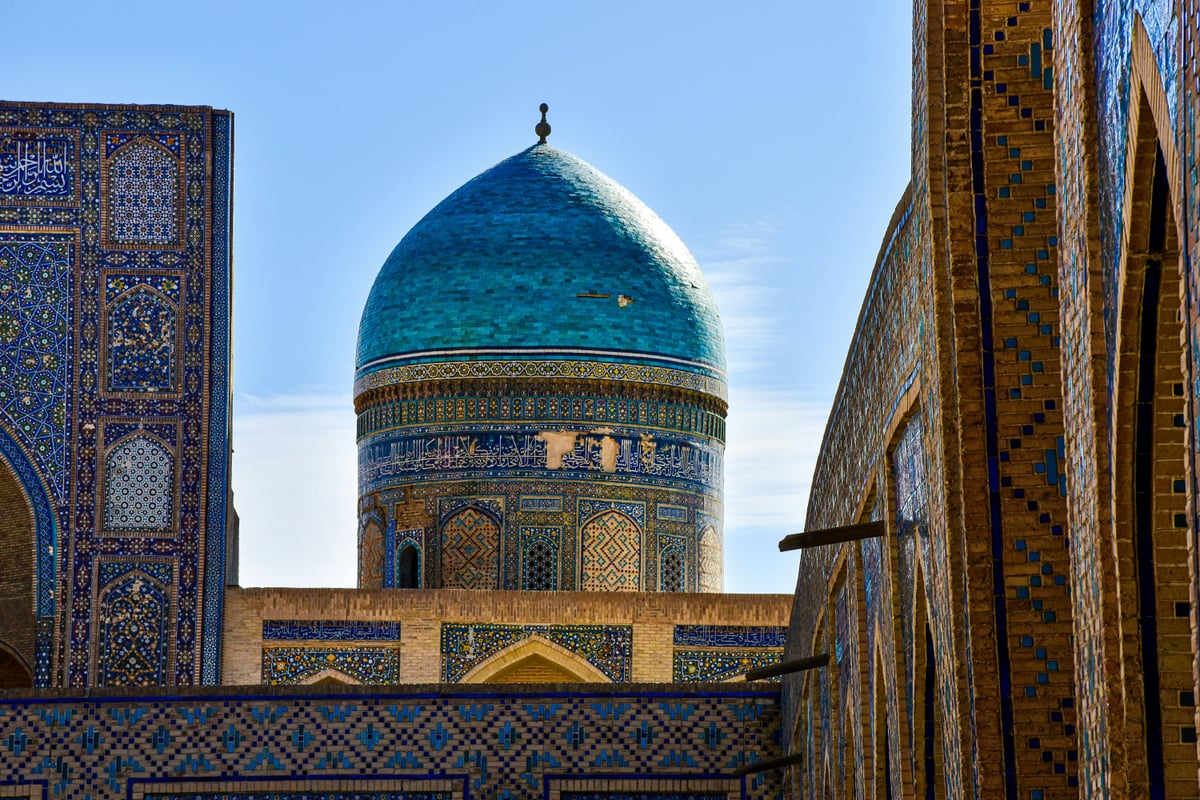
No silk route tour feels complete without Samarkand. This city embodies everything the Silk Roads represented: grandeur, cultural fusion, and the eternal human drive to create beauty.
I still remember my first glimpse of Registan Square at sunrise. Three madrasahs stood shoulder to shoulder, their azure domes catching the early light. The intricate geometric patterns seemed to shimmer and dance. In that moment, I understood why Tamerlane chose this city as his capital, why merchants travelled months to reach its markets, why it earned the nickname "The Pearl of the East."
Essential Sites in Samarkand
The city rewards slow exploration. Don't rush.
Registan Square dominates every visitor's itinerary for good reason. The three madrasahs – Ulugh Beg (1420), Sher-Dor (1636), and Tilya-Kori (1660) – create an architectural ensemble unmatched anywhere in Central Asia. Visit multiple times: during the day to study the tilework details, at sunset for photographers' light, and during evening sound-and-light shows for pure spectacle.
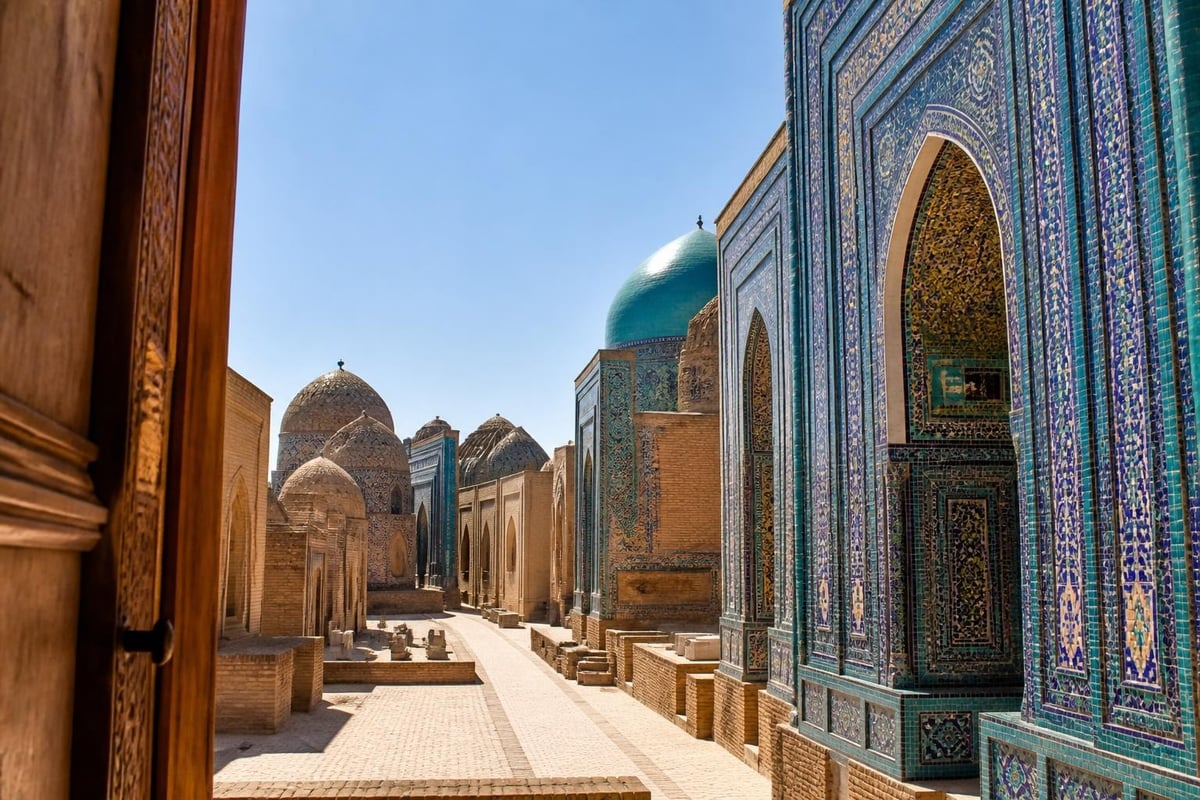
Shah-i-Zinda necropolis climbs a hillside in a dazzling display of mausoleums, each more beautifully decorated than the last. Local legend says the Prophet Muhammad's cousin Kusam ibn Abbas lies buried here, though historians debate this claim. What's undebatable is the emotional power of walking this avenue of remembrance.
Bibi-Khanym Mosque once ranked among the Islamic world's largest mosques. Earthquakes damaged it severely, but restoration work continues, and the remaining structures still convey Tamerlane's ambitions.
For those seeking a deeper understanding of the city's layers, guided walking tours reveal hidden courtyards, local artisans’ workshops, and stories the guidebooks miss. A knowledgeable guide transforms architectural monuments into living history.
Beyond Samarkand: Essential Stops
Bukhara: Living History
Whilst Samarkand impresses with monumental architecture, Bukhara charms through intimacy. This city feels frozen in time. Its old town escaped Soviet-era demolition, preserving a labyrinth of narrow lanes, covered bazaars, and hidden madrasahs.
The Ark fortress has watched over Bukhara for 1,500 years. Emirs ruled from within its walls until 1920. Walking through its gates, you follow the footsteps of countless ambassadors, merchants, and suppliants who approached the throne.
Bukhara's trading domes – covered markets specialising in different goods – still function today. The Toki-Sarrofon (Money-Changers' Dome) and Toki-Telpak-Furushon (Hat-Sellers' Dome) buzz with activity as they did centuries ago, though now they primarily sell crafts to tourists rather than serve caravan traders.
Khiva: The Desert Gem
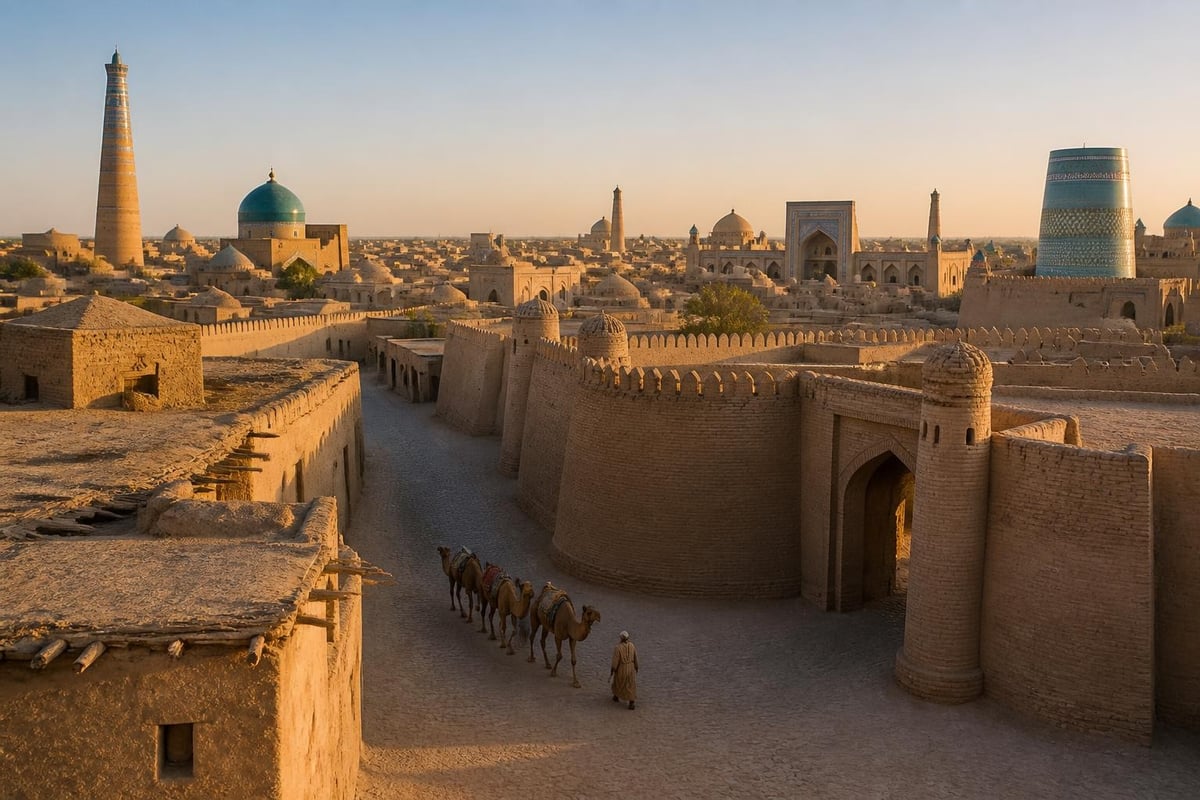
Khiva represents the Silk Roads' most perfectly preserved city. Its inner fortress, Ichan-Qala, appears much as it did in the 1800s. Walking these streets at dusk, when day-trippers depart and shadows lengthen, you might almost expect a silk-laden caravan to round the corner.
The city served as the capital of the Khivan Khanate, one of Central Asia's last independent states. Its rulers built lavishly, creating a compact urban masterpiece. Every structure – from the squat, unfinished Kalta Minor minaret to the soaring Islam Khodja minaret – tells stories of ambition, rivalry, and faith.
Cultural Immersion on Your Silk Route Tour
Architecture forms just one dimension of a silk route tour. The routes' true legacy lives in cultural practices that survived centuries.
Traditional Crafts
Silk Road cities remain centres for traditional crafts:
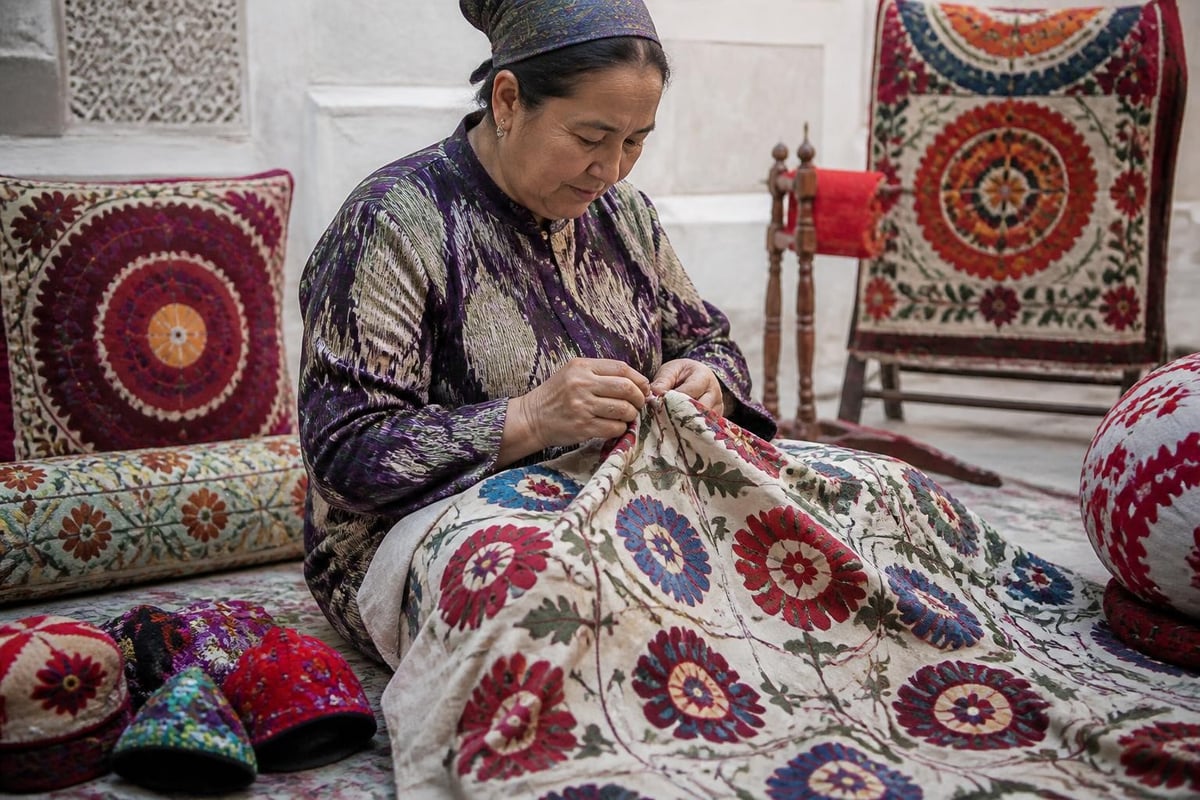
- Suzani embroidery: Large decorative textiles, traditionally part of a bride's dowry, showcase elaborate needlework passed through generations
- Ceramics: Each city developed distinctive styles; Gijduvan blue-green plates differ markedly from Rishtan's vibrant polychrome pieces
- Miniature painting: Persian-influenced art depicting historical scenes, poetry, and court life
- Carpet weaving: Especially in Turkmenistan and western Uzbekistan, where nomadic traditions persist
- Metalwork: Copper engraving, jewellery making, and knife forging continue in family workshops
Visiting artisans' studios enriches your silk route tour immeasurably. Watching a master ceramicist shape clay or an embroiderer create intricate patterns connects you to techniques unchanged for centuries.
Culinary Traditions
Food along the Silk Roads reflects the cultural exchange that defined these routes. Persian, Turkish, Chinese, Russian, and indigenous Central Asian influences blend deliciously.
Plov (pilaf) reigns supreme. Every region, city, and family has their version, but the basic principle remains: rice cooked with meat, carrots, and onions in a qazan (cast-iron cauldron). In Samarkand, wedding plov feeds hundreds, cooked in massive qazans over open fires.
Samsa (savoury pastries), lagman (hand-pulled noodles), manti (steamed dumplings), and shashlik (skewered grilled meat) appear throughout Central Asia, each location adding local variations.
Don't miss the markets. Siyob Bazaar in Samarkand overflows with seasonal produce, dried fruits, nuts, and spices. The sight of pomegranates, melons, apricots, and figs piled high reminds you why merchants braved months of dangerous travel to trade these goods.
Modern Tourism and the Belt and Road Initiative
The 21st century has seen renewed interest in Silk Road tourism, partly driven by China's Belt and Road Initiative. This massive infrastructure project has significantly impacted tourism development and heritage management along historic routes, creating both opportunities and challenges.
Infrastructure Improvements
Recent years have brought dramatic improvements to silk route tour infrastructure:
- High-speed rail: Linking major Uzbek cities, reducing travel times significantly
- Airport expansion: International connections have multiplied, particularly in Samarkand and Bukhara
- Hotel development: From luxury properties to backpacker hostels, accommodation options have expanded
- Digital connectivity: Wi-Fi and mobile coverage now reach most tourist areas
These developments make silk route tour planning easier than ever before, though some worry modernisation may erode authentic experiences.
Sustainable Tourism Challenges
Increased visitor numbers bring challenges. UNESCO-listed sites face pressure from tourism. Registan Square, for instance, hosts concerts and events that some conservationists argue damage historic structures.
Responsible silk route tour operators focus on:
- Supporting local communities directly through homestays and locally-owned businesses
- Respecting cultural sites by following conservation guidelines
- Educating visitors about the sites' significance and fragility
- Distributing tourism benefits beyond the main monuments to lesser-known sites
Practical Tips for First-Time Silk Route Travellers
Visa Requirements
Visa policies have relaxed considerably. Uzbekistan offers visa-free entry for citizens of most Western countries for stays up to 30 days. Always verify current requirements, as policies change.
Transportation Between Cities
Several options connect major silk route tour destinations:
| Method | Speed | Comfort | Cost | Best For |
|---|---|---|---|---|
| High-speed train | Fast | Excellent | Moderate | Main routes (Tashkent-Samarkand-Bukhara) |
| Shared taxi | Medium | Variable | Low-Moderate | Flexibility, smaller towns |
| Domestic flights | Fastest | Good | Moderate-High | Long distances, time-pressed travellers |
| Private driver | Medium | Excellent | High | Custom itineraries, groups |
Money and Budgeting
Uzbekistan remains remarkably affordable. Budget travellers can manage on £25-35 daily, mid-range visitors on £50-80, whilst luxury seekers might spend £150+. Cash (US dollars or euros for exchange) remains important, though card acceptance is growing in cities.
Language Considerations
Russian serves as the lingua franca across Central Asia, whilst Uzbek, Tajik, and other local languages dominate daily life. English spreads slowly. Learning basic Russian phrases dramatically improves your silk route tour experience. Smartphone translation apps help bridge gaps.
Independent Travel Versus Organised Tours
The silk route tour question every traveller faces: go independent or join a group?
Independent Travel Advantages
- Flexibility: Change plans spontaneously, spend extra days where you connect
- Authenticity: Navigate local transport, eat at neighbourhood teahouses, interact more directly with locals
- Budget control: Choose your spending balance between comfort and economy
- Personal pace: Photograph that doorway for an hour if you wish, or skip sites that don't resonate
Organised Tour Benefits
- Expert knowledge: Guides explain historical context and cultural significance you'd otherwise miss
- Logistics handled: No wrestling with train schedules, taxi negotiations, or finding hotels
- Access: Some sites, particularly remote caravanserais, require permissions or are difficult to reach independently
- Social connections: Travel with like-minded history enthusiasts
Many seasoned travellers recommend a hybrid approach: arrange key experiences (historical site tours, craft workshops, local family dinners) whilst maintaining flexibility for independent exploration.
Lesser-Known Silk Route Destinations
Popular destinations like Samarkand deserve their fame, but adventurous silk route tour travellers should consider:
Shakhrisabz: Tamerlane's birthplace, home to the ruins of his summer palace, Ak-Saray. The entrance portal alone stands 38 metres high; the complete structure must have been breathtaking.
Termez: Near the Afghan border, this ancient city preserves Buddhist stupas, Greco-Bactrian ruins, and early Islamic monuments, reflecting Central Asia's pre-Islamic heritage.
Nukus: Home to the Savitsky Museum, one of the world's most unlikely art collections. Soviet-era dissident art fills this remote museum, saved from destruction by one determined curator.
Fergana Valley: Uzbekistan's most fertile region, producing silk, ceramics, and stone carving. The valley's craft traditions run deeper than in better-known cities.
The Spiritual Dimension
The Silk Roads carried more than goods. Buddhism, Christianity, Islam, and other faiths spread along these routes, leaving architectural and cultural traces.
Islam dominates modern Central Asia, but earlier religious influences persist. Buddhist cave complexes dot certain regions. Zoroastrian fire temples (now mostly ruins) remind visitors of pre-Islamic Persia. Nestorian Christian gravestones turn up in archaeological digs.
Many travellers find their silk route tour becomes unexpectedly spiritual. Standing in a 600-year-old mosque during evening prayers, watching elderly men perform rituals unchanged for centuries, or simply experiencing the desert's vast silence can provoke profound reflection.
Packing for Your Silk Route Tour
What you bring significantly affects your comfort:
Clothing considerations:
- Modest dress for mosque visits and conservative areas (shoulders and knees covered)
- Layers for temperature swings (hot days, cool evenings, air-conditioned spaces)
- Comfortable walking shoes (you'll cover kilometres on uneven historic pavements)
- Sun protection (hat, sunglasses, high-SPF sunscreen)
Essential items:
- Reusable water bottle with filter
- Universal power adapter
- Headtorch for poorly lit historic sites
- Small daypack for excursions
- Hand sanitiser and tissues (toilet facilities vary)
Photography equipment:
- Wide-angle lens for architecture
- Polarising filter to manage bright sunlight
- Extra batteries (not always available locally)
- Respectful approach (always ask permission for portraits)
Health and Safety
Central Asia generally proves safe for travellers. Violent crime targeting tourists remains rare. Standard precautions apply:
- Avoid unlit areas after dark
- Watch belongings in crowded bazaars
- Use registered taxis or ride-hailing apps
- Keep copies of important documents separate from originals
Health-wise, the main concerns are travellers' diarrhoea and dehydration. Drink bottled water, eat at busy restaurants where food turns over quickly, and wash hands frequently. The desert climate dehydrates you faster than you'd expect; drink constantly.
A silk route tour offers transformation, not just tourism. You return changed, carrying stories of extraordinary architecture, warm hospitality, and a deeper understanding of how our interconnected world was forged centuries ago through cultural exchange along these ancient pathways. Whether you're drawn by the azure domes of Samarkand, the living bazaars of Bukhara, or simply the romance of following in Marco Polo's footsteps, the Silk Roads continue to reward those who journey along them. Visit Samarkand provides the perfect gateway to begin your exploration, offering both complimentary and in-depth walking tours that bring the city's layered history to life through expert guides and thoughtfully designed routes that reveal the hidden stories behind the monuments.