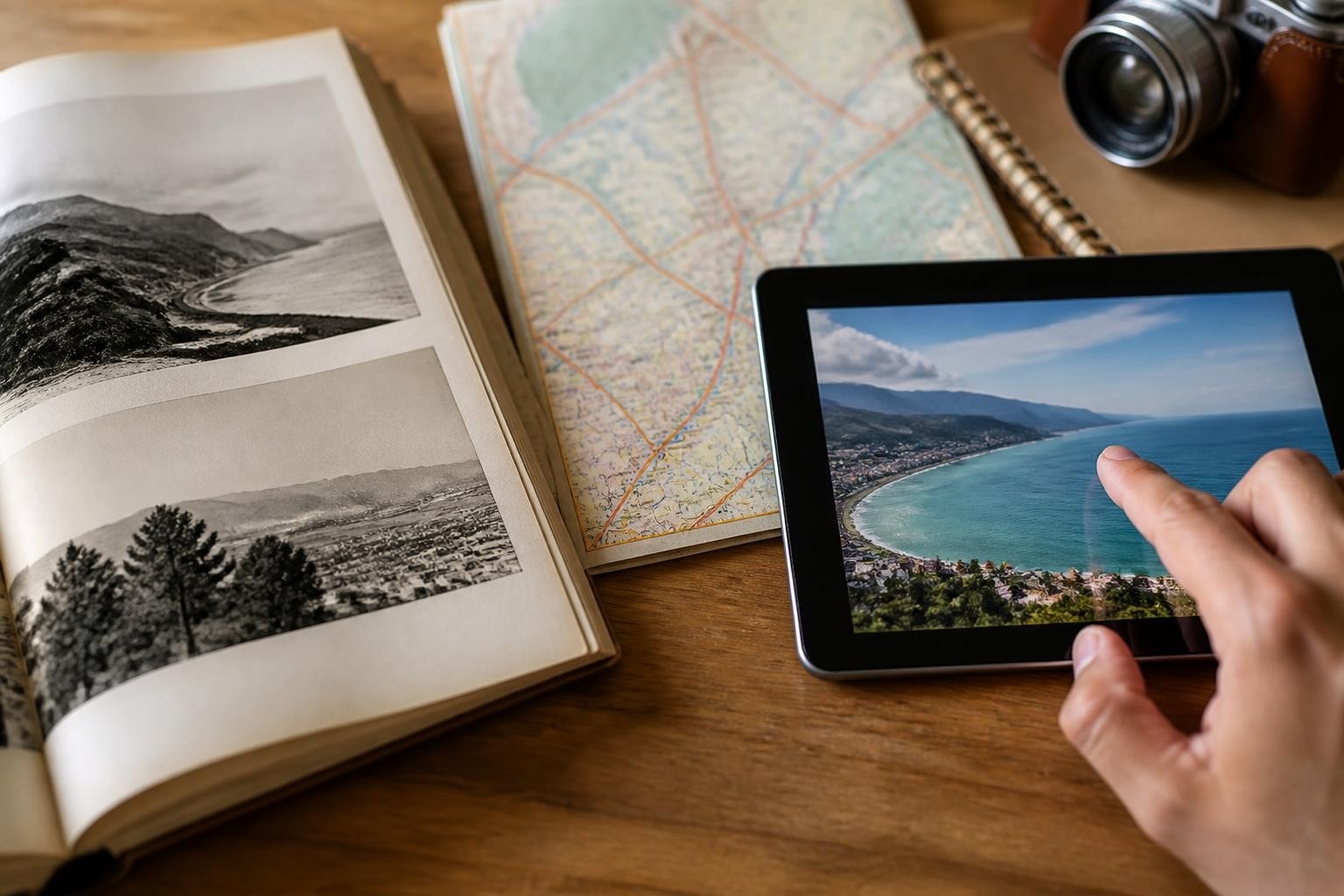
The worn pages of a tour book hold more than just facts and figures. They carry the promise of discovery, the anticipation of wandering through ancient streets, and the whisper of stories waiting to unfold. For centuries, travellers have clutched these companions close, trusting them to unlock the secrets of unfamiliar places. Today, whether printed or digital, a well-crafted tour book remains the bridge between curiosity and authentic experience, transforming casual visitors into engaged explorers who truly connect with a destination's soul.
The Timeless Appeal of the Tour Book
The tour book has survived the digital revolution for a simple reason: people crave curated knowledge. When visitors arrive in a new city, they face overwhelming choices. Which monument deserves their limited time? What story makes a building more than just old stones? A thoughtfully designed tour book answers these questions with authority and warmth, becoming a trusted companion rather than just an information dump.
The best tour books share common DNA:
- They tell stories that transform facts into memories
- They anticipate questions before visitors ask them
- They balance practical information with emotional connection
- They respect the reader's intelligence whilst remaining accessible
In 2026, the travel guide market continues to evolve, with Publishers Weekly noting sustained demand for both printed and digital formats. Travellers increasingly seek specialised, locally-produced guides over generic mass-market options.
Why Walking Tours Need Exceptional Tour Books
Walking tours present unique challenges. Participants juggle listening to a guide, watching their footing, taking photos, and absorbing new information. A tour book serves as the memory they can't fully form in the moment. It captures what they heard, enriches what they saw, and provides context they'll appreciate later.
For a city like Samarkand, where every turquoise dome and intricate mosaic carries layers of Silk Road history, the tour book becomes essential. It extends the guide's voice beyond the tour itself, allowing visitors to revisit the experience and share stories with others.
Crafting Content That Resonates
The heart of any tour book beats in its storytelling. Dry historical facts fade quickly, but stories stick. When describing the Registan Square, don't just list construction dates. Share the story of the mathematicians who studied there, the merchants who traded in its shadow, the craftsmen whose descendants still work nearby.
Structuring Information for Maximum Impact
Your tour book should work like a conversation, not a lecture. Start each section with a hook that creates curiosity. A question, an anecdote, or a striking detail pulls readers in before you deliver deeper information.
Information hierarchy matters tremendously:
- The Hook — Open with intrigue or wonder
- Essential Context — What visitors need to understand now
- Rich Detail — Deeper historical or cultural layers
- Practical Tips — How to experience it fully
- Personal Connection — Why this matters to their journey
The National Park Service’s interpretive planning guidance offers invaluable frameworks for structuring visitor information. Though written for parks, the principles apply beautifully to urban heritage sites. The key is connecting tangible resources to intangible meanings.
Writing With Voice and Authenticity
Generic tour book language sounds like it was written by a committee and translated twice. Your voice should reflect the character of your destination. For Samarkand, that might mean weaving in Persian poetry references, acknowledging the city's role as a crossroads of civilizations, and celebrating the hospitality that defines Uzbek culture.
Voice guidelines for tour book writing:
- Use active verbs that create mental pictures
- Choose specific details over vague descriptions
- Address readers directly as "you" to create intimacy
- Vary sentence length for rhythm and emphasis
- Include local words with gentle explanations
When exploring free walking tour options through platforms like Visit Samarkand, participants receive verbal storytelling that brings the city's heritage alive. A complementary tour book captures those narratives in a format visitors can treasure long after returning home.

Design Elements That Enhance Experience
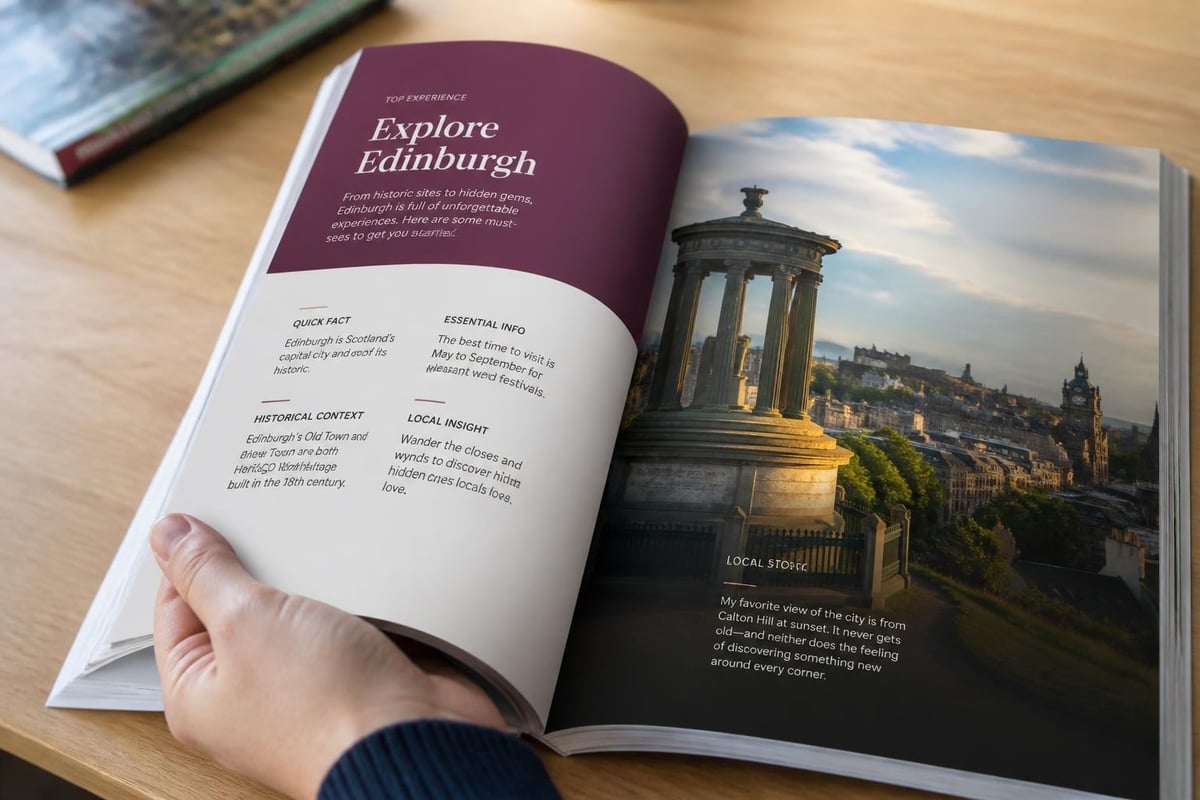
A tour book's design either supports or sabotages its content. The most beautifully written guide fails if readers can't navigate it quickly or if the layout causes eye strain. In 2026, design thinking has evolved beyond mere aesthetics to embrace accessibility and user experience as foundational principles.
Visual Hierarchy and Navigation
Readers shouldn't hunt for information. Clear visual hierarchy guides the eye naturally through content layers. Headers, subheaders, bullet points, and pull quotes all serve as signposts helping visitors find what they need exactly when they need it.
| Design Element | Purpose | Best Practice |
|---|---|---|
| Headers | Section identification | Use consistent hierarchy (H2, H3 only) |
| Pull Quotes | Highlight key insights | One per page maximum |
| Sidebars | Practical tips or fun facts | Visual distinction from main text |
| Icons | Quick reference points | Simple, culturally appropriate |
| White Space | Reading comfort | At least 30% of page |
Maps deserve special attention in any tour book. They should be simple enough to grasp at a glance yet detailed enough to prevent visitors from getting lost. Number your stops clearly and ensure map numbers match the text perfectly. Nothing frustrates readers more than hunting for "Stop 7" that appears as "Location 7" on the map.
Photography and Illustration Choices
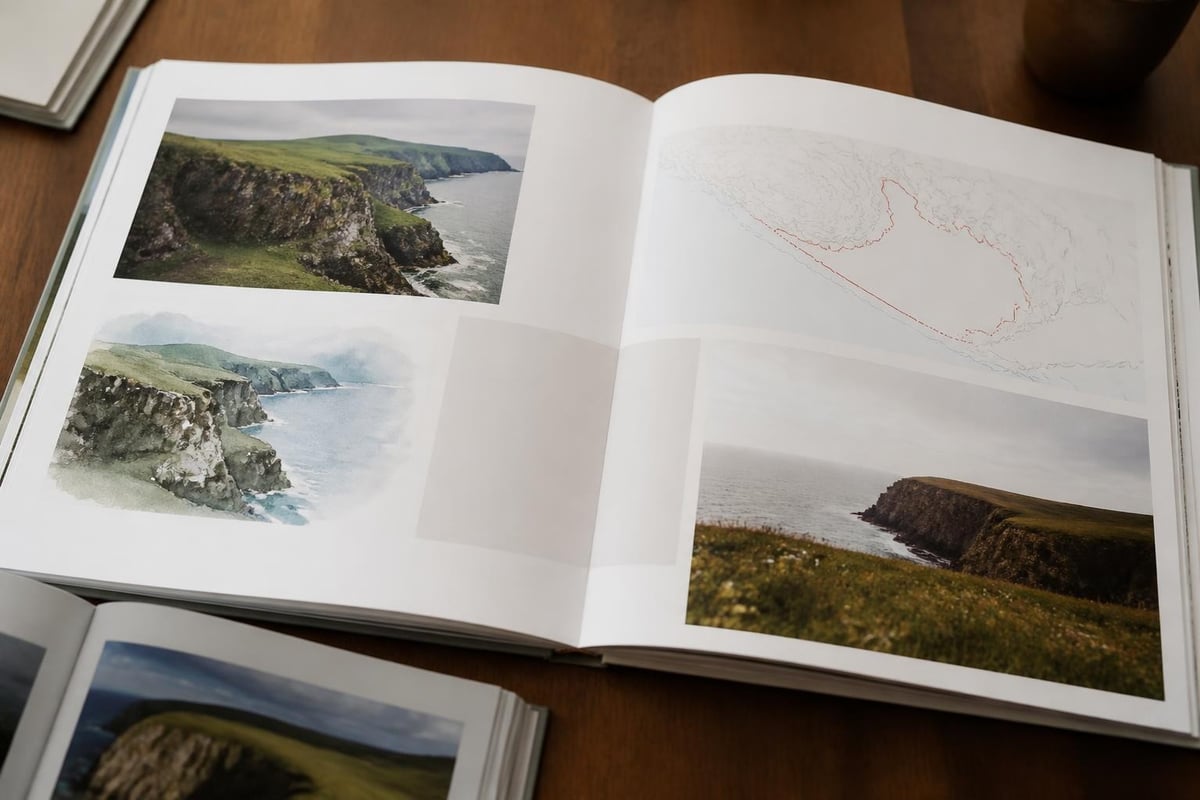
Images in a tour book serve multiple purposes. They inspire, they orient, and they document. When selecting or commissioning photography, think beyond the obvious postcard shots. Include detail photos that guide visitors to notice what they might otherwise miss: the geometric patterns in tilework, the calligraphy above doorways, the way light falls at different times of day.
Copyright considerations matter enormously. The U.S. Copyright Office provides practical guidance on using photographs, which applies internationally through various treaties. When creating a tour book, either commission original photography, use properly licensed stock images, or leverage creative commons resources with proper attribution.
The Digital-Physical Balance
The debate over printed versus digital tour books has largely resolved into "both." Each format offers distinct advantages, and forward-thinking tour operators provide options for different preferences and use cases.
Print: The Tactile Companion
Printed tour books don't require battery life or signal strength. They work in direct sunlight. Readers can flip quickly between sections, mark pages, and write marginal notes. There's also something psychologically powerful about physical souvenirs. A printed tour book becomes a tangible memory object, often kept for years on coffee tables where it sparks conversations.
Advantages of printed tour books:
- No technical barriers or learning curves
- Superior readability in bright outdoor conditions
- Becomes a keepsake with personal annotations
- Can be shared easily among travel companions
- Works anywhere without connectivity
When producing printed tour books, accessibility guidelines still apply. The W3C provides PDF-specific techniques that ensure your printed-then-scanned or PDF-distributed tour books remain accessible to users with disabilities. Proper heading structure, alternative text for images, and logical reading order matter in both digital and print-to-PDF workflows.
Digital: The Interactive Guide
Digital tour books embrace capabilities impossible in print. They can include audio pronunciations of local words, embedded video clips of traditional crafts, and dynamic maps that show your current location. They update instantly when information changes, and they occupy zero space in a traveller's luggage.
Research on smartphone self-guided excursions demonstrates that mobile-first tour materials can enhance learning outcomes when designed thoughtfully. The key is balancing interactivity with simplicity. Too many bells and whistles distract from the actual experience of being present in a remarkable place.
Hybrid Solutions That Work
The smartest approach combines both formats strategically. Offer a concise printed tour book with essential information, maps, and beautiful photography. Supplement it with a digital companion featuring audio guides, video content, updated practical information, and deeper dive articles for particularly interested visitors.
| Format | Best For | Challenges |
|---|---|---|
| Print Only | Heritage sites, older demographics | Updates require reprinting |
| Digital Only | Tech-savvy travellers, budget constraints | Excludes less digital audiences |
| Print + Digital | Maximum reach and satisfaction | Higher production costs |
Some tour operators, like those offering northern lights tours in Iceland, use this hybrid model effectively. They provide printed guides with essential information whilst maintaining apps or websites with real-time updates about viewing conditions and detailed astronomical explanations for curious participants.
Production Considerations for Tour Books
Creating a professional tour book involves more than writing and design. Production decisions affect quality, cost, and environmental impact. Whether you're printing fifty copies or five thousand, these choices matter.
Selecting Materials and Printing Methods
Paper weight, binding style, and cover treatment all influence how your tour book performs in the field. A tour book that falls apart after one rainy afternoon fails its core mission. Consider durability alongside aesthetics.
Print production checklist:
- Paper stock (minimum 80gsm for longevity)
- Binding (saddle-stitch for under 48 pages, perfect-bound for longer)
- Cover treatment (lamination protects against moisture and wear)
- Size (pocket-sized encourages use, larger allows bigger maps)
- Colour accuracy (especially for architectural and artistic heritage)
For digital tour books, the JSTOR publisher guidelines for accessible PDFs offer a practical checklist. Though aimed at academic publishers, the standards apply to any professional digital publication. Proper tagging, logical structure, and embedded fonts ensure your digital tour book works across devices and assistive technologies.
Budgeting and Distribution
Tour book costs vary wildly based on complexity and scale. A simple black-and-white stapled guide might cost under £1 per copy in quantity. A full-colour perfect-bound book with premium paper could exceed £5 per copy. Digital production shifts costs from printing to development and hosting.
Budget categories to consider:
- Content creation (writing, photography, fact-checking)
- Design and layout (software, designer fees)
- Print production (setup, printing, binding)
- Digital development (app development, hosting, maintenance)
- Distribution (shipping, storage, digital infrastructure)
- Updates and revisions (annual or seasonal)
Distribution strategy depends on your business model. Free tour operations might offer tour books at cost or subsidize them through sponsorships. Paid tours often include a tour book in the experience price. Some operators sell premium versions as standalone products, creating an additional revenue stream.
Keeping Your Tour Book Current
A tour book becomes obsolete the moment a featured restaurant closes or opening hours change. Maintaining accuracy requires systems and commitment. The effort pays dividends in visitor satisfaction and trust.
Building Update Processes
Establish regular review cycles tied to seasonal changes or annual calendars. Assign specific team members to verify different categories of information: historical content remains stable, but practical details need frequent checking.
Information volatility guide:
- Static (review annually): Historical narratives, architectural descriptions, cultural context
- Moderate (review quarterly): General venue hours, transport routes, pricing ranges
- Dynamic (review monthly): Special events, temporary closures, seasonal considerations
For digital tour books, updates can deploy immediately. For printed versions, consider including a companion website URL where visitors can check updates. Some tour books print "Valid through [date]" to set clear expectations about currency.
Gathering Feedback for Improvement
Your tour participants are your best editors. Create simple feedback mechanisms that capture what worked, what confused, and what they wished they'd known. A quick QR code linking to a feedback form makes this effortless in 2026.
Analyse which sections readers reference most frequently. Notice where they ask questions that should have been answered in the tour book. Track comments about readability, size, and usability. This intelligence shapes your next edition into an even more valuable resource.
Tour Books as Marketing Tools
A brilliant tour book doesn't just serve current participants. It attracts future ones. People share remarkable tour books with friends, post photos on social media, and write reviews mentioning the quality of materials provided. Your tour book becomes an ambassador for your brand.
Extending Reach Through Shareability
Design elements that encourage sharing multiply your tour book's impact. Beautiful photography invites social media posts. Interesting facts beg to be repeated. Clear, enthusiastic writing makes people want to recommend your tour to others.
Consider including a "Share Your Experience" section with your social media handles and suggested hashtags. Make it easy for satisfied participants to become vocal advocates. Some tour books include perforated postcards or bookmark inserts that serve as both practical tools and brand reminders.
Building Brand Through Quality
Every detail of your tour book communicates your values. Thoughtful writing suggests knowledgeable guides. Beautiful design implies attention to detail. Durable production demonstrates respect for your participants' investment. Accessible formats show inclusive thinking.
For organizations like the Silk Road Travel Academy, which sponsors accessible tourism education, a well-crafted tour book embodies the mission. It makes cultural heritage accessible not just during the tour but afterwards, extending learning and appreciation far beyond the walking experience itself.
A well-crafted tour book transforms casual sightseeing into meaningful exploration, turning visitors into storytellers who carry your destination's magic forward. Whether you choose print, digital, or a thoughtful combination of both, the investment in quality content and design pays dividends in visitor satisfaction and word-of-mouth marketing. Visit Samarkand demonstrates this commitment through free walking tours that bring the city's extraordinary heritage alive, supported by resources that help visitors truly understand and appreciate the jewel of the Silk Road.