
The dawn broke over the Registan Square in Samarkand, and Maria from Barcelona was already there with her phone in hand, following the route she'd discovered the night before. She'd stumbled upon a small tourism web platform whilst researching Central Asian destinations, and within minutes, she'd booked a free walking tour that would change how she experienced travel forever. This scenario plays out thousands of times daily across the globe, as travellers increasingly rely on digital platforms to unlock authentic experiences in destinations they've never visited. The tourism web has evolved from simple brochure sites into sophisticated ecosystems that bridge cultures, enable discoveries, and transform how we explore our world.
The Evolution of Digital Tourism Platforms
Remember when planning a trip meant collecting paper brochures and phoning tourist offices during business hours? Those days feel like ancient history now. The tourism web has undergone a remarkable transformation over the past two decades, shifting from static information repositories to dynamic, interactive platforms that anticipate traveller needs before they're even articulated.
In 2026, a successful tourism web presence must do far more than list attractions and opening times. Modern travellers expect seamless booking experiences, authentic storytelling, and the ability to discover hidden gems that aren't plastered across every guidebook. The platforms that thrive are those that understand this fundamental shift from information provision to experience curation.
From Static Pages to Dynamic Experiences
The early tourism web consisted largely of digitized pamphlets-attractive photographs paired with basic descriptions. Today's platforms incorporate:
- Real-time availability and booking systems that eliminate the frustration of discovering tours are full
- User-generated content and reviews that provide social proof and authentic perspectives
- Personalisation engines that suggest experiences based on individual interests and behaviours
- Multi-language support that makes destinations accessible to global audiences
- Mobile-first design that recognizes most travel research happens on smartphones
This evolution hasn't been optional. Travellers have become accustomed to the seamless experiences provided by major platforms, and they expect the same from smaller, destination-specific sites.
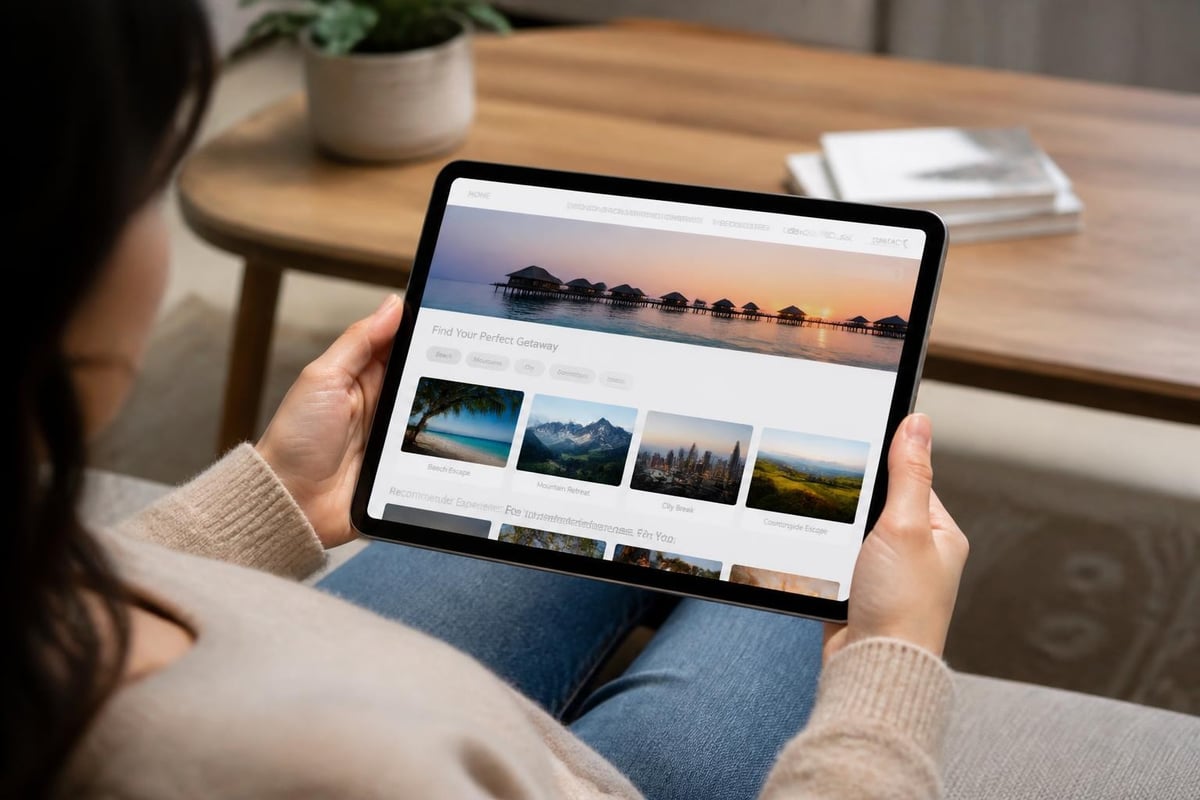
Building Trust Through Your Tourism Web Presence
Trust forms the bedrock of any successful tourism web platform. When someone books an experience in a destination they've never visited, they're taking a leap of faith. Your digital presence must catch them.
Consider the traveller's perspective: they're scrolling through dozens of options, comparing prices, reading reviews, and trying to gauge whether your offering is legitimate or just another tourist trap. Every element of your tourism web design either builds or erodes that crucial trust.
Essential Trust Signals
Your website architecture should incorporate multiple layers of credibility:
| Trust Element | Implementation | Impact |
|---|---|---|
| Authentic photography | Original images of actual tours and locations | Builds realistic expectations |
| Transparent pricing | Clear cost breakdowns with no hidden fees | Reduces booking anxiety |
| Genuine reviews | Verified testimonials with names and dates | Provides social proof |
| Clear policies | Straightforward cancellation and refund terms | Demonstrates professionalism |
| Security indicators | SSL certificates and secure payment processing | Protects sensitive data |
The PCI Security Standards Council guidance becomes particularly relevant when implementing payment systems, even for free tours that accept donations or offer paid upgrades. Protecting visitor data isn't merely good practice-it's a legal requirement that builds confidence in your tourism web platform.
Performance: The Invisible Make-or-Break Factor
Here's a truth that many tourism operators learn the hard way: a beautiful website that loads slowly is worse than a simple site that loads instantly. When someone's researching travel options, they're typically comparing multiple sites simultaneously. If your tourism web page takes more than three seconds to load, they've already moved on to a competitor.
The importance of Core Web Vitals cannot be overstated. Google now uses page experience as a ranking factor, which means slow sites don't just frustrate users-they also disappear from search results. For tourism businesses that rely on organic search traffic, this is existential.
Optimising for Global Audiences
Tourism inherently involves global audiences, which adds complexity to performance optimization. A site that loads quickly in London might crawl in Lima. The techniques outlined in Smashing Magazine’s guidance on serving global audiences become invaluable here:
- Implement a Content Delivery Network (CDN) to serve assets from servers geographically close to users
- Optimise images aggressively without sacrificing the visual appeal that travel content demands
- Lazy-load below-the-fold content so initial page renders happen instantly
- Minimize third-party scripts that can drag down performance unpredictably
- Test from multiple global locations using tools that simulate real-world conditions
For a destination like Samarkand, where visitors might be connecting from Tokyo, Sydney, Berlin, or São Paulo, this global perspective on performance becomes particularly crucial. The web.dev resources on Core Web Vitals provide practical, step-by-step approaches to measuring and improving these metrics.
Accessibility: Opening Doors for Everyone
The most beautifully designed tourism web platform in the world fails if it excludes potential visitors with disabilities. Accessibility isn't merely a legal checkbox-it's a moral imperative and, frankly, good business sense. People with disabilities travel, often with companions, and they actively seek out businesses that accommodate their needs.
Modern accessibility standards, including the evolving WCAG 3.0 guidelines, provide comprehensive frameworks for creating inclusive digital experiences. For tourism web platforms, this means:
- Alternative text for every image that conveys meaningful information
- Keyboard navigation for all interactive elements, from booking forms to image galleries
- Sufficient colour contrast so text remains readable for users with visual impairments
- Screen reader compatibility ensuring assistive technologies can parse and convey content
- Captioning for video content showcasing destinations and experiences
When you make your tourism web platform accessible, you're not just helping people with permanent disabilities-you're improving the experience for anyone dealing with temporary impairments (a broken arm, eye strain) or situational limitations (bright sunlight washing out screens, noisy environments where audio can't be heard).

Content Strategy: Telling Stories That Convert
Facts inform, but stories sell. The most effective tourism web platforms understand this distinction viscerally. When someone's deciding whether to book an experience, they're not primarily concerned with operational logistics-they want to know how they'll feel, what they'll discover, and which stories they'll bring home.
Balancing Inspiration with Information
The content challenge for any tourism web presence involves serving two distinct but overlapping audiences:
Dreamers who are browsing possibilities, often months before travel dates are confirmed. They need:
- Evocative descriptions that paint sensory pictures
- Compelling photography that triggers emotional responses
- Authentic narratives from previous visitors
- Context about why experiences matter culturally or historically
Planners who have committed to visiting and need practical details. They require:
- Precise meeting points with maps and landmarks
- Duration, difficulty levels, and what to bring
- Booking processes that are straightforward and quick
- Clear policies on cancellations, weather, and group sizes
Your tourism web content architecture must serve both audiences simultaneously. A well-structured page begins with inspiration-the hook that makes someone want to participate-then seamlessly transitions into practical details that enable booking.
Visit Samarkand demonstrates this balance effectively on their platform, where rich historical context about the Silk Road and architectural wonders creates desire, whilst clear logistics about free walking tours enable action. This dual approach doesn't happen accidentally-it requires intentional content design.

Technical Foundations: Structured Data and Search Visibility
Behind the scenes of every successful tourism web platform runs code that search engines can understand and interpret. Structured data, particularly Schema.org’s TouristAttraction markup, enables search engines to surface your offerings in rich results-those enhanced listings that include ratings, prices, and availability directly in search results.
Implementing structured data isn't just technical housekeeping; it's competitive advantage. When someone searches "free walking tours Samarkand," properly marked-up content can appear with review stars, tour durations, and booking links whilst competitors show only basic blue links.
Essential Markup for Tourism Platforms
The following structured data types should appear on virtually every tourism web platform:
- TouristAttraction for destinations and landmarks featured in tours
- TouristTrip for the experiences themselves, with itineraries and highlights
- Organization for your business, including contact details and social profiles
- Review for testimonials and ratings (when using aggregated scores)
- FAQPage for common questions about booking, accessibility, and policies
This markup transforms your tourism web presence from a collection of human-readable pages into a machine-understandable knowledge graph that search engines can confidently present to users.
User Experience: Reducing Friction in the Booking Journey
Every click between discovery and confirmation represents an opportunity for potential customers to abandon your tourism web platform. Research from the Baymard Institute on travel site UX reveals that 69% of travel and tourism bookings are abandoned before completion-a staggering failure rate that most businesses could dramatically improve with thoughtful design.
Common Friction Points and Solutions
| Friction Point | Why It Matters | Solution |
|---|---|---|
| Forced account creation | 25% of users abandon at registration | Allow guest checkout with optional account creation |
| Unclear pricing | Hidden fees destroy trust | Display all costs upfront, including optional additions |
| Multi-page forms | Each page adds abandonment risk | Use single-page or accordion-style forms |
| Unclear confirmation | Booking anxiety persists | Immediate on-screen confirmation plus email backup |
| Poor mobile experience | 67% of travel research happens on mobile | Design mobile-first, not desktop-adapted |
For free walking tours, the friction equation changes slightly. You're not battling payment hesitation, but you still face commitment barriers. Making booking effortless-ideally requiring only a name and email-maximizes participation whilst building a contact list for future communications.
Multilingual Challenges and Opportunities
A tourism web platform serving international visitors must grapple with language in sophisticated ways. Machine translation has improved remarkably, but it remains insufficient for nuanced cultural and historical content. Clumsy translations undermine credibility and can even cause offense when cultural contexts are misunderstood.
Professional translation represents an investment, but prioritization makes it manageable:
- Translate core booking flows first so visitors in any language can complete reservations
- Focus on your top three visitor languages based on analytics rather than assumptions
- Maintain separate URLs for language versions to maximize SEO value
- Use native speakers for cultural content where historical and social context matters
- Implement proper hreflang tags so search engines serve the correct language version
The multilingual challenge extends beyond mere translation to cultural adaptation. Imagery, colour schemes, and even layout preferences vary across cultures. A tourism web platform serving Japanese visitors might emphasize group experiences and detailed itineraries, whilst Australian visitors might respond better to flexibility and adventure framing.
Building Community Through Your Tourism Web Platform
The most sophisticated tourism web platforms transcend transactional relationships to cultivate communities. When visitors feel connected to a destination before arrival, they engage more deeply during their visit and advocate more enthusiastically afterwards.
Community-building tactics for tourism web platforms include:
- User-generated galleries where past participants share photographs from experiences
- Discussion forums or comment sections where future visitors can ask questions
- Local contributor programmes featuring guides, historians, and cultural experts
- Newsletter communities that share destination updates and lesser-known stories
- Social proof integration displaying recent bookings and reviews in real-time
These elements transform your tourism web presence from a booking engine into a destination in its own right-a place where curious travellers gather, share knowledge, and build anticipation together.
Analytics and Continuous Improvement
Your tourism web platform generates valuable data with every visitor interaction. The businesses that thrive are those that systematically analyse this data and act on insights.
Metrics That Matter
Beyond vanity metrics like total visitors, focus on indicators that drive business outcomes:
- Booking conversion rate: What percentage of visitors complete reservations?
- Time to conversion: How many visits occur before booking?
- Device breakdown: Where do conversions happen (mobile vs. desktop)?
- Traffic source performance: Which channels deliver the highest-quality visitors?
- Drop-off points: Where do users abandon the booking process?
Armed with these insights, you can prioritize improvements that deliver measurable results. Perhaps mobile bookings convert poorly because your form doesn't autofill properly. Or maybe visitors from social media bounce quickly because landing pages don't match the content that attracted them.
The tourism web demands perpetual evolution. What works brilliantly today might feel outdated next year as traveller expectations shift and new technologies emerge. Businesses that embrace this reality and build improvement into their operational rhythm consistently outperform those that launch platforms and consider them finished.
A thoughtful tourism web presence does more than facilitate bookings-it opens cultural doorways, builds bridges between communities, and transforms how people experience the world's magnificent diversity. Whether you're optimizing performance metrics, crafting compelling narratives, or ensuring accessibility for all visitors, every improvement makes authentic cultural exchange more possible. Visit Samarkand embodies this philosophy through free walking tours that make the city's extraordinary Silk Road heritage accessible to everyone, demonstrating how digital platforms can democratize cultural experiences whilst maintaining the authenticity that makes travel transformative.