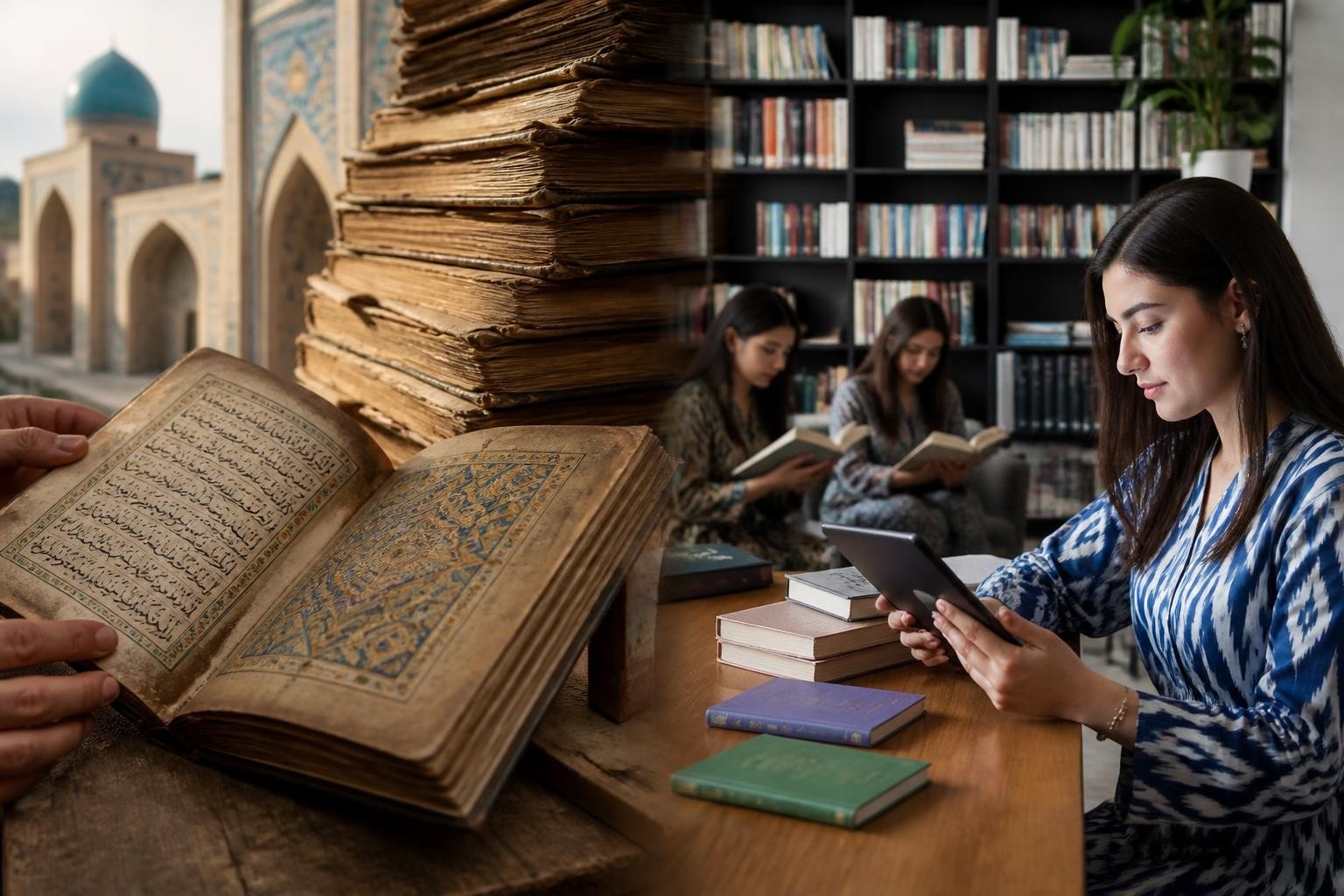
The pages of an uzbekistan book carry more than words. They hold centuries of poetry, scientific discovery, and the whispered conversations of scholars who once gathered in the courtyards of Samarkand's madrasahs. When you open a manuscript from this region, you're not simply reading text-you're touching a thread that connects the Silk Road's greatest minds, from astronomers charting the heavens to poets who could make even the cruelest khan weep. Today, that literary tradition continues to evolve, blending ancient storytelling techniques with modern digital platforms, creating a bridge between past and present that travellers and readers alike can cross.
The Ancient Manuscript Tradition
Walking through Samarkand's historic quarters, you might stumble upon references to the city's golden age as a centre of learning. Between the 9th and 15th centuries, this oasis city became one of the Islamic world's premier intellectual hubs, and books were its currency.
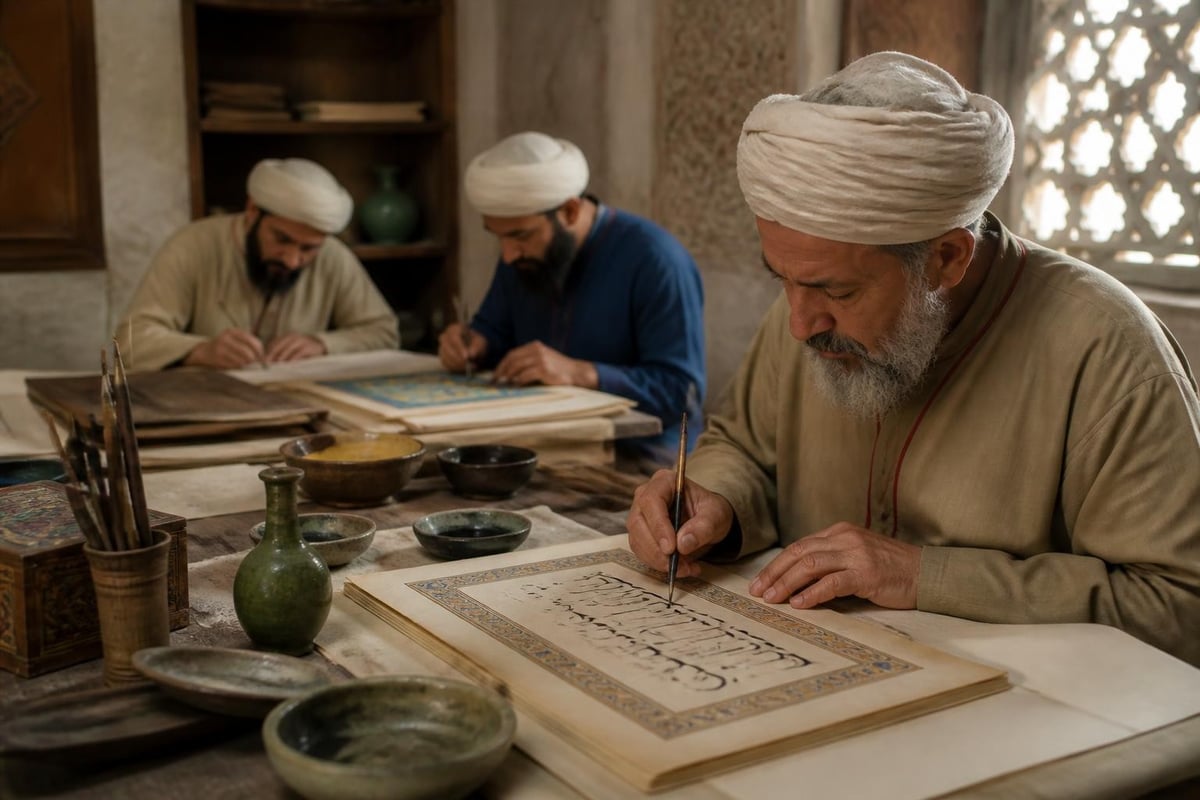
Scribes worked in cramped workshops, their fingers stained with ink made from soot and gum arabic. Each uzbekistan book they produced was a work of art, featuring:
- Calligraphic mastery in Arabic, Persian, and Chagatai scripts
- Illuminated margins decorated with geometric patterns and floral motifs
- Gold-leaf accents that caught candlelight in private libraries
- Mathematical diagrams that would influence European science centuries later
The National Library of Uzbekistan now houses many of these treasures, digitising manuscripts that survived wars, fires, and the simple entropy of time. Their online database offers glimpses into this heritage, though nothing compares to seeing these texts in person.
The Science Behind the Stories
Ulugh Beg, the astronomer-king who ruled Samarkand in the 15th century, understood that knowledge lived and died with books. His astronomical tables-compiled at the observatory whose ruins still stand outside the city-circulated throughout the Islamic world and eventually reached Renaissance Europe.
But here's what makes an uzbekistan book from this era remarkable: these weren't dry academic texts. Astronomers embedded their findings in narrative frameworks. Medical manuals included case studies told as stories. Even mathematical treatises often began with poetry.
| Manuscript Type | Primary Language | Survival Rate | Current Locations |
|---|---|---|---|
| Astronomical tables | Arabic/Persian | ~15% | Tashkent, London, Paris |
| Medical texts | Arabic | ~25% | Samarkand, Bukhara libraries |
| Poetry anthologies | Chagatai | ~40% | National collections |
| Religious commentary | Arabic | ~50% | Mosque libraries, private collections |
This storytelling approach wasn't accidental. It served a practical purpose: oral transmission. Students memorised these texts by anchoring facts to narratives, a technique modern educators are only now rediscovering.
The Soviet Chapter and Its Contradictions
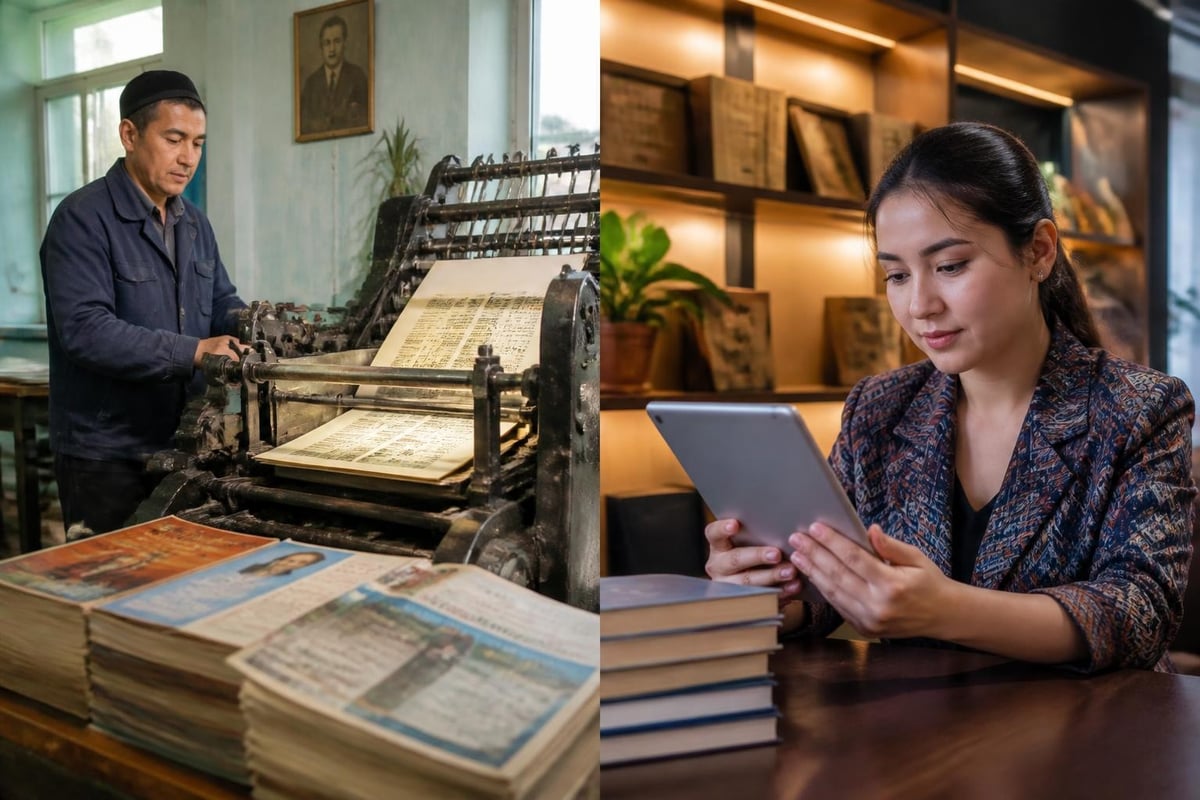
The 20th century brought dramatic changes to Uzbekistan's book culture. Soviet authorities launched aggressive literacy campaigns, pushing reading rates from roughly 4% in 1920 to nearly universal literacy by the 1970s. Yet this progress came with strings attached.
The Cyrillic script replaced traditional Arabic-based writing in 1940. Entire libraries were purged. Religious texts vanished from public view. An uzbekistan book published in Tashkent during the 1960s would celebrate collective farming whilst ignoring the region's pre-Soviet intellectual achievements.
My grandmother, who worked as a librarian in Samarkand during those years, once described the contradictions:
"We had more books than ever before, printed on modern presses in huge runs. But the books we truly wanted-our classical poetry, our histories written by our own scholars-those we had to copy by hand and hide."
Underground Literary Networks
Beneath official Soviet publishing, a shadow book culture persisted. Families maintained secret libraries. Sufi orders preserved banned texts. Samizdat networks circulated typed copies of forbidden uzbekistan book titles, from religious commentaries to nationalist poetry.
When you visit Samarkand’s historic sites today, guides often share stories about these underground networks. The very walls of the Registan witnessed book smuggling operations, clandestine copying sessions, and the quiet resistance of people who refused to let their literary heritage die.
Modern Publishing and Digital Revolution
Independence in 1991 transformed Uzbekistan's book landscape once again. Publishers rushed to print previously banned titles. The nation shifted from Cyrillic back to a modified Latin alphabet (a change still ongoing, creating interesting linguistic layers in modern uzbekistan book publications).
The digital age has accelerated these changes dramatically. The government's ‘Mutolaa’ project aims to expand access to ebooks and audiobooks nationwide, targeting younger generations who've grown up with smartphones rather than library cards.
Key developments in Uzbekistan's contemporary book market:
- Partnership between local publishers and international platforms
- Growing translation efforts bringing Uzbek literature to global readers
- Digital archives making rare manuscripts accessible online
- Youth-focused initiatives promoting reading through apps and social media
- Revival of traditional bookbinding as both craft and commerce
Platforms like Tell eBook now offer Uzbek titles alongside international bestsellers, creating unprecedented access for readers both within the country and across the diaspora. This democratisation of reading material would astonish those medieval scribes who spent months producing a single volume.
The International Context
Uzbekistan's book heritage doesn't exist in isolation. The UNESCO Silk Roads Programme documents how manuscripts travelled along trade routes, carrying ideas from China to the Mediterranean. An uzbekistan book from medieval Samarkand might contain Chinese paper, Persian poetry, Arabic scientific notation, and Turkic folk tales-all bound in leather from Indian cattle.
The British Library’s ‘A Silk Road Oasis’ exhibition showcased this cultural synthesis, displaying Central Asian manuscripts that influenced everything from European cartography to Renaissance medicine. These texts prove that Uzbekistan's literary tradition shaped global knowledge in ways most modern readers never realise.
For researchers, the Library of Congress guide to Uzbekistan resources provides essential pathways into this material, connecting English-language readers with primary sources and scholarly works that illuminate the region's written heritage.
Translation Challenges and Solutions
Modern efforts to share Uzbek literature face fascinating technical challenges. The recent work on creating translation resources for Southern Uzbek highlights how technology must adapt to the nuances of Turkic languages. An uzbekistan book translated into English loses layers of meaning embedded in honorifics, verb tenses, and cultural references that don't map neatly across languages.
Yet translators persist, driven by the conviction that these stories deserve global audiences. Contemporary Uzbek novelists are beginning to appear on international prize longlists. Poetry collections find homes with boutique publishers. The conversation is slowly becoming bidirectional.
The Physical Experience of Uzbek Books
Digital access matters, but there's something irreplaceable about holding a physical uzbekistan book. The weight of handmade paper. The smell of leather and ancient glue. The way gilt edges catch the light.
Samarkand's antiquarian bookshops offer windows into this tactile dimension. Tucked into the old city's winding lanes, these small establishments stock everything from Soviet-era children's books to reproductions of medieval manuscripts.
| Book Category | Average Price Range | Typical Condition | Collector Interest |
|---|---|---|---|
| Soviet textbooks | £2-8 | Fair to good | Low (historical curiosity) |
| 1990s first editions | £10-25 | Good | Moderate (post-independence literature) |
| Manuscript reproductions | £30-150 | Excellent | High (decorative and scholarly) |
| Rare pre-Soviet titles | £200-2000+ | Variable | Very high (serious collectors only) |
Shopkeepers share stories with each sale. That uzbekistan book of Navoi's poetry? It belonged to a teacher who fled to Kazakhstan during collectivisation. This astronomy text? Found in a destroyed mosque, its margins filled with calculations by unknown students.
Walking tours through Samarkand's book quarter reveal these narratives. The Free Sight seeing of Samarkand offered by Visit Samarkand often includes stops at historic libraries and contemporary bookshops, where guides explain how literature shaped the city's identity across centuries.
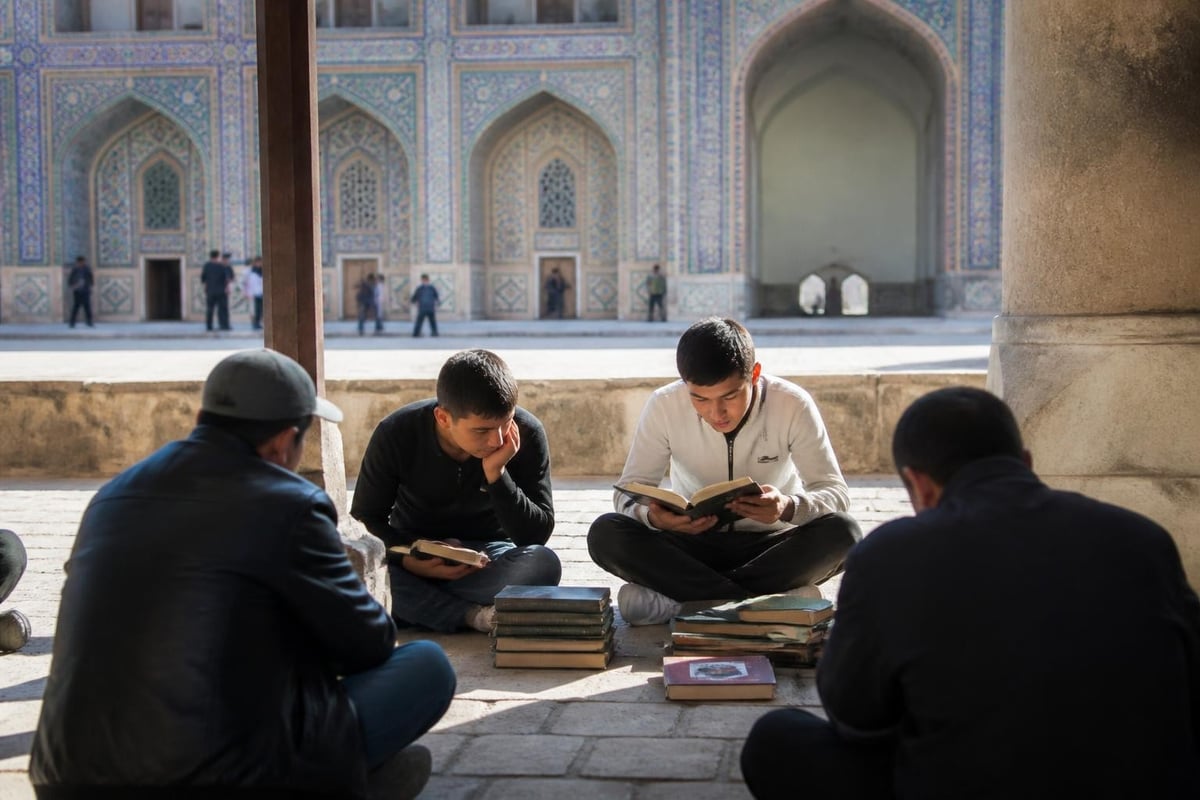
Contemporary Voices and Future Directions
Today's Uzbek writers navigate complex terrain. They honour classical forms whilst experimenting with modernist techniques. They write in Uzbek, Russian, and increasingly in English, targeting different audiences with each language choice.
An uzbekistan book published in 2026 might be:
- A historical novel exploring the Timurid court
- A memoir of Soviet childhood in Samarkand
- Speculative fiction imagining Central Asia's future
- Poetry blending classical Ghazal forms with contemporary themes
- Children's literature reviving folk tales with modern illustrations
The market remains small by global standards-recent conference analysis shows Uzbekistan's domestic book market is growing but faces challenges including limited distribution infrastructure and competition from digital entertainment. Yet publishers adapt, forming partnerships with Russian and Turkish distributors, exploring print-on-demand models, and building direct-to-reader sales channels.
The Role of Tourism in Book Culture
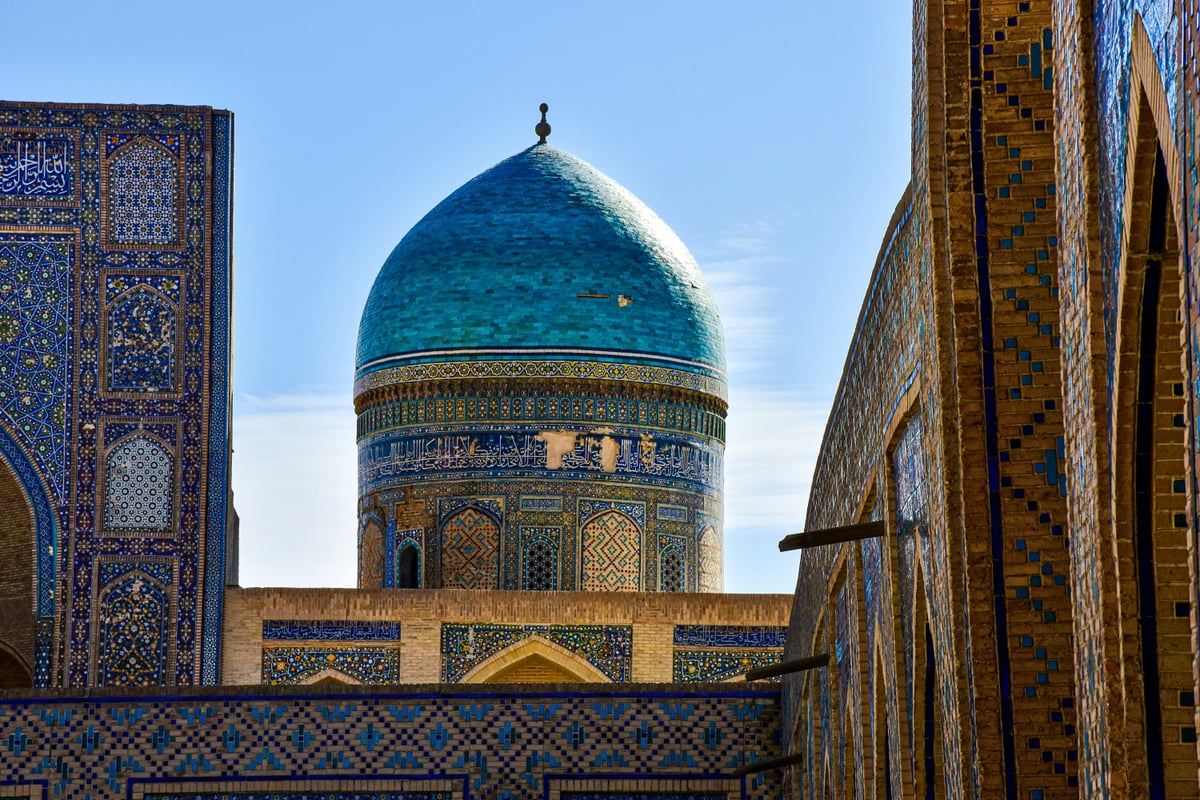
Visitors to Samarkand increasingly seek cultural depth beyond the famous monuments. They want to understand the ideas that animated those turquoise domes. What did scholars discuss in the Registan's madrasahs? What poems inspired the mosaics' geometric patterns?
Smart travellers pack an uzbekistan book or two for their journey-perhaps Hamid Ismailov's novels or classical poetry collections. Reading these texts whilst walking the streets they describe creates layered understanding impossible to achieve through guidebooks alone.
Local tour operators have noticed this trend. Guides now receive training in literary history, learning to connect architectural sites with the texts produced within their walls. It's not unusual to hear a guide recite Navoi's verses at the poet's mausoleum, or explain how astronomical manuscripts informed the Ulugh Beg Observatory's construction.
Collecting and Preserving for Tomorrow
Preservation efforts face urgent timelines. Paper acidifies. Bindings crumble. Climate change threatens storage conditions. Each uzbekistan book lost represents irreplaceable cultural memory.
Yet hope persists in unexpected forms:
Digital initiatives scan manuscripts at resolution high enough to reveal individual paper fibres, creating backup copies whilst enabling global scholarship.
Community archives collect family libraries, ensuring private collections survive generational transitions.
Youth programmes teach traditional bookbinding techniques, preserving craft knowledge whilst creating employment.
International partnerships connect Uzbek institutions with global expertise in conservation and restoration.
The most exciting development? Young Uzbeks are rediscovering their literary heritage with genuine enthusiasm. Social media accounts dedicated to classical poetry attract thousands of followers. Book clubs form around contemporary Uzbek authors. Reading challenges encourage exploration of both traditional and modern uzbekistan book titles.
This generational shift suggests the tradition will endure, evolving as it always has, adapting to new technologies whilst maintaining its essential character: stories that connect people across time, language, and geography.
The stories contained within any uzbekistan book-whether medieval manuscript or modern novel-reflect the same impulse that brings travellers to Samarkand: the desire to connect with something larger than ourselves, to touch history whilst imagining the future. These books remind us that culture isn't static; it's a living conversation across generations. When you're ready to explore where these stories were born and continue to flourish, Visit Samarkand offers free walking tours that bring this literary landscape to life, guiding you through the streets where scholars once debated, poets found inspiration, and books changed the world.