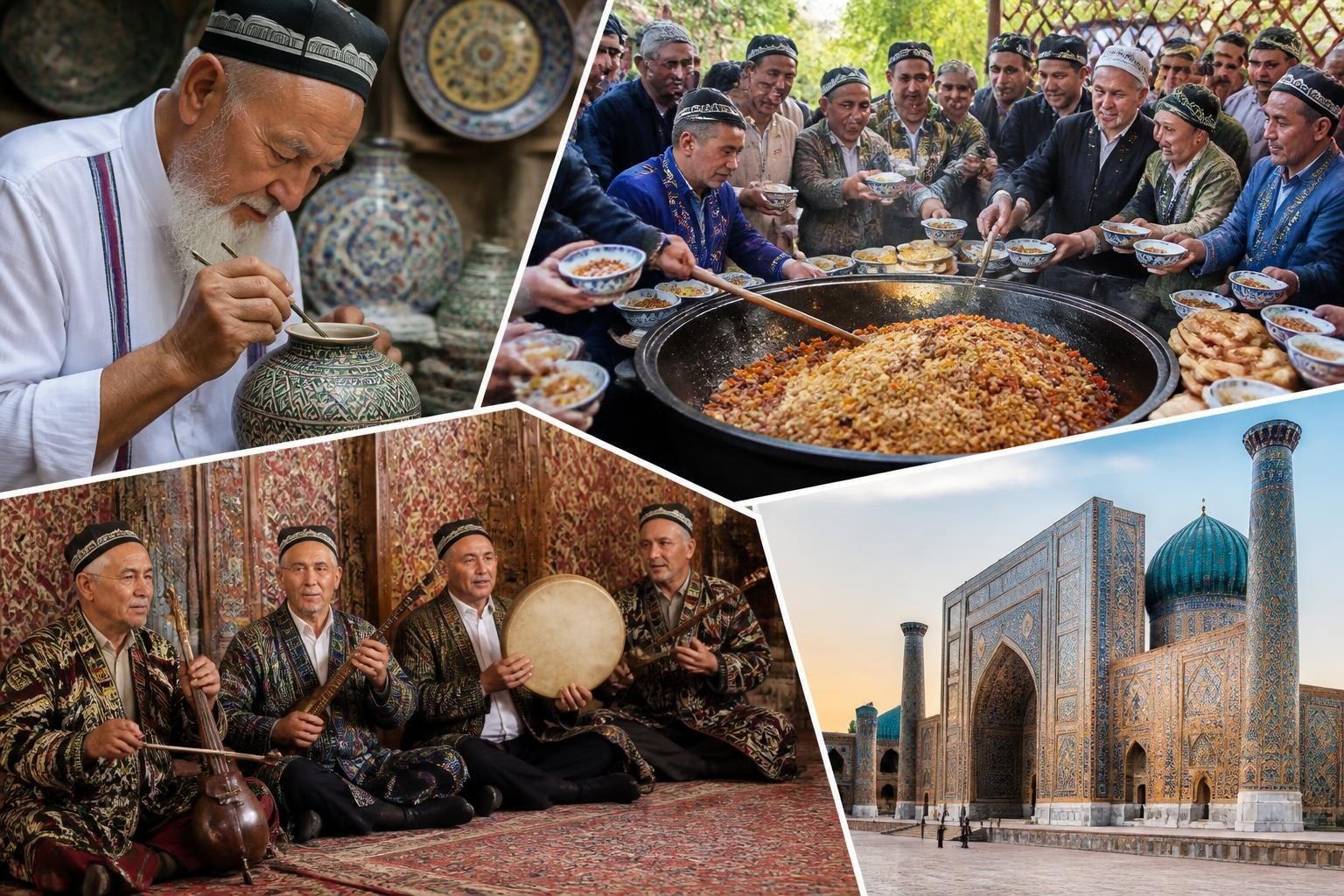
The scent of cumin and saffron drifts through the narrow streets, mixing with the sound of a dutar's gentle melody. A grandmother teaches her granddaughter the intricate steps of a traditional dance, while craftsmen shape silk using techniques passed down through countless generations. This is the living heartbeat of uzbekistan culture-a magnificent tapestry woven from centuries of Silk Road exchange, nomadic traditions, and settled civilisations. From the azure domes of Samarkand to the bustling bazaars of Tashkent, every corner tells a story of resilience, creativity, and profound hospitality that continues to shape Central Asian identity today.
The Living Heritage of Communal Traditions
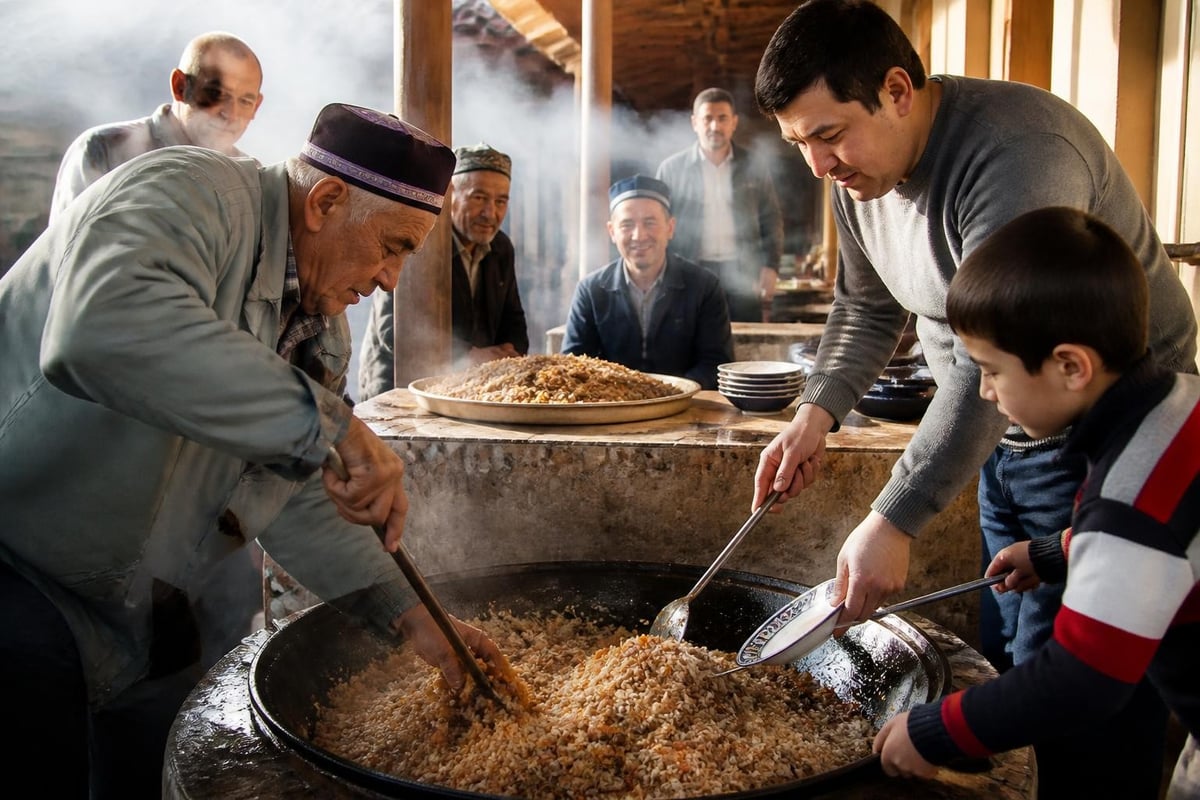
When Dilnoza's family gathers for her wedding celebration, they're not just sharing a meal-they're participating in a ritual that binds communities together across Uzbekistan. The preparation of plov (or osh) becomes a sacred act, with the eldest male family member overseeing the massive cast-iron kazan as it transforms rice, carrots, and lamb into something greater than food.
The palov culture and tradition represents far more than culinary practice. UNESCO recognised this tradition because it embodies the very essence of uzbekistan culture: collective participation, generational knowledge transfer, and the notion that true celebration requires sharing. Every region boasts its own variation-Samarkand plov differs from Tashkent's, which differs again from Bukhara's-yet all share the common thread of bringing people together.
Mahalla: The Neighbourhood That Raised a Nation
The mahalla system forms the backbone of Uzbek social structure. These self-governing neighbourhood communities function as extended families, where everyone knows everyone, and collective responsibility shapes daily life.
- Weddings, funerals, and celebrations become community affairs
- Elders resolve disputes through traditional councils
- Young people learn respect and responsibility through observation
- Resources and support flow naturally between households
- Cultural practices transmit organically from generation to generation
When I walked through the old mahallas of Samarkand, I witnessed this living tradition firsthand. An elderly man sat outside his courtyard, greeting every passerby by name. Children played in the narrow lanes under the watchful eyes of multiple households. This wasn't nostalgia-it was uzbekistan culture functioning as it has for centuries, adapting to modern life whilst maintaining its essential character.
The Poetry of Sound and Movement
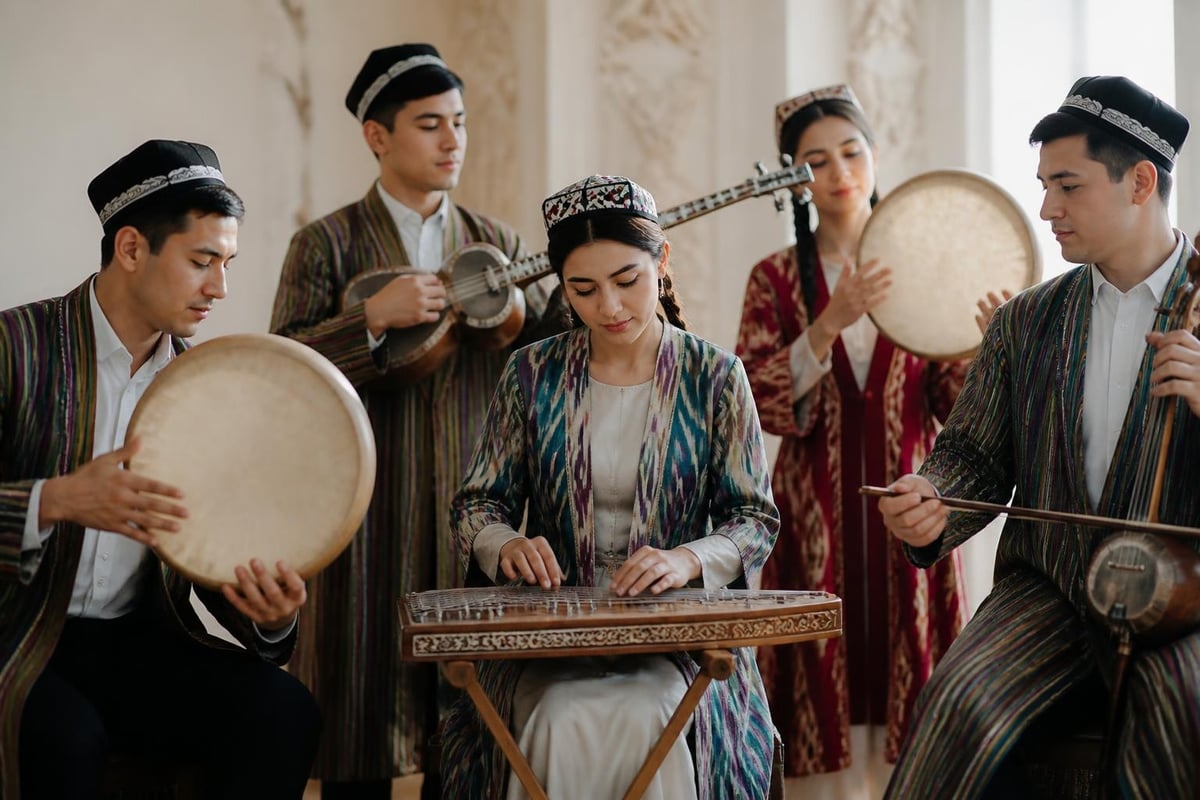
The first time you hear Shashmaqom, you might not immediately recognise it as music. The modal progressions seem to float outside Western harmonic understanding, whilst the rhythmic cycles create patterns that feel both ancient and utterly contemporary. This classical music tradition represents one of uzbekistan culture's most sophisticated artistic achievements.
Shashmaqom literally means "six maqams"-six melodic modes that form the foundation of this complex musical system. Developed over centuries through Persian, Arabic, and Turkic influences, it survived Soviet attempts at standardisation to emerge as a living tradition. The rhythmic patterns and percussion techniques used in Shashmaqom performances demonstrate extraordinary mathematical precision wrapped in emotional expression.
| Musical Element | Characteristics | Cultural Significance |
|---|---|---|
| Maqam modes | Six primary modes with specific emotional qualities | Connects performers to centuries of tradition |
| Doira percussion | Frame drum creating complex polyrhythms | Provides structural foundation and spiritual pulse |
| Vocal style | Ornamented, melismatic singing with microtonality | Expresses profound emotional and poetic content |
| Performance context | Often accompanies poetry recitation | Links music to literary and spiritual traditions |
Contemporary musicians continue to explore these ancient forms. The maqam traditions in modern practice show how younger generations reinterpret classical structures whilst respecting their essence-a perfect metaphor for how uzbekistan culture balances preservation and evolution.
Dance as Narrative
Uzbek dance tells stories without words. The lazgi dance from Khorezm bursts with energy, shoulders shaking in rapid movements that echo the desert winds. In contrast, the elegant Bukhara dance flows like silk, with dancers manipulating small plates or flowers in movements refined over centuries in royal courts.
Watch a skilled dancer perform, and you'll see the influence of Persian grace, Turkic vitality, and Central Asian storytelling all flowing together. The hand gestures alone form a vocabulary-each position of the fingers, each turn of the wrist, communicates specific meanings understood by those versed in the tradition.
The Architecture of Identity
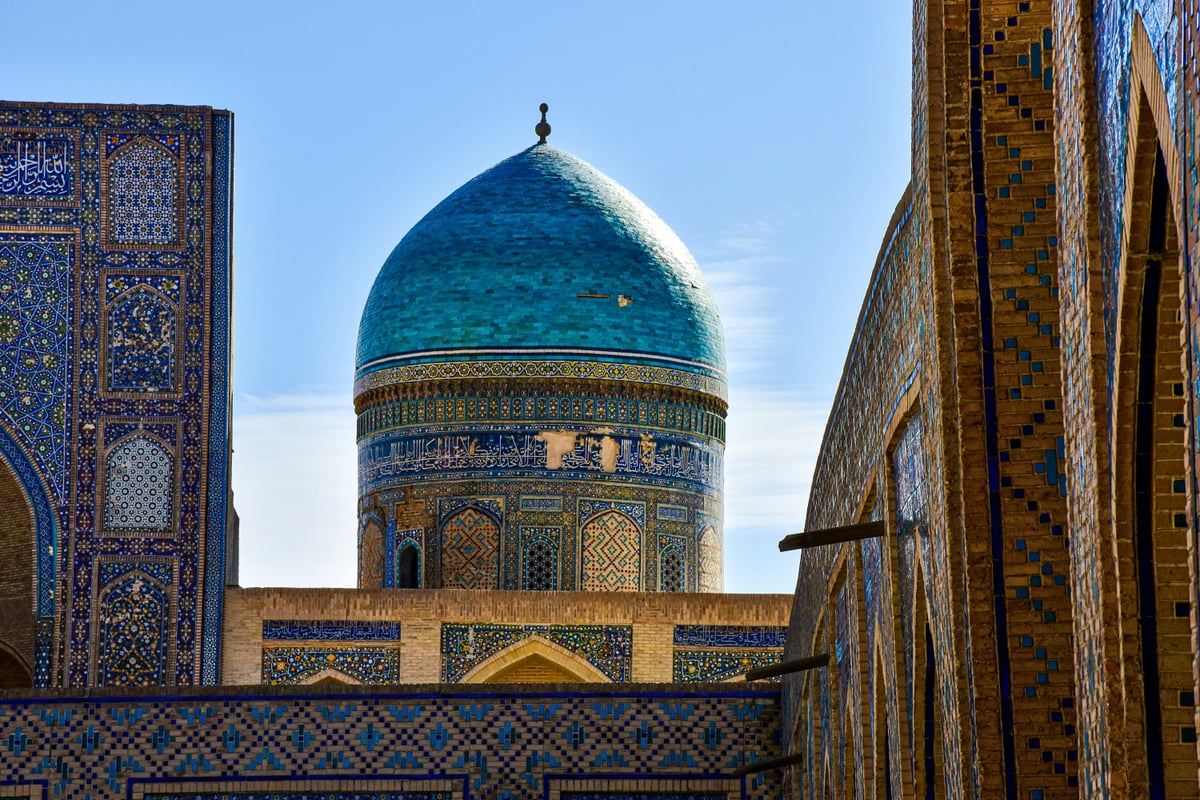
Step into the Registan Square in Samarkand, and you're not just seeing buildings-you're standing inside uzbekistan culture made tangible. The turquoise domes catch the light differently throughout the day, whilst intricate geometric patterns demonstrate mathematical understanding that rivals contemporary design.
The Islamic architectural tradition in Uzbekistan evolved distinct characteristics:
- Tilework featuring complex geometric and floral patterns
- Pishtaq entrance portals creating dramatic vertical emphasis
- Double domes using structural ingenuity for acoustic and aesthetic effects
- Majolica ceramic work in distinctive turquoise and blue
- Carved ganch (plaster) creating lace-like interior decorations
Yet beyond the grand monuments, the true genius appears in vernacular architecture. The traditional Uzbek courtyard house (hovli) creates private paradise within urban density. High walls protect family privacy, whilst internal gardens provide cooling shade. Rooms arranged around courtyards facilitate the extended family living that remains central to uzbekistan culture.
Walking through these spaces with knowledgeable guides transforms architectural appreciation into cultural understanding. The free walking tours offered by Visit Samarkand reveal the stories behind the structures-how families lived, how craftsmen worked, how communities organised themselves within these magnificent urban fabrics. These excursions make the connection between physical space and social practice visible in ways that guidebooks cannot capture.
Craftsmanship as Cultural Memory
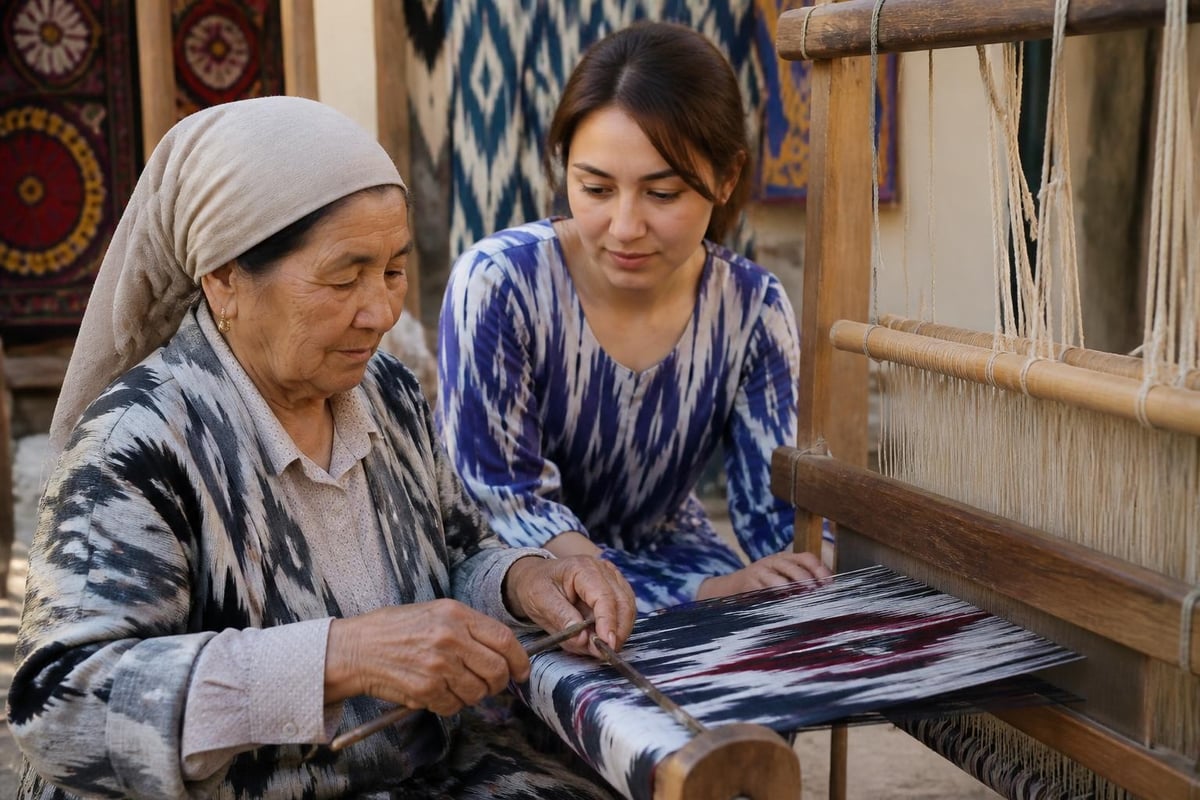
Rustam's hands move with practiced certainty as he threads another warp through his loom. He's weaving ikat-the resist-dyed silk fabric that has become synonymous with Uzbek textile tradition. But he's also weaving memory, technique, and cultural identity into every metre of cloth.
The suzani embroidery tradition carries similar weight. These large decorative panels, traditionally created by young women for their wedding trousseau, feature stylised plant motifs worked in silk thread on cotton or silk backgrounds. Each region developed distinctive colour palettes and design vocabularies:
- Bukhara suzanis emphasise circular sun and moon motifs
- Nurata work features bold, graphic compositions
- Shakhrisabz pieces showcase fine detail and delicate colour transitions
- Tashkent styles incorporate more naturalistic floral arrangements
- Samarkand suzanis balance dramatic scale with intricate workmanship
These aren't museum pieces-they're living practices. Young artisans continue learning these techniques, often adapting traditional patterns for contemporary applications whilst maintaining core principles that define uzbekistan culture.
The Pottery Villages
In Rishtan, virtually every household participates in ceramic production. The distinctive turquoise glaze-achieved through specific mineral compositions and firing techniques-has marked Rishtan pottery for centuries. Master ceramicists guard their glaze recipes whilst generously teaching forming and decorating skills.
This combination of secrecy and openness reflects broader patterns in uzbekistan culture. Certain knowledge remains protected, transmitted only within families or to worthy apprentices. Other aspects spread freely, shared generously with anyone showing genuine interest. The balance maintains tradition whilst allowing innovation.
Food as Cultural Expression
The recent Guardian feature capturing everyday life in Uzbekistan highlights how food permeates every aspect of social interaction. Tea isn't just a beverage-it's the medium through which hospitality, business, friendship, and family all flow.
The choykhana (teahouse) serves as community centre, negotiation space, and contemplative refuge. Men gather on raised platforms (tapchan), sipping green tea from delicate porcelain bowls whilst discussing everything from politics to poetry. This isn't casual dining-it's uzbekistan culture in its most accessible form.
Bread (non or lepyoshka) carries almost sacred significance. Round flatbreads stamped with distinctive patterns never go face-down on the table. Breaking bread together creates obligations of friendship and mutual support. Each region's bread differs in thickness, flavour, and decoration, serving as edible regional identity.
| Dish | Primary Ingredients | Cultural Context |
|---|---|---|
| Plov | Rice, meat, carrots, onions | Celebration centrepiece, communal bonding |
| Shashlik | Grilled meat skewers | Social gatherings, outdoor occasions |
| Lagman | Hand-pulled noodles in broth | Everyday sustenance, regional variations |
| Somsa | Baked pastries with various fillings | Street food, hospitality offerings |
| Manti | Steamed dumplings | Family meals, special occasions |
The official cultural ministry recognises culinary traditions as intangible heritage requiring active preservation. State programmes support traditional cooking schools, document regional variations, and promote uzbekistan culture through gastronomic diplomacy.
The Calendar of Celebration
Navruz marks the spring equinox and new year according to the Persian calendar. This ancient celebration predates Islam, surviving through various historical transitions to remain the most important secular holiday. Families prepare sumalak-a sweet paste made from wheat sprouts cooked overnight with constant stirring and singing. The process itself embodies the holiday's meaning: renewal, community effort, and connection to agricultural cycles.
When Navruz arrives, streets fill with musicians, dancers, and performers. Neighbours visit each other, sharing traditional dishes and settling old grievances. The holiday encapsulates how uzbekistan culture harmonises pre-Islamic, Islamic, and contemporary elements into coherent celebration.
Life Cycle Ceremonies
Birth, circumcision, marriage, and death each trigger elaborate ceremonial sequences. These aren't mere parties-they're cultural transmissions where younger generations observe and gradually assume active roles.
- Beshik-tuyi: Cradle ceremony when babies first use their wooden cradle
- Sunnat-tuyi: Circumcision celebration for boys, major community event
- Fotiha: Engagement ceremony establishing formal family connections
- Nikokh: Wedding ceremony blending religious and customary elements
- Commemorative meals: Post-funeral gatherings maintaining connection with deceased
Each ceremony follows prescribed patterns whilst allowing individual expression. This balance between structure and creativity characterises uzbekistan culture broadly-frameworks provide continuity whilst innovation ensures relevance.
Language and Literature
The Uzbek language carries Persian, Arabic, Turkic, and Russian influences in its vocabulary and structure. This linguistic layering reflects the region's position at Central Asian crossroads. Speaking Uzbek means accessing centuries of poetry, storytelling, and philosophical discourse.
Alisher Navoi, the 15th-century poet and statesman, elevated Chagatai Turkic to literary language capable of expressing the most refined thoughts. His works remain central to Uzbek identity, taught in schools and quoted in everyday conversation. Understanding uzbekistan culture requires engaging with this literary heritage-not as historical curiosity but as living resource.
Contemporary writers continue this tradition. Modern Uzbek literature grapples with questions of identity, globalisation, and cultural preservation whilst maintaining connection to classical forms. Young poets experiment with structure and language whilst respecting the aesthetic principles established by masters like Navoi and Babur.
The Evolving Tradition
Uzbekistan culture never stood still. The Silk Road brought continuous influx of ideas, goods, and people. Each era added layers without completely erasing previous ones. Today's challenge involves maintaining this adaptive capacity whilst resisting homogenisation pressures.
Social media lets young Uzbeks connect globally whilst sharing local traditions. A dancer in Tashkent might learn technique from masters in Bukhara via video call, then share performances online reaching diaspora communities worldwide. Traditional craftspeople sell directly to international customers, finding markets that value handwork and cultural authenticity.
The state cultural apparatus walks a delicate line between preservation and evolution. Supporting traditional arts whilst encouraging contemporary expression, maintaining standards whilst allowing experimentation, honouring elders whilst empowering youth-these tensions generate creative energy driving uzbekistan culture forward.
Gender and Cultural Practice
Women hold central but complex positions within uzbekistan culture. Traditional expectations emphasise family roles, yet historical figures like Nadira (19th-century poet) and contemporary leaders demonstrate women's intellectual and social contributions.
The female artisan tradition particularly deserves recognition. Textile work, embroidery, and certain ceramic techniques pass primarily through maternal lines. Grandmothers teach granddaughters patterns and techniques whilst sharing family histories and social wisdom. This female knowledge transmission runs parallel to male-dominated spaces like choykhanas and craft workshops.
Modern Uzbekistan sees increasing female participation in previously male-dominated fields whilst traditional female domains maintain importance. This isn't simple Westernisation-it's uzbekistan culture continuing its long pattern of adaptation and synthesis.
The Spiritual Landscape
Islam shapes uzbekistan culture profoundly, yet the relationship proves more nuanced than simple orthodoxy. Sufism left deep marks on spiritual practice, emphasising mystical experience and poetry alongside formal observance. Shrines to Sufi saints attract pilgrims seeking intercession and blessing, practising folk Islam that blends pre-Islamic elements with Muslim devotion.
The Friday mosque remains central to community life, not just for prayer but for social gathering and community organisation. The imam often serves as mediator, advisor, and moral authority beyond purely religious functions.
Yet secular life thrives alongside religious practice. Uzbekistan culture accommodates both-the grandmother who prays five times daily and the grandson who rarely attends mosque both participate fully in family and community life. This practical tolerance reflects centuries of managing diversity.
The stories, traditions, and practices that define uzbekistan culture offer profound lessons about maintaining identity whilst embracing change, honouring the past whilst creating the future, and building community through shared experience and mutual respect. Whether you're drawn to the architectural magnificence, the culinary traditions, or the living craftsmanship, experiencing these cultural treasures firsthand transforms understanding into genuine appreciation. Visit Samarkand provides the perfect gateway to this rich heritage, offering both free and paid walking tours that reveal the layers of history, culture, and daily life that make Samarkand and Uzbekistan truly extraordinary.