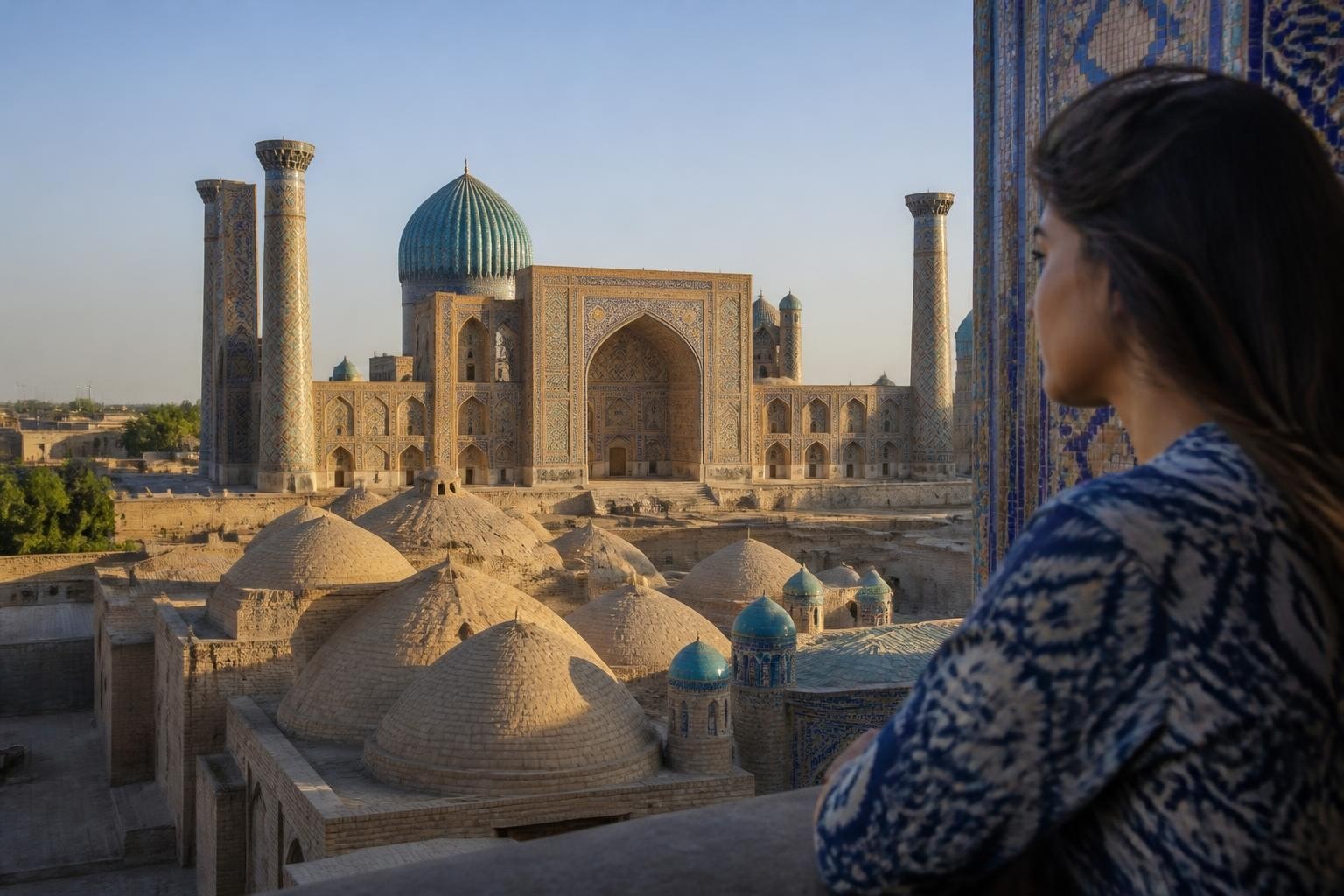
Standing beneath the soaring turquoise domes of Samarkand for the first time, I understood why travellers have been drawn to Central Asia for millennia. The Silk Road cities of Uzbekistan aren't merely destinations on a map; they're living testimonies to human ambition, artistic brilliance, and the power of cultural exchange. From the moment you arrive, uzbekistan tourist attractions reveal themselves as more than monuments. They're portals into stories that shaped civilisations, connected continents, and inspired poets and conquerors alike. Whether you're wandering through ancient madrasahs, standing in bustling bazaars unchanged for centuries, or gazing across desert fortresses, every corner of this extraordinary country whispers tales of empires, merchants, and dreamers.
The Crown Jewel: Samarkand's Registan Square
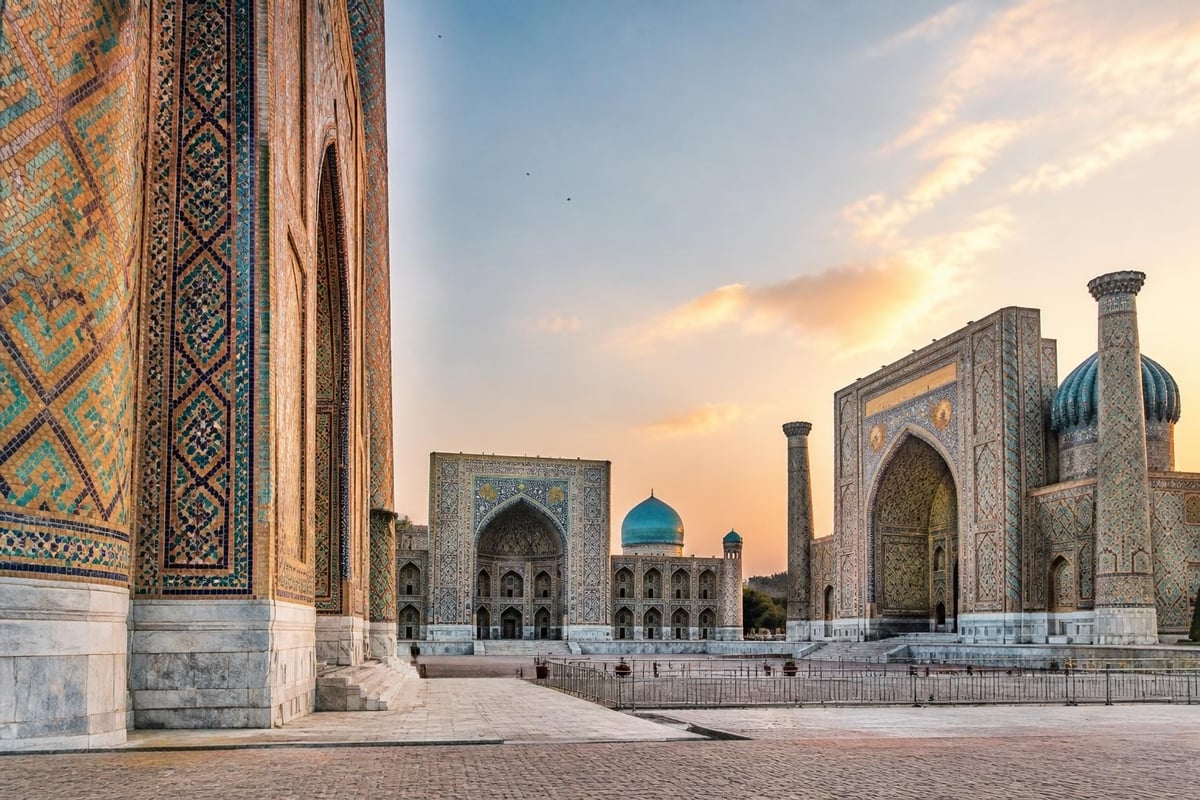
The Registan stands as the undisputed masterpiece among uzbekistan tourist attractions. Three magnificent madrasahs frame this legendary square, their facades covered in geometric patterns and calligraphy that seem to dance in the changing light.
I'll never forget watching sunrise here, when the first golden rays illuminated the Tilya-Kori Madrasah's gilded interior. Local guides told me that this square once thrummed with scholars debating philosophy, merchants haggling over silk, and musicians entertaining crowds. Today, it continues that tradition as one of the most photographed places in Central Asia.
Architectural Mastery on Display
The three madrasahs each tell their own story:
- Ulugh Beg Madrasah (1417-1420): Built by Tamerlane's grandson, an astronomer-king who valued knowledge above conquest
- Sher-Dor Madrasah (1619-1636): Features controversial lion imagery that defied Islamic artistic conventions
- Tilya-Kori Madrasah (1646-1660): Houses a mosque with stunning gold-leaf decoration that gives the building its name ('gold-covered')
Walking around the square's perimeter takes about twenty minutes, but you could spend days exploring the workshops, galleries, and hidden courtyards within these walls. The Lonely Planet guide to Uzbekistan describes the Registan as "the single most impressive sight in Central Asia", and standing there at dusk, watching the buildings illuminate against the darkening sky, I couldn't argue.
Bukhara: The City That Time Preserved
Bukhara feels different from Samarkand. Where Samarkand dazzles with grandeur, Bukhara enchants with intimacy. This ancient city boasts over 140 architectural monuments, making the entire historic centre feel like an open-air museum. Among uzbekistan tourist attractions, Bukhara offers the rare experience of walking through living history.
The Ark Fortress dominates the skyline, a massive citadel where Bukhara's emirs ruled for a millennium. Inside its thick walls, I explored museums displaying everything from ancient coins to royal torture chambers. The contrast between beauty and brutality reminded me that history contains multitudes.
Trading Domes and Sacred Spaces
Bukhara's covered bazaars represent medieval commerce at its finest:
| Trading Dome | Specialty | Historical Significance |
|---|---|---|
| Toki Zargaron | Jewellery and precious metals | Centre of goldsmith guilds |
| Toki Telpak Furushon | Traditional headwear | Hat-makers' marketplace |
| Toki Sarrafon | Money changers | Banking and currency exchange |
The Kalon Minaret rises 46 metres above the city, so impressive that even Genghis Khan reportedly spared it during his devastating conquest. Standing in its shadow, you understand why locals call it the "Tower of Death" (criminals were once executed by being thrown from its top), yet also why it's been a beacon for travellers for over 900 years.
The Kalon Mosque and Mir-i-Arab Madrasah flank the minaret, creating an ensemble that defines Islamic architecture in Central Asia. Unlike many monuments that feel frozen in time, the Mir-i-Arab still functions as a working madrasah, with students studying Islamic theology just as they have for centuries.
Khiva: A Desert Mirage Made Real
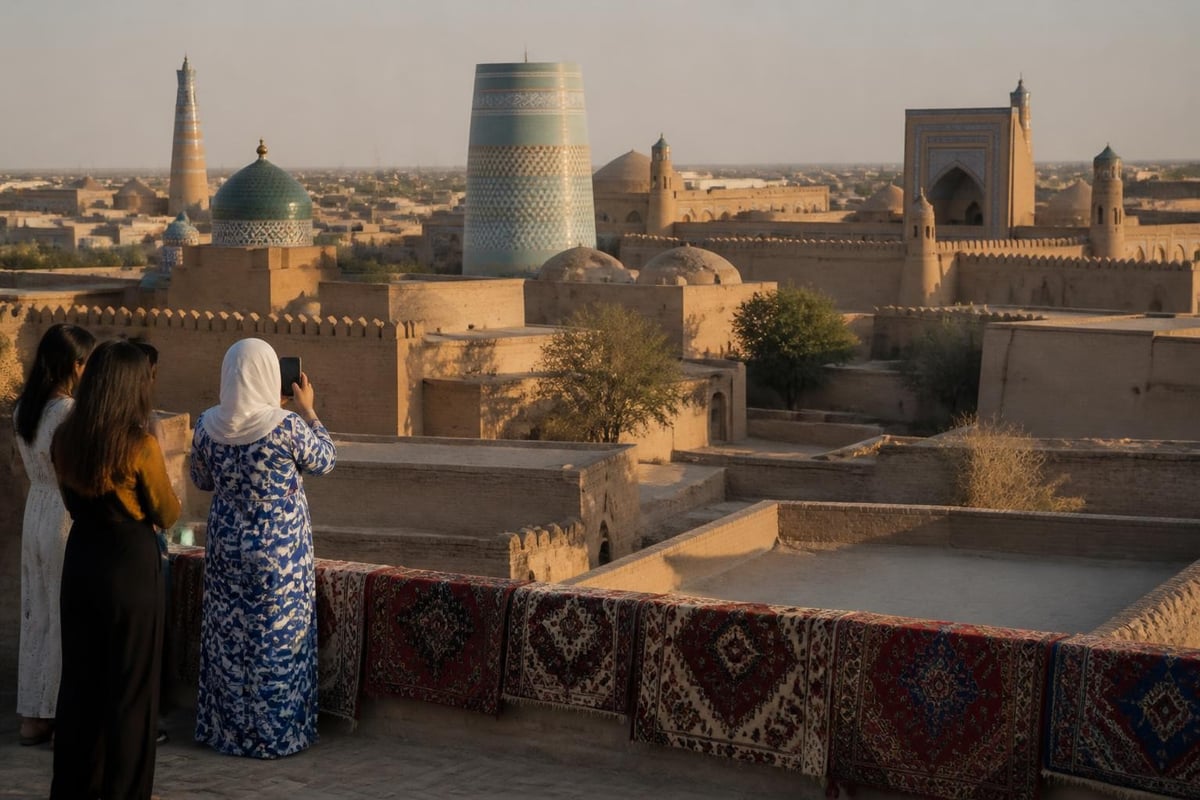
Approaching Khiva across the Karakum Desert, the city appears like something from Arabian Nights. The fortified inner town, Itchan Kala, rises from the sands completely encircled by towering clay walls. This UNESCO World Heritage site represents one of the most perfectly preserved uzbekistan tourist attractions, a complete medieval Islamic city virtually unchanged since the 18th century.
Walking through Khiva's narrow lanes, I passed madrasahs converted into craft workshops where artisans still practice traditional woodcarving and silk-weaving. The National Geographic feature on Khiva highlights how this city earned recognition as the "Tourist Capital of the Islamic World 2024", bringing renewed attention to its extraordinary architectural heritage.
Monuments Within Monuments
The density of historical buildings in Itchan Kala astounds first-time visitors:
- Over 50 monuments and 250 old houses packed into just 26 hectares
- The unfinished Kalta Minor Minaret, covered in turquoise tiles
- Islam Khodja Minaret, Khiva's tallest structure at 45 metres
- Tash Hauli Palace with its intricate wood carvings and tilework
- Ancient city walls you can walk along for panoramic desert views
One evening, I climbed the Islam Khodja Minaret just before sunset. From the top, Khiva spread below like a terracotta map, minarets and domes creating a skyline that hasn't changed in centuries. Beyond the walls, the desert stretched endlessly, reminding me why this oasis city became so vital to Silk Road traders.
Tashkent: Where Soviet Meets Silk Road
As Uzbekistan's capital, Tashkent offers a striking contrast to the Silk Road cities. The 1966 earthquake destroyed much of the old city, leading to massive Soviet reconstruction. Yet among uzbekistan tourist attractions, Tashkent uniquely showcases how tradition and modernity coexist.
The Chorsu Bazaar pulses with energy every morning, its massive green dome sheltering vendors selling everything from fresh pomegranates to hand-woven rugs. Nearby, the Hazrati Imam Complex houses one of Islam's oldest Qurans, a 7th-century manuscript with traces of Caliph Uthman's blood.
A City of Contrasts
Modern Tashkent reveals itself in layers:
- Soviet Heritage: Grand metro stations decorated with local motifs, wide boulevards designed for military parades
- Islamic Architecture: The restored Kukeldash Madrasah and Barak-Khan Madrasah anchor the old city
- Contemporary Development: The Tashkent City business district represents Uzbekistan's economic ambitions
- Green Spaces: Tree-lined parks provide respite from summer heat
The official Uzbekistan tourism portal notes that Tashkent serves as the gateway for most international visitors, making it the natural starting point for exploring the country's diverse attractions. The city's museums, particularly the State Museum of History, provide essential context for understanding Uzbekistan's complex past before venturing to the Silk Road cities.
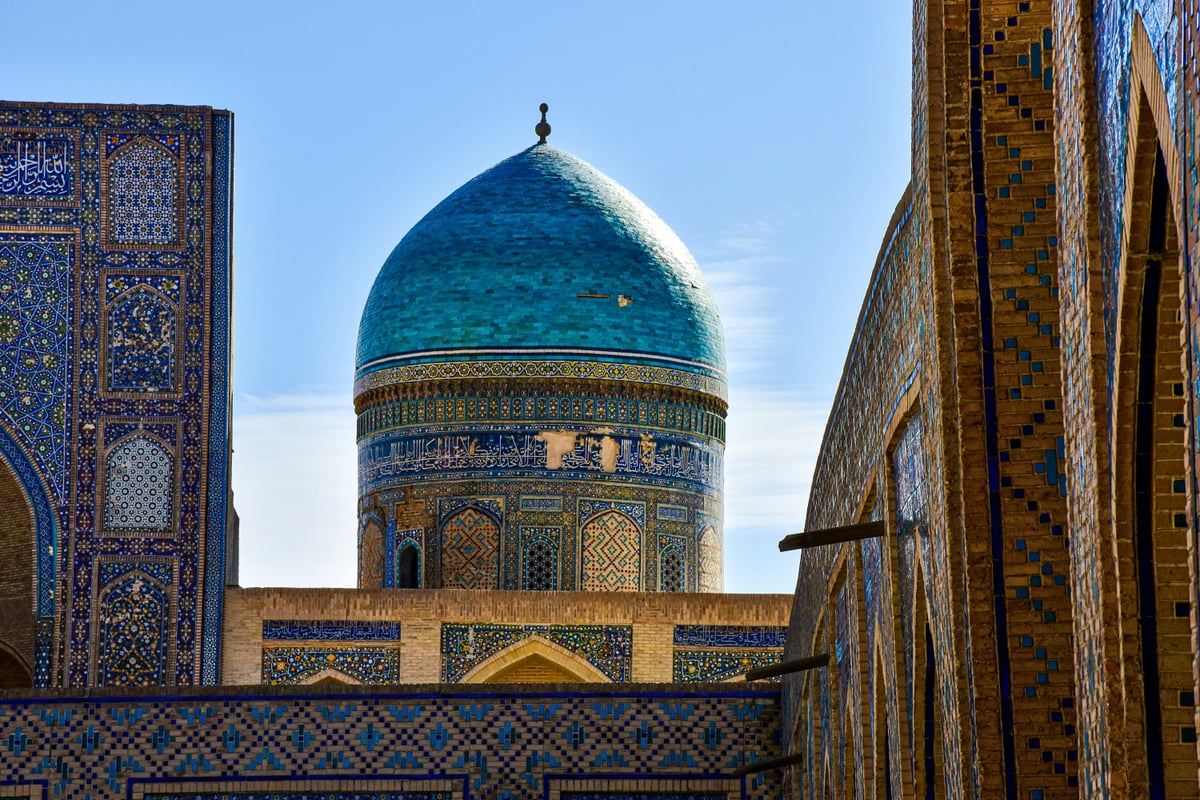
For those planning to explore Samarkand's magnificent monuments, participating in a free walking tour offers an excellent introduction to the city's history and hidden corners. These guided excursions provide local insights that transform monuments from impressive buildings into compelling stories.
The Fergana Valley: Craft Traditions and Natural Beauty
East of Samarkand, the fertile Fergana Valley cradles some of Uzbekistan's most traditional communities. Among uzbekistan tourist attractions, this region offers something different: living craft traditions that have continued unbroken for generations.
In Margilan, I watched silk being produced exactly as it has been for over a thousand years. The Yodgorlik Silk Factory demonstrates every step, from boiling cocoons to dyeing threads with natural pigments to weaving on traditional looms. The master weavers create khan atlas silk with its distinctive ikat patterns, fabric so prized that it once served as currency along the Silk Road.
Craft Cities Worth Visiting
Each Fergana Valley city specialises in particular crafts:
| City | Specialty | What to Experience |
|---|---|---|
| Margilan | Silk weaving | Factory tours, master weavers at work |
| Rishtan | Ceramic pottery | Blue-glazed ceramics using medieval techniques |
| Kokand | Architecture | Khudayar Khan Palace with 19 courtyards |
| Andijan | Woodcarving | Traditional furniture and musical instruments |
The valley's natural beauty complements its cultural attractions. Snow-capped mountains frame fertile orchards and terraced vineyards. In spring, the entire valley blooms white and pink with apricot and almond blossoms. This abundance explains why empires fought for centuries to control this strategic region.
Nukus and the Karakalpakstan Experience
At Uzbekistan's western edge, the autonomous republic of Karakalpakstan offers one of Central Asia's most unexpected cultural treasures. The Savitsky Museum in Nukus houses the world's second-largest collection of Russian avant-garde art, an astonishing 90,000 pieces collected by artist Igor Savitsky during the Soviet era.
This museum ranks among the most remarkable uzbekistan tourist attractions for a simple reason: it shouldn't exist. Savitsky rescued forbidden artworks from destruction during Stalin's purges, secretly storing them in remote Nukus where authorities wouldn't look. The Guardian’s feature on the Savitsky Museum explains how this "Louvre of the Desert" preserves masterpieces by artists once condemned as enemies of the state.
Beyond the museum, Karakalpakstan offers stark desert landscapes and the haunting remnants of the Aral Sea. The abandoned fishing boats at Moynaq stand as monuments to environmental catastrophe, yet they've become poignant symbols that attract photographers and documentary makers worldwide.
The Shahrisabz Legacy
South of Samarkand lies Shahrisabz, birthplace of Tamerlane and home to some of his most ambitious architectural projects. The ruins of Ak-Saray Palace hint at its former glory with a gateway still standing 38 metres high. Historical accounts describe the complete palace as even more magnificent than anything in Samarkand, with Tamerlane's famous inscription reading: "If you doubt our power, look at our buildings."
Beyond the Palace Ruins
Shahrisabz's other monuments deserve attention:
- Dorut Tilovat Complex: Contains tombs of Tamerlane's family members and spiritual advisors
- Dorus Siadat: Intended as Tamerlane's own burial complex, though he was ultimately interred in Samarkand
- Kok Gumbaz Mosque: Features a brilliant blue dome and intricate interior decoration
The town itself maintains a quieter pace than the major cities, offering insights into everyday Uzbek life. Locals still gather at traditional tea houses, and the bazaar sells produce from surrounding farms rather than tourist souvenirs. This authenticity makes Shahrisabz valuable for visitors seeking to understand modern Uzbekistan alongside its imperial past.
Mountain Retreats and Nature Escapes
Not all uzbekistan tourist attractions involve ancient monuments. The Chimgan Mountains, just 80 kilometres from Tashkent, provide year-round recreation. In summer, hikers explore alpine meadows dotted with wildflowers. Winter brings skiers to modest but improving resorts.
The Nuratau Mountains harbour a different kind of treasure: rare wildlife and traditional yurt camps. Conservation programmes protect endangered species like the Severtzov sheep, whilst community-based tourism allows visitors to experience nomadic hospitality. Staying in a yurt under star-filled skies, sharing fresh bread and stories around a fire, reveals aspects of Uzbek culture that cities cannot show.
Lake Aydarkul, created accidentally when Soviet irrigation canals breached, has become Central Asia's largest lake. Its beaches attract domestic tourists escaping summer heat, whilst the surrounding desert offers camel treks and bird watching. The UNWTO development report identifies nature-based tourism as a growing sector, with investments in infrastructure making these experiences more accessible.
Planning Your Uzbekistan Journey
The diversity of uzbekistan tourist attractions means every visitor can craft a unique itinerary. History enthusiasts might spend weeks exploring Silk Road monuments. Adventure seekers could focus on trekking and desert expeditions. Art lovers would find the museums and craft workshops endlessly fascinating.
Most travellers follow a classic route connecting Tashkent, Samarkand, Bukhara, and Khiva. This circuit efficiently covers the major sites whilst allowing time to absorb each city's distinct character. However, venturing beyond this triangle rewards curious travellers with quieter experiences and deeper cultural immersion.
Practical Considerations
When planning your visit, keep these factors in mind:
- Best seasons: Spring (April-May) and autumn (September-October) offer comfortable temperatures
- Visa policies: Uzbekistan has significantly liberalised visa requirements, with many nationalities now enjoying visa-free entry
- Transport: Domestic flights connect major cities, whilst trains offer scenic overnight journeys
- Language: Russian and Uzbek dominate, but English is increasingly spoken in tourist areas
- Currency: The Uzbek som, with ATMs now widely available in cities
The EBRD country evaluation notes substantial improvements in tourism infrastructure since 2016, when Uzbekistan began opening to international visitors after decades of isolation. Hotels, restaurants, and transportation have all improved dramatically, making travel considerably easier than even five years ago.
Cultural Immersion Beyond Monuments
Experiencing uzbekistan tourist attractions fully means engaging with living culture, not just viewing old buildings. Attend a traditional music performance where the haunting sounds of the dutar connect you to centuries of oral tradition. Join locals for plov, the beloved rice dish prepared in massive quantities for weddings and celebrations. Visit a hammam, the traditional bathhouse where generations have gathered to socialise and cleanse.
Language provides another window into culture. Learning a few Uzbek phrases transforms interactions. Shopkeepers light up when tourists attempt "rahmat" (thank you) or "qancha turadi?" (how much?). These small efforts signal respect and curiosity, opening doors to conversations and connections that would otherwise remain closed.
The tea culture deserves special attention. Uzbeks consume vast quantities of green tea, serving it as a gesture of hospitality and friendship. The ritual of tea preparation and serving follows specific customs. The host always tastes the first cup to ensure quality and demonstrate that the tea isn't poisoned (a tradition from more dangerous times). Subsequent cups are poured sparingly, encouraging conversation as guests request refills.
Uzbekistan's extraordinary blend of architectural masterpieces, living traditions, and warm hospitality creates journeys that resonate long after you return home. Whether you're marvelling at the Registan's turquoise domes or sharing stories over tea in a village home, every experience reveals new layers of this fascinating country. Ready to begin your own Silk Road adventure? Visit Samarkand offers free walking tours that bring the city's monuments and hidden corners to life through expert local guides who share the stories, legends, and cultural insights that transform sightseeing into genuine understanding.